





 Portuguese
  English
  Spanish
  4 min of reading
  20 comments


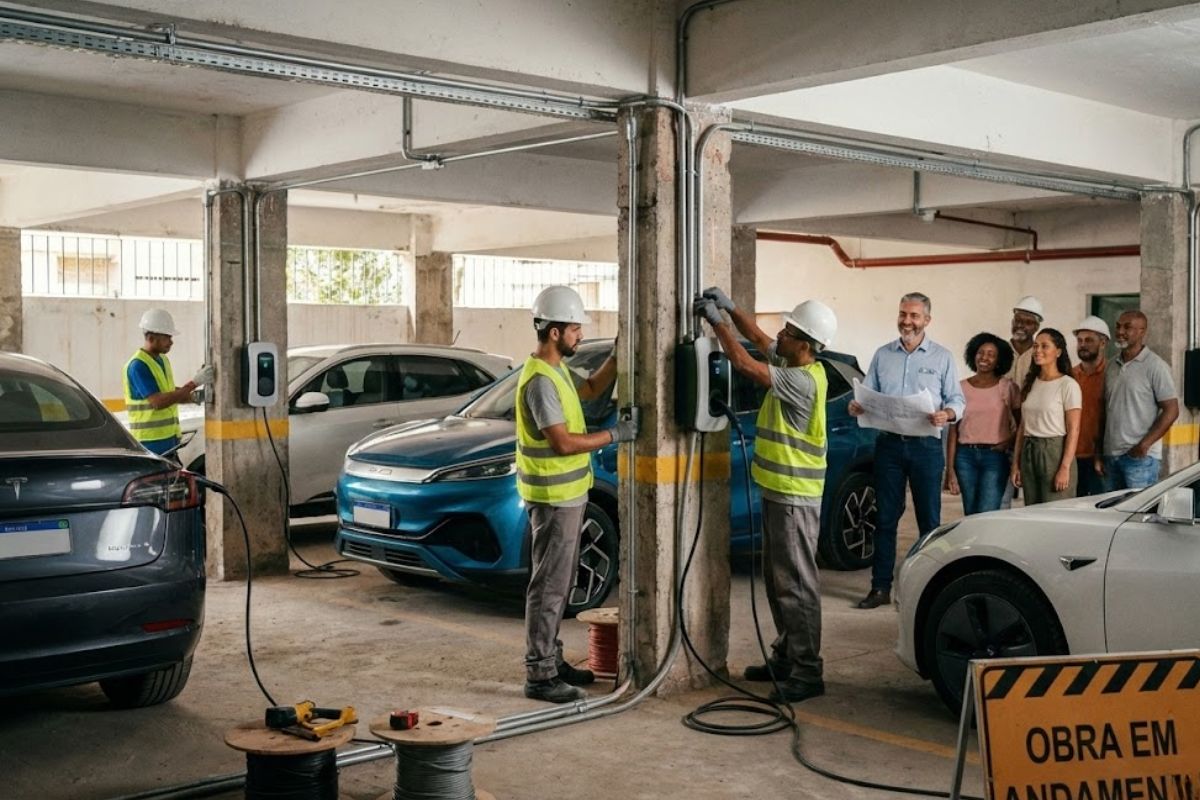


With the New Law Approved by Alesp, Residents of Condominiums in São Paulo Gain the Right to Install Charging Stations for Electric Cars in Their Own Garages, Following the Rules of the Utility Company and ABNT, While Building Managers Lose Room for Bureaucratic Excuses and Electric Vehicle Owners Take Control of the Plug.
The new law approved on Wednesday, the 17th, by the Legislative Assembly of the State of São Paulo regulates the installation of charging points for electric vehicles in residential and commercial condominiums. This gives residents a clear backing to request a plug in the garage, provided they follow the technical norms and security rules in place.
According to Detran SP, the fleet with electric charging options surged from 4,300 vehicles in 2019 to 59,300 in September of this year. The advancement of electromobility made regulation urgent that puts an end to condo excuses and ensures safe charging infrastructure.
What the New Law Changes in Buildings in SP
The new law approved by the Legislative Assembly of the State of São Paulo regulates the installation of charging stations for electric vehicles in residential and commercial condominiums.
-
The Senate approves a bill that criminalizes misogyny, hatred, or aversion towards women, and includes the crime in the Racism Law with a penalty of up to 5 years.

-
Chamber Approves Bill That Allows Pepper Spray for Women Over 16 and Imposes Strict Rules for Purchase, Possession, and Use as Self-Defense

-
Chamber Approves Law to Combat Leucaena, Fast-Growing Plant That Dominates Land and Threatens Native Species in Various Regions of the Country

-
Asset Division: Know What Cannot Be Divided in Case of Divorce


The text guarantees that residents and owners of electric cars have the right to request a charging point in the garage, as long as the installation follows the technical norms and safety regulations defined.
According to the approved proposal, buildings no longer depend solely on specific assembly decisions or the goodwill of the building manager.
There is now a clear state-level rule that defines how these requests should be handled and under what conditions they can be accepted or denied.
Right Guaranteed to the Electric Car Owner in the Garage
The measure makes it clear that residents and owners can request the installation of charging points in the parking spaces.
The condominium cannot simply deny the request without presenting a security justification, such as a proven risk to the electrical infrastructure or to the building’s integrity.
At the same time, the new law allows condominiums to define technical standards for the use of the plugs, including rules about sharing equipment and responsibilities for any damages or energy consumption related to charging.
This way, the building can organize how this new internal service will be managed transparently.
Technical Rules, Safety, and Responsibilities of the Condominiums
The installation of charging stations must be carried out by a qualified professional, following the rules of the local utility company and the Brazilian Association of Technical Standards (ABNT). The central aim is to ensure that the new infrastructure operates safely, efficiently, and without causing inconvenience to other residents.
By allowing the condominium to detail responsibilities regarding damages and energy consumption, the new law also reduces future conflicts among neighbors.
The regulation provides legal security both for those who want to install the charging point and for building managers and administrators, who now have a reference framework to authorize the works.
Growth of the Electric Fleet and Pressure for Regulation
The data from the São Paulo Traffic Department help explain why the issue gained urgency.
The fleet with electric charging options grew from 4,300 vehicles in 2019 to 59,300 in September of this year, according to Detran SP.
With more and more electric and hybrid cars on the road, the lack of clear rules in garages has become a tangible problem.
The new law eliminates legal and administrative barriers that previously hindered or delayed the installation of charging points in buildings.
The trend is that this facilitates the adoption of vehicles with a lower environmental impact by condominium residents, who begin to see a minimum infrastructure guaranteed by law.
Role of Alesp, the Eletromobility Front, and the Fire Department
The project was presented by deputies Marcelo Aguiar of Podemos and Donato of PT, with the aim of encouraging the expansion of the fleet of electric and hybrid vehicles in the State of São Paulo.
During debates promoted by the Legislative Front for the Incentive of Eletromobility of Alesp, lawmakers and specialists advocated for clear, secure regulation aligned with the reality of condominiums.
The Fire Department is also involved in the discussion and is studying specific procedures for combating fires in electric vehicle charging systems.
The idea is that the installation rules set forth in the new law align with these protocols, enhancing the safety of residents and professionals working in the buildings.
In day-to-day life, this means that the owner of an electric vehicle in São Paulo gains more predictability and no longer depends solely on the assembly’s mood to have a charging point at home.
And you, do you believe that the new law will really change the behavior of condominiums in São Paulo or will resistance still prevail in garages?









Nos dias atuais já deveria ser obrigatório ter a possibilidade de cada morador ter o seu ponto de recarga em sua vaga de garagem; obviamente seguir as normas de segurança e ser instalado por um técnico habilitado com ART de um engenheiro que valide o serviço a ser realizado. O Brasil sempre assim, atrasam tudo para depois começar a vender facilidades para cobrar taxas e mais taxas.. Estamos em uma nova era da mobilidade e novas tecnologias que o cidadão precisa aceitar e se adequar horas…
Uma visão simplista sobre o tema: primeiro ponto é que não há uma regulamentação clara e esta não deve ser apenas para o estado de SP mas sim para todas as unidades da federação . Colocar que o condomínio detalhe responsabilidades sobre danos e sobre o uso desta energia provoca uma verdadeira balbúrdia diante de seguros e da própria legislação existente . Urge estabelecer normativa técnica clara junto as concessionárias de energia e ter em mente que muitos prédios , principalmente os acima de 30 anos , nem atendem mais as normativas atuais da ABNT. Sobre o quesito segurança a participação do corpo de bombeiros é fundamental e não se limita ao entendimento popular de apagar o incêndio mas também na definição de sistemas preventivos tais como detecção de incêndio e sistemas de extinção de incêndio eficazes. O básico atualmente é uma análise da condição elétrica do edifício por profissional habilitado (CREA ou CFT) antes de qualquer decisão do condomínio. Penso que criar posições de recarga rotativas onde o condômino proprietário do veículo elétrico possa efetuar a recarga e a mesma ser paga ao condomínio seja mais viável.
Vai acontecer da mesma forma como foi com a liberação de moto táxi em São Paulo. Poder, pode, mas vão querer cobrar valores exorbitantes de instalação para anular qualquer esperança e real vantagem de ser libertar do petróleo