





 Portuguese
  English
  Spanish
  3 min of reading
  0 comments


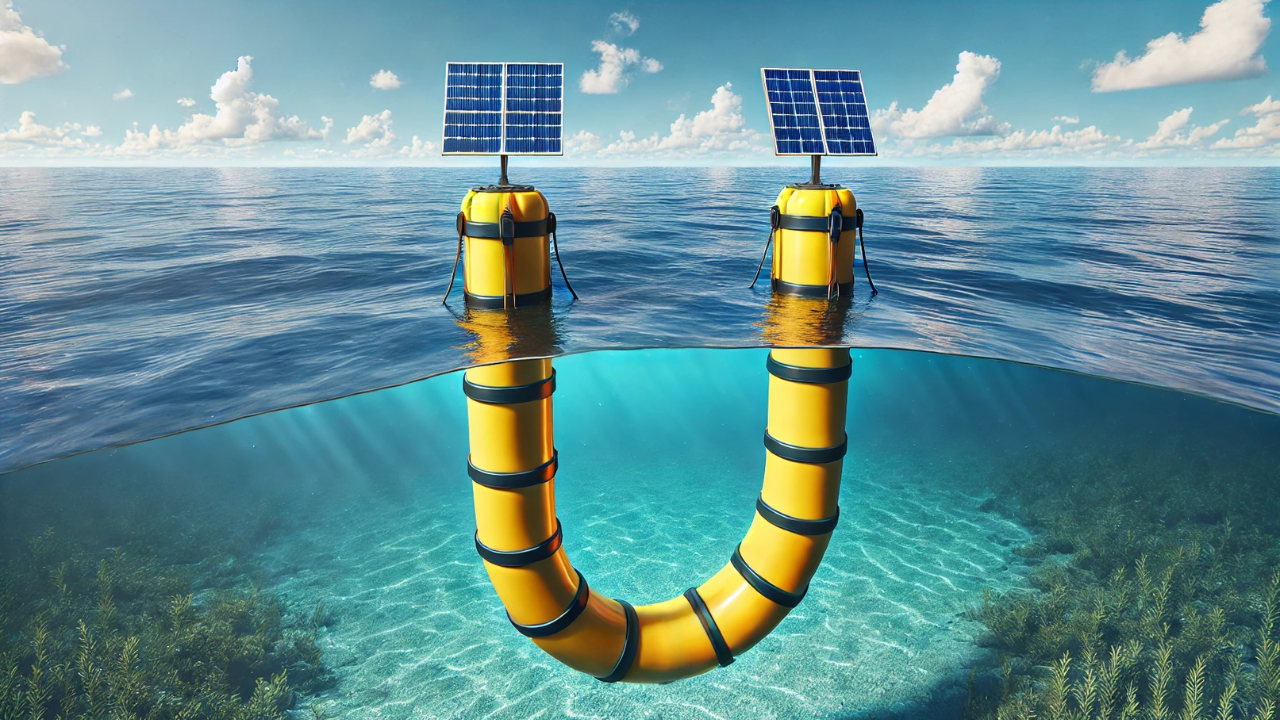
New Kinowave Plant Generates Clean Energy from Ocean Waves Without Fixed Structures, Offering Innovation and Efficiency.
A new plant that generates energy from ocean waves promises to transform the renewable energy sector. The system, called Kinowave, dispenses with the use of fixed or anchored structures, making the process more economical and efficient. The innovation could be a solution to the challenge of harnessing the energy potential of ocean waves.
How Does the Plant Work?
With the search for new alternatives, the ocean presents itself as a natural source of energy. However, current technologies face high costs and low efficiency.
The Kinowave arrives as a proposal for innovation to overcome these difficulties and make wave energy more accessible, enabling its application on a large scale.
-
Renewable energy advances over protected areas in Brazil, and a survey by the Energy Transition Observatory reveals silent impacts that challenge environmental conservation and pressure sensitive traditional territories.

-
Rio Grande do Sul accelerates energy transition: State invests in renewable technologies and consolidates decarbonization strategies and pathways to attract billions in new industrial investments.

-
With 160,000 m² of collectors, an area larger than 20 football fields, Silkeborg, in Denmark, hosts a solar thermal plant that heats 19,500 homes and could become the largest solar heating plant in the world.

-
A study reveals the expansion of renewable energy procurement in Brazil and shows how companies are taking advantage of opportunities to reduce expenses, ensure energy efficiency, and strengthen strategic environmental commitments.


The system operates with vertical cylinders connected by flexible tubes that float on the ocean surface. The movement of the waves causes the cylinders to move up and down, generating an internal fluid flow.
This flow is converted into energy through turbines known as Wells, which have high efficiency in converting the movement of the waves into electricity.
Unlike other power plants that require fixed systems on the seabed, Kinowave does not utilize large infrastructures.
This reduces installation costs and facilitates maintenance. The absence of permanent structures also preserves the marine environment, making this innovation smarter.
The simplicity of the system expands the possibilities of use, proving that the ocean can be a viable solution for clean energy generation.
The Development of the Project
The Kinowave project arose from the challenge of creating an efficient plant to capture the energy from ocean waves.
Inspired by Pascal’s principle, the system began with a basic prototype made of connected plastic bottles.
The initial model showed promising results but had limitations in fluid flow.
With design improvements, the plastic cylinders were replaced by tanks and wider tubes, increasing the system’s efficiency.
Additionally, the incorporation of floats and Wells turbines optimized the energy conversion process from waves into electricity.
Tests conducted in wave pools confirmed the superior efficiency of Kinowave compared to other plants.
The advancement of this innovation allows us to see the ocean as an even more viable energy source, especially for countries with vast coastlines.
The possibility of harnessing wave movement without high costs makes the Kinowave system a practical and efficient solution.
Next Plans for the Kinowave Plant
The Kinowave system could have a significant impact on the global energy sector. Its modular and adaptable design allows implementation in different regions around the world, making wave energy a viable option.
The simplicity of this innovation facilitates access to clean energy at various scales.
The next steps include sea testing with larger prototypes and the expansion to plants capable of generating up to 10 kW of energy, which could power small communities.
The proposal is for the capture of energy from ocean waves to gain commercial scale in the coming years, contributing to the global energy transition.
With the growing search for renewable alternatives, the ocean, with its constant waves, offers enormous potential.
The innovation brought by Kinowave can establish the use of this energy plant as an efficient and accessible solution.










-

-

3 pessoas reagiram a isso.