





 Portuguese
  English
  Spanish
  4 min of reading
  0 comments


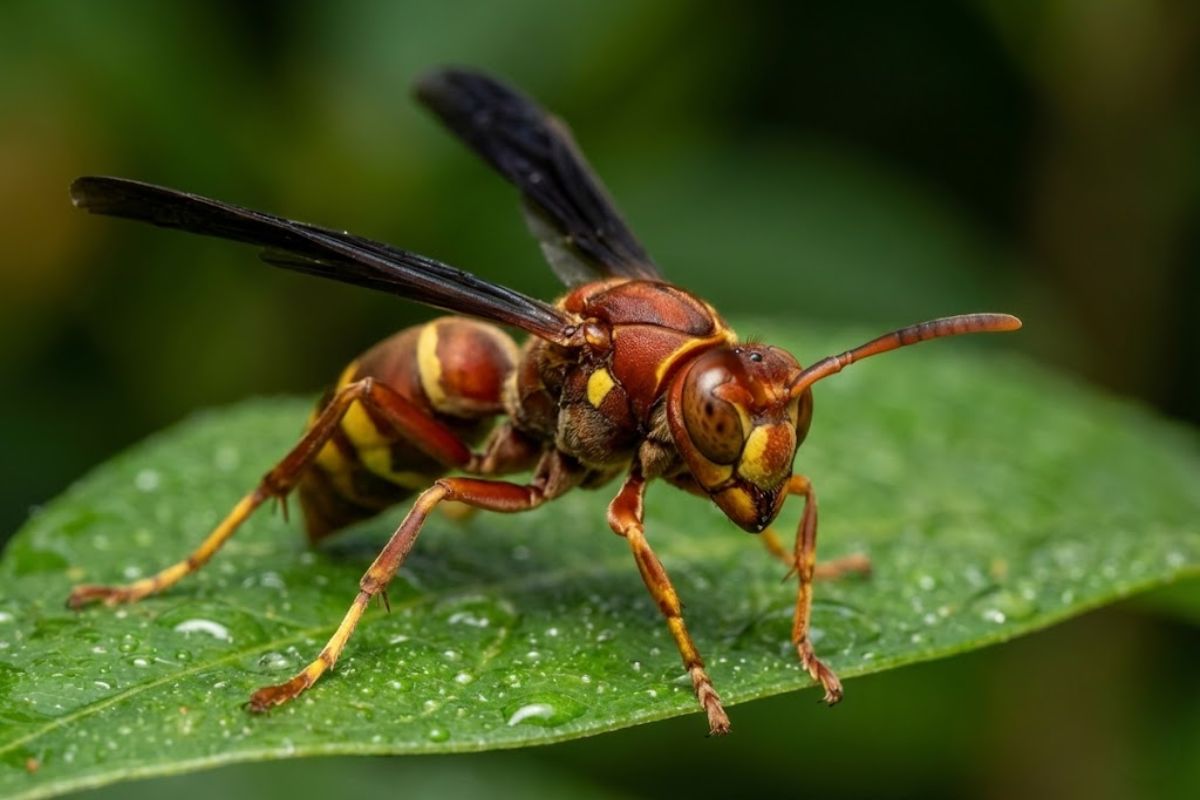
The Vampire Wasp Capitojoppa Amazonica Was Recorded in the Allpahuayo Mishana National Reserve in the Peruvian Amazon, Where Researchers Observed a Yellow Insect Up to 1.8 cm with a Large Head, Capable of Piercing Hosts with Its Ovipositor, Using Antennas to Assess Prey, and Developing Larvae Internally Without Targeting Humans and Preferring Caterpillars
The vampire wasp recently described in the Peruvian Amazon has put entomology on alert by gathering, in a single animal, a set of characteristics that seem exaggerated even for tropical forest standards. The species was found in the Allpahuayo Mishana National Reserve, often cited as the tropical forest with the highest biodiversity in the world, and drew attention for stinging, sucking blood, and acting as a parasitoid wasp.
The vampire wasp has not been presented as a typical threat to humans. The behavior associated with the species points to hosts such as caterpillars, beetles, and spiders, while people are unlikely to be the most probable target. Nevertheless, the biological package observed, with egg-laying and development inside the host, has reignited discussions about Amazonian biodiversity, parasitism, and methods for detecting new species.
Where the Vampire Wasp Was Found and Why the Location Matters So Much

The discovery occurred in the Allpahuayo Mishana National Reserve, in the Peruvian Amazon, an area often described as one of the most biodiverse spots on the planet. It was there that researchers working in the field found the vampire wasp during forest investigation activities.
-
With a cost per shot close to zero, the DragonFire laser could change naval warfare in 2027 and provide British ships with nearly unlimited defense against drones.

-
A British startup creates tires that generate electricity in electric vehicles when passing over potholes, speed bumps, and cracks.

-
Scientists have created robots made with living cells that have their own nervous system, swim on their own, explore the environment, and self-organize without any genetic engineering, and now they want to do the same with human cells.

-
Students create a solar-powered ambulance that operates without a plug, without fuel, and still keeps medical equipment running in remote areas.


The record is significant because, up to the present moment, the species has been associated with this specific corner of the Amazon. This suggests a restricted distribution or, at the very least, a pattern of occurrence that is still poorly understood, typical of Amazonian insects that can go decades without being formally identified.
What the Capitojoppa Amazonica Looks Like and What Makes It “Abnormal” for Science

The species was named Capitojoppa amazonica and was described as a large wasp, with a bright yellow coloration, capable of reaching up to 1.8 cm. The most striking detail is the abnormally large head, a trait that inspired the “capito” in the name, presented as a nickname in Spanish associated with someone with a big head.
The combination of striking color, above-average size, and unusual body proportions reinforced the impact of the finding, especially since the animal was linked to a highly specialized parasitoid strategy, with well-defined behavioral stages at the time of host selection.
What It Means for the Vampire Wasp to Be a Parasitoid and How the Attack Happens

The vampire wasp was described as a parasitoid wasp, a type of organism that depends on a host to complete the life cycle of its offspring. The reported process involves locating the host, securing it, and then assessing whether it is suitable.
A highlighted behavioral detail is that the female frantically caresses the host with its antennas. This stage serves as a check before laying eggs. If the host is deemed acceptable, a single egg is laid through an ovipositor, described as a tubular organ used to deposit eggs.
This sequence helps to understand why the vampire wasp is seen as a highly specialized animal: it is not a random attack, but a biological protocol involving selection and decision.
The Cycle from Egg to Adult Emergence Inside the Host
After laying, the eggs are described as capable of hatching after a few days. From there, the offspring continue their development inside the host, emerging only when they become fully formed adult wasps.
It is this cycle that feeds the reputation of the vampire wasp as an extreme case of parasitism in the tropical forest. Science describes the phenomenon as a reproductive strategy, but from the perspective of ecological impact, it also defines host-predator relationships and influences local food chains, especially when preferred targets include caterpillars, beetles, and spiders.
Who Is at Greater Risk and Why Humans Are Not the Main Target
Despite the label of vampire wasp and the psychological effect of the term, it has been indicated that humans are not among the living beings most likely to become hosts. The prey most associated with the observed behavior were caterpillars, beetles, and spiders, aligning the species with a common pattern in parasitoid wasps, which usually focus on arthropods as part of their reproductive strategy.
This distinction is central to avoid alarmist interpretations. The vampire wasp draws attention for its biological mechanism, but the presented picture points to an insect inserted in specific ecological relationships, rather than a generalized human risk.
Why the Vampire Wasp Made the News and What It Signals About the Amazon
The impact of the vampire wasp comes from a technical standpoint: the Amazon, especially areas described as extremely biodiverse, still produces species that challenge expectations even in groups studied for centuries, like wasps. The association with the Allpahuayo Mishana National Reserve reinforces the idea that environments with high diversity still harbor rare, discreet, and difficult-to-detect species.
The discovery also reignites a broader discussion: how many species with complex and highly specialized life cycles have yet to be recorded, and what kind of method, field effort, and documentation are necessary to find them.
In your opinion, does the discovery of the vampire wasp show that we still know little about the Amazon, or is it just another rare case that gained attention due to the frightening nature of its life cycle?










-

-

-

-

7 pessoas reagiram a isso.