





 Portuguese
  English
  Spanish
  5 min of reading
  35 comments


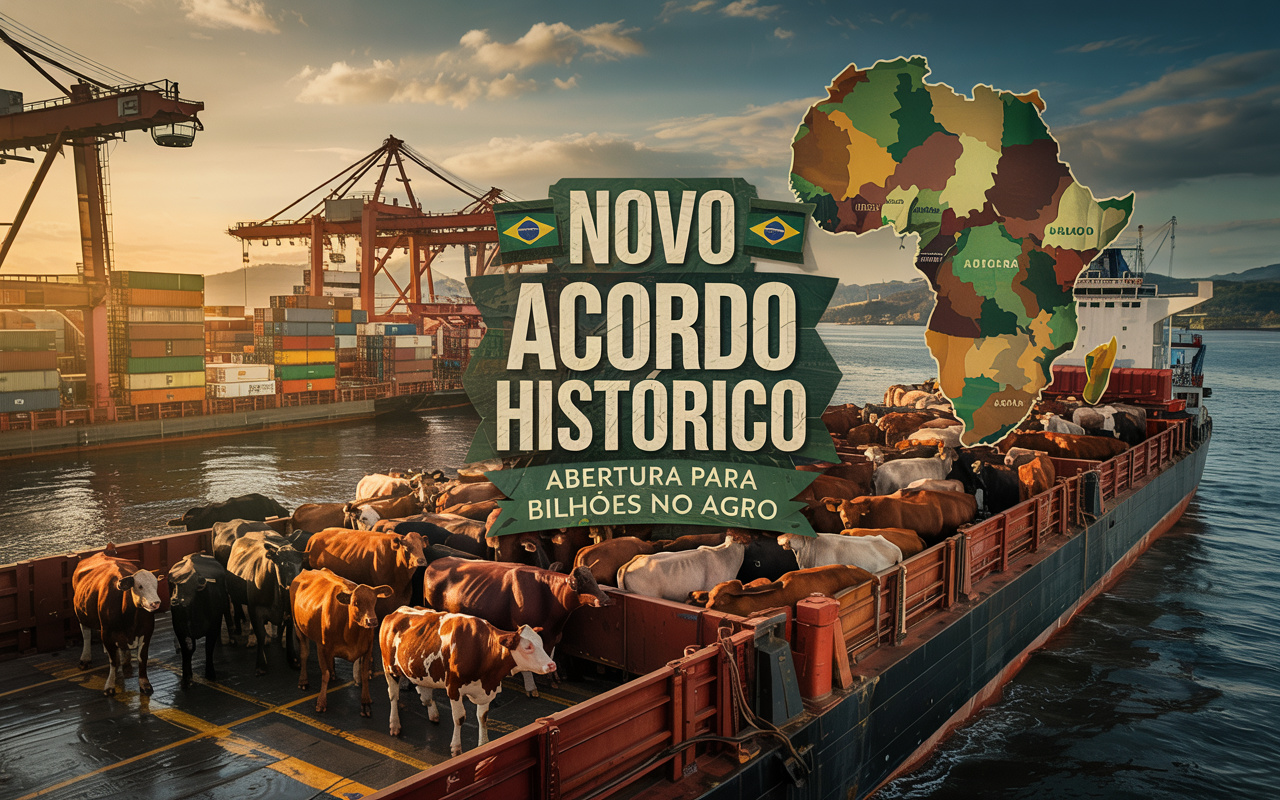


Brazil Started Beef Exports to Kenya in 2025, a Country That Had Never Imported the Product. Historic Agreement Opens New Route in Africa.
The year of 2025 has been very positive for the Brazilian agribusiness. For the first time, Kenya, in East Africa, officially authorized the import of beef from Brazil. Until then, the African country had not received a single shipment of Brazilian beef. The opening of the market was confirmed after the approval of the International Sanitary Certificate (ISC), which allows the entry of fresh meat, offals, and other beef derivatives.
This decision, which took effect at the beginning of January 2025, places Brazil in an even more strategic position on the African continent. More than just opening space for future shipments, the agreement serves as an international showcase and reinforces the image of the country as a global guarantor of animal protein, at a time when food security has become a global priority.
Kenya on Brazil’s Radar
Kenya currently has a population of over 55 million inhabitants, with an average annual economic growth of 5%, according to the World Bank. Although it has a cattle-raising tradition, local production faces structural bottlenecks, such as input shortages, climate vulnerability, and low productivity.
-
The sugar-energy sector advances with agricultural technology, but agricultural productivity still raises concerns.

-
The eggshell that almost everyone throws away is made up of about 95% calcium carbonate and can help enrich the soil when crushed, slowly releasing nutrients and being reused in home gardens and vegetable patches.

-
This farm in the United States does not use sunlight, does not use soil, and produces 500 times more food per square meter than traditional agriculture: the secret lies in 42,000 LEDs, hydroponics, and a system that recycles even the heat from the lamps.

-
The water that almost everyone throws away after cooking potatoes carries nutrients released during the preparation and can be reused to help in the development of plants when used correctly at the base of gardens and pots, at no additional cost and without changing the routine.



By authorizing the import of Brazilian beef in 2025, Kenya seeks not only to strengthen its internal supply but also establishes a new level in its commercial relationship with Brazil.
Until last year, Brazilian exports of animal protein to Africa were concentrated in Northern countries like Egypt and Morocco, along with some partners in Sub-Saharan Africa, such as South Africa and Nigeria. Now, the export map expands towards East Africa.
The Strength of Brazilian Agriculture in 2025
Brazil has been the largest beef exporter in the world for over a decade, accounting for about 25% of global sales. In 2024, the sector recorded shipments close to US$ 10.8 billion, according to the Brazilian Association of Exporting Beef Industries (ABIEC).
The expectation for 2025, with the entry of Kenya and other newly opened markets, is to exceed the mark of US$ 11 billion.
For producers, the impact goes beyond revenue. Entering a new market is seen as a seal of international trust. Once validated by local sanitary systems, Brazilian products are likely to gain space in neighboring countries and trade partners of the new importer.
In the case of Kenya, which is a member of the East African Community (EAC), this approval may be the entry point for countries like Tanzania, Uganda, and Rwanda.
A Market That Can Yield Billions
Although the initial volumes of beef sent to Kenya in 2025 are relatively modest, the opening represents a strategic step. Industry estimates suggest that if the operation solidifies, African markets could generate up to US$ 500 million additional per year in Brazilian animal protein exports.
This figure may seem small compared to the billions Brazil moves with China and the USA, but its strategic value is enormous.
Africa is the fastest-growing continent in population — it is expected to double by 2050, according to the UN — and will see its demand for protein increase exponentially. Ensuring presence today means reaping dividends in the future.
The Global Dispute for Food
The Brazilian achievement in Kenya must also be analyzed in the context of a global dispute for food. Australia, India, and the United States already have a strong presence in supplying meat and grains to the African continent. In addition, China has invested in infrastructure and logistics in the region, seeking to secure supply routes.
By establishing itself as an exporter of beef to a new African country, Brazil enhances its agri-food soft power and positions itself as a central player in one of the most important geopolitical arenas of the 21st century: food security.
Logistical and Sanitary Challenges
However, not everything is a triumph. Exporting beef to East Africa requires overcoming logistical barriers. The maritime route from Brazil to Kenyan ports like Mombasa involves additional costs and longer travel times compared to traditional destinations. This may make the product more expensive for local consumers, requiring adaptation strategies.
Another sensitive issue is the sanitary requirements. By approving the Brazilian model, Kenya expects strict compliance with traceability, inspection, and disease control issues. For Brazil, this means investing in standardization of processes and transparency, reinforcing the credibility already achieved in other markets.
Comparisons with Other Markets Opened in 2025
Kenya is not the only African country that recently started importing Brazilian beef. Concurrently, Morocco authorized in 2025 the import of 20,000 tons of beef and sheep meat with zero tariff, further expanding Brazil’s presence in North Africa.
This year, Indonesia also allowed the import of bone-in beef cuts, and the Philippines approved the shipment of offals and derivatives. Together, these openings reinforce the Brazilian government’s strategy to diversify markets and reduce dependence on China, which still accounts for over 50% of national shipments.
The Internal Impact in Brazil
For Brazilian livestock farmers, the opening of the Kenyan market in 2025 could represent new business opportunities and an increase in the price of cattle. Furthermore, it strengthens the image of national beef at a time when the sector seeks to combat negative international narratives about sustainability.
By conquering unprecedented markets, Brazil demonstrates that it is possible to combine production scale with internationally recognized sanitary and environmental standards. This serves as a response to pressures from blocs such as the European Union, which is tightening environmental rules and could restrict imports.
The Future of Brazilian Meat on the African Continent
The step taken in 2025 paves the way for other African countries to follow Kenya’s example. Negotiations are underway with Ghana, Ivory Coast, and Algeria, markets that together could represent tens of millions of additional dollars in exports.
Consolidating presence on the African continent is one of Brazil’s strategic objectives for the next decade. It’s not just about selling meat, but about establishing long-term trade partnerships in a continent that will play a decisive role in the global economy by 2050.
Brazilian Meat on the Global Board of 2025
The agreement with Kenya is more than the opening of a new market: it is a historic milestone that reinforces Brazil’s vocation as a global food power.
For the first time, an African country that had never purchased domestic beef becomes a client, in a move that could inspire neighbors and generate billions in future opportunities.
In 2025, Brazilian agribusiness shows that it is not only looking to maintain leadership but expand borders, conquer unprecedented markets, and establish the country as a key player in global food security. Every shipment to Kenya is, symbolically, a brick in the construction of that future.










Extremamente útil para o desenvolvimento social do Brasil e especialmente na área do agronegócio, no momento em que o Brasil vive uma parceria econômica dessas pode oferecer mais credibilidade e independência para o setor da pecuária e assim influenciando diretamente na economia do país
Lula ja ajeitou tudo, não se preocupem. Vai beneficiar os “irmãos Batista que estao precisando de ajuda. Se o Quênia não pagar o Lula paga com os nossos impostos. Fiquem tranquilos.
Acordo “histórico”.Hoje tudo é histórico.As próximas gerações lembrarão desse importante dia e os professores lerão nos livros sobre isso!