





 Portuguese
  English
  Spanish
 5 min of reading
  0 comments


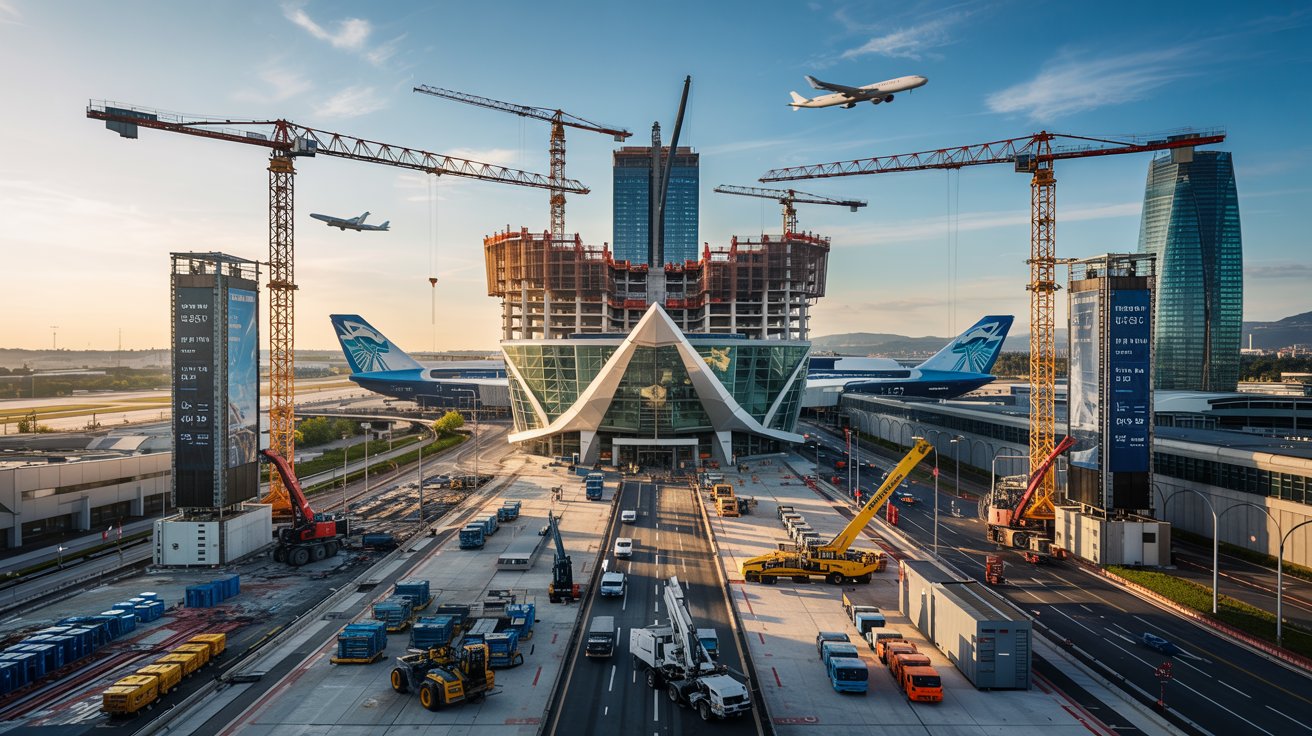
The City of Olímpia Is Going to Get a New International Airport, with Works Already Confirmed for the First Semester of 2025! With an Investment of R$ 500 Million, the Terminal Promises to Revolutionize Aviation in the Interior of SP and Generate 5,000 Jobs, Putting the City on the Map of Great Tourist and Logistics Destinations in the Country!
Works for the new international airport in Olímpia will begin in the first semester of 2025 and are expected to boost tourism, economy, and connectivity in the São Paulo interior.
The state of São Paulo will gain a new and modern international airport, with construction expected to start in the coming months.
The project will be built in Olímpia, a tourist city in the northwest of São Paulo, and is expected to boost both the air sector and the regional economy.
-
The government requests the Federal Revenue Service for a new system to automate the income tax declaration, reducing errors, time, and bureaucracy for millions of Brazilians.

-
Friends have been building a small “town” for 30 years to grow old together, with compact houses, a common area, nature surrounding it, and a collective life project designed for friendship, coexistence, and simplicity.

-
Pix in installments, international Pix, and contactless payment without internet: the Central Bank revealed the new features coming to the tool that is already used by almost every adult in Brazil.

-
This small town in Germany created its own currency 24 years ago, today it circulates millions per year, is accepted in over 300 stores, and the German government allowed all of this to happen under one condition.


According to what the city hall of Olímpia announced, the project already has CNPJ and ZIP code defined and is now moving towards the execution phase.
With an initial investment of R$ 500 million and an expectation of generating up to 5,000 direct and indirect jobs, the Olímpia International Airport is among the major infrastructure projects included in the new Growth Acceleration Program (PAC) from the Federal Government.
The proposal is ambitious: to transform Olímpia into an air connection hub with other states and countries in South America.
Federalization Guarantees Implementation by Infraero
The responsibility for the construction and management of the new airport lies with Infraero, a state-owned company that operates important airports in the country.
In October 2024, a regulation from the Ministry of Ports and Airports formalized the federalization of the terminal, transferring to Infraero the legal responsibilities for its implementation, administration, operation, and exploration.
According to the local city hall, the structure has already been registered under CNPJ 00.352.294/0220-09, with the trade name “Aeroporto de Olímpia,” and its ZIP code has been established as 15403-899.
The address is listed as Estrada Municipal OLP 382, in the Aeroporto neighborhood, the area where the infrastructure will be built.
Capacity to Accommodate Large Aircraft and Up to 1 Million Passengers Per Year
The new terminal will be built on an area of 200 hectares, located about 20 kilometers from the center of Olímpia and easily accessible via Rodovia Assis Chateaubriand, Estrada Municipal Diógenes Breda Filho, and Vicinal Natal Breda.
The initial runway will be 2,100 meters long and 45 meters wide, with potential for future expansion to 2,500 meters, allowing for landings and takeoffs of large aircraft, such as Boeing and Airbus models.
The aircraft parking area will have the capacity to accommodate up to six commercial planes simultaneously, optimizing the movement of passengers and cargo.
According to information obtained by Revista Veja, through journalist José Casado, the terminal could serve up to 1 million passengers per year, reinforcing the position of the state of São Paulo as a national air hub.
The goal is for international flights to connect Olímpia to strategic destinations in South America, enhancing tourism and commercial relations.
Olímpia: A Tourist Hub That Is Gaining Wings
The choice of Olímpia to host an international airport was not by chance.
The city has been establishing itself as one of the main tourist destinations in the São Paulo interior, with attractions that draw thousands of visitors each year.
Thermas dos Laranjais, considered one of the largest water parks in the world, and Hot Beach Olímpia, a reference in the leisure and entertainment sector, make the city a true open-air amusement park.
With the arrival of the new airport, the expectation is for a significant increase in the number of tourists, including visitors from neighboring countries such as Argentina, Paraguay, Uruguay, and Chile.
According to the city hall, tourism represents more than 70% of Olímpia’s economy, and the airport infrastructure should enhance this index.
It is estimated that the flow of international visitors could grow by up to 30% in the first two years of operation of the new terminal.
Economic Impacts and Job Creation
In addition to boosting tourism, the airport is expected to stimulate various sectors of the regional economy, with an emphasis on construction, hospitality, transportation, and services.
According to project data, around 5,000 direct and indirect jobs will be generated during the construction and operation phase.
The project also attracts the attention of investors, especially from the logistics sector.
The proximity to major industrial hubs in the São Paulo interior makes Olímpia a potential strategic base for cargo distribution.
With a runway capable of accommodating cargo planes, the airport can enhance the shipment of regional products to international markets.
Timeline and Future Expectations
The forecast is for construction to start by June 2025 and to be completed by the end of 2026, according to Infraero’s current planning.
The terminal will be built with a modular structure, allowing for future expansions as demand grows.
The project also foresees sustainable installations, such as solar panels, water reuse systems, and intelligent waste management, aligning with new environmental and operational requirements of international aviation.
With the delivery of the new airport, São Paulo will become the only Brazilian state with four international airports: Guarulhos (GRU), Viracopos (VCP), Congonhas (CGH), and now Olímpia (OLP).
This reinforces its position as the main air corridor in Latin America.
Regional Development Depends on Connectivity
For logistics and infrastructure experts, the decentralization of flights is an efficient strategy to reduce the overload of existing airports and facilitate access to regions further away from major urban centers.
Olímpia, due to its tourist vocation and privileged location, fits perfectly into this new logic.
According to an analysis by journalist José Casado, the construction of the airport also represents an attempt by the federal government to promote large-scale projects outside major centers, giving visibility to medium cities and promoting greater balance in national development.
Conclusion: Olímpia About to Take Off Towards a New Cycle
With the start of construction expected in the coming months and a robust investment planning, the Olímpia International Airport promises to transform the economic and tourism landscape of the São Paulo interior.
The project represents not only a milestone in Brazil’s air transport infrastructure but also a bet on the interiorization of development.
What do you think, can a new international airport really change the fate of a city like Olímpia? Leave your opinion in the comments!








Seja o primeiro a reagir!