





 English
  Francês
  Alemão
  Italiano
  Japonês
  Norueguês
  Portuguese
  Spanish
  4 min of reading
  0 comments


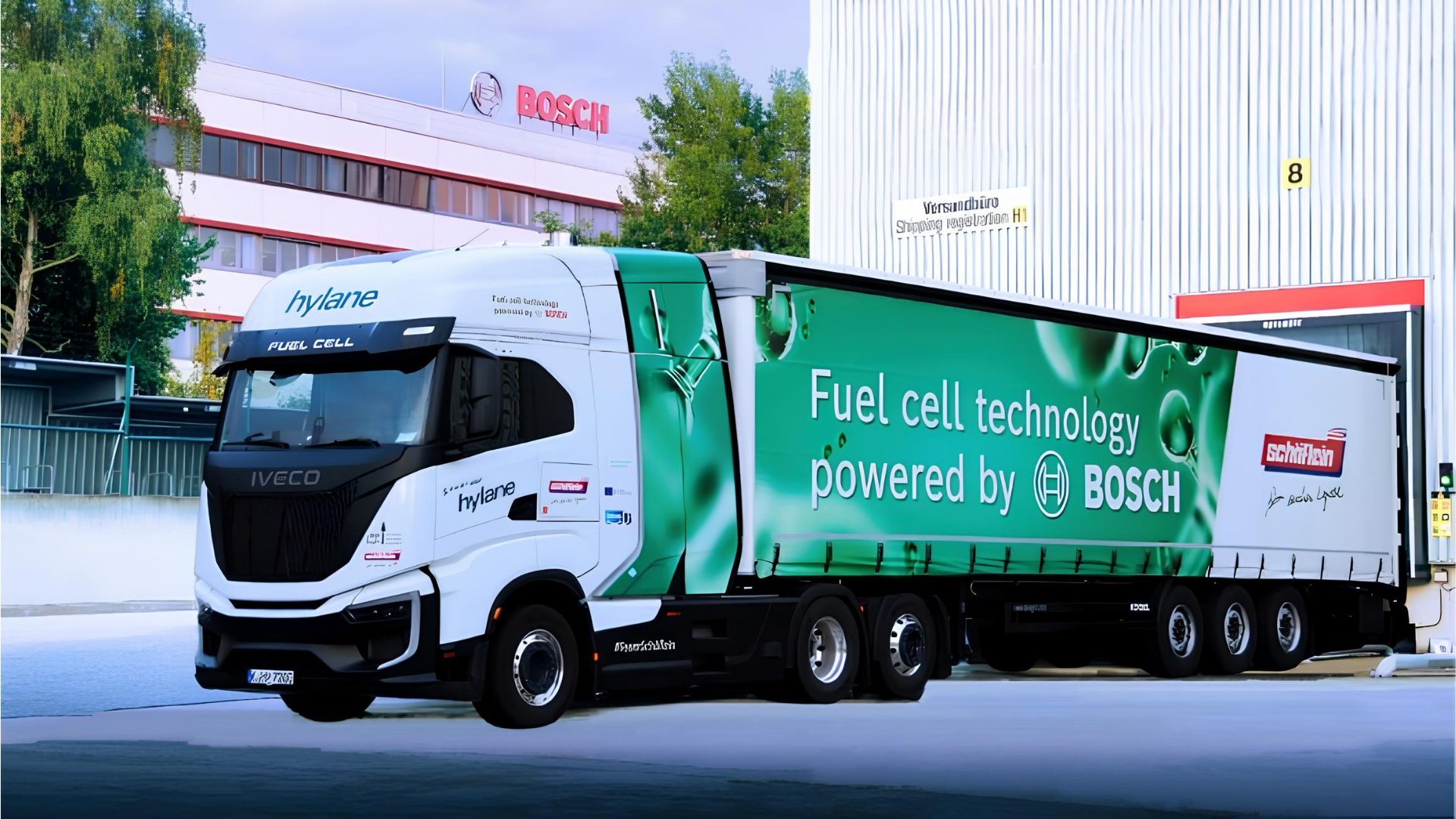
Bosch and Iveco Expand Sustainable Mobility with an Innovative Hydrogen Truck Designed for Long Distances and Lower Environmental Impact in Heavy Transportation
Bosch and Iveco announced a milestone in the heavy transportation industry: the launch of a new hydrogen truck with a range of up to 800 km and a payload capacity of 40 tons.
According to a report released by Estradão this Wednesday (5), the vehicle, which is already in operation at Bosch’s factory in Nuremberg, Germany, represents a significant advancement in sustainable mobility, offering a clean and efficient alternative to diesel-powered transportation.
Bosch and Iveco Partnership: Innovation and Sustainability with Hydrogen
The partnership between Bosch and Iveco is strategic to accelerate the energy transition in the logistics sector. Bosch, a global reference in industrial technology, developed the Fuel Cell Power Module (FCPM), a fuel cell system that powers the new truck. Iveco, a manufacturer of commercial vehicles, contributed its automotive engineering expertise to enable the project.
-
With earth, bamboo, straw, and lime mortar, a specialist builds a house for just over $460 and draws attention for its cost being much lower than traditional construction.

-
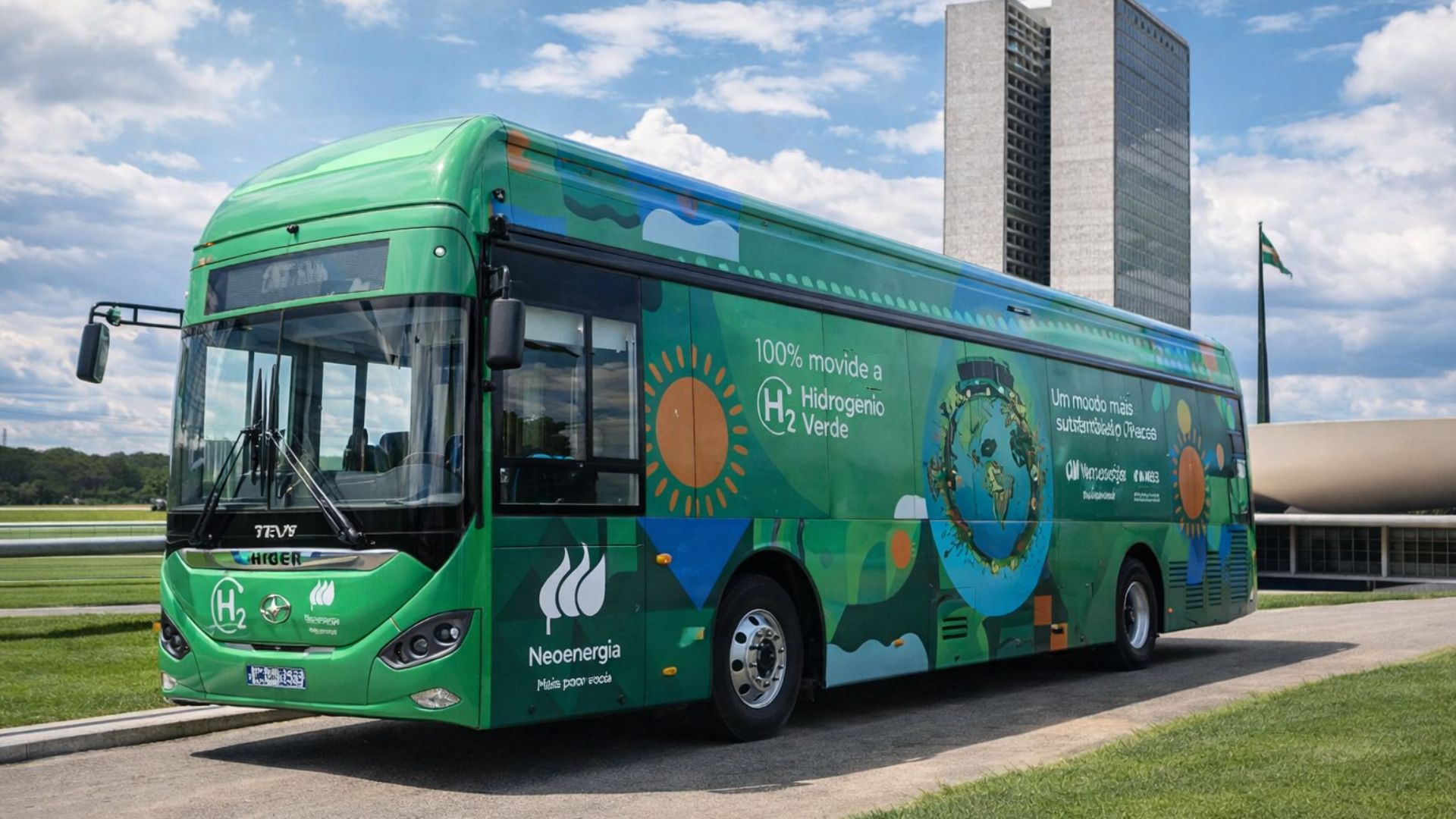
The Federal District bets on innovation and sustainability by launching a hydrogen-powered bus on a new tourist route, promising to reduce emissions and transform the urban experience for residents and visitors.
-
Rodrigo de Freitas Lagoon advances in environmental recovery with sanitation, elimination of irregular sewage, and the resumption of water sports in Rio de Janeiro.

-
Sustainable housing gains strength with a nationally awarded project in Campo Grande, highlighting innovative solutions that combine sustainability, urban integration, and efficiency in the use of natural resources.


The truck is powered by renewable hydrogen, ensuring zero carbon emissions during its operation. This technology is considered one of the most promising for the future of freight transport, especially on long-distance routes.
Technical Features of the New Hydrogen Truck
The model presented by the companies has specifications that place it among the most advanced in the market:
- Range of up to 800 km on a single hydrogen charge
- Payload capacity of 40 tons, ideal for industrial operations
- Electric propulsion through fuel cell, with no emissions of pollutants
- Initial operation at Bosch’s factory in Nuremberg
- Vehicle leased from Hylane and operated by Schäflein
In addition, the truck features a fast refueling system, allowing refueling in just a few minutes, making it competitive with traditional diesel-powered models.
Hydrogen Truck and Its Impact on Sustainable Mobility
The introduction of hydrogen-powered trucks is a direct response to the environmental challenges faced by the transportation sector. According to the International Energy Agency (IEA), the transportation sector is responsible for about 23% of global CO₂ emissions related to energy, with road transport being the main contributor within this segment.
Replacing combustion vehicles with sustainable models is essential to reach decarbonization goals. The use of green hydrogen — produced by electrolysis with renewable sources — makes the truck’s propulsion system climatically neutral. This means that, in addition to not emitting pollutants during operation, the process of generating fuel also does not contribute to global warming.
Practical Applications and Initial Operation of the Bosch-Iveco Truck
The new truck is being used for internal transportation of goods at Bosch’s factory in Nuremberg. The operation is conducted by Schäflein, specialized in sustainable logistics, which leases the vehicle from Hylane, a provider of emission-free trucks.
This initial phase aims to test the logistical and operational viability of the model in an industrial environment. The expectation is that, after this phase, the truck will be integrated into commercial routes, expanding its positive impact on the sector.
The truck is equipped with five hydrogen tanks, which collectively store up to 70 kg under a pressure of 700 bar. It also features an electric axle powered by two additional batteries, allowing it to achieve a total power output of 400 kW — equivalent to about 540 horsepower.
In addition to offering a range of up to 800 km, the model stands out for its quick refueling, comparable to the time needed to refuel a conventional diesel truck.


Challenges for Large-Scale Adoption
Despite technological advancements, the use of hydrogen as fuel still faces significant obstacles:
- Limited refueling infrastructure, with few stations available
- High production cost of green hydrogen, still not competitive
- Need for public policies to incentivize, such as subsidies and regulations
However, initiatives like those of Bosch and Iveco show that the technology is ready to be adopted. With investments in infrastructure and government support, it is possible to accelerate the transition to a cleaner and more efficient fleet.
Technical Specifications of the New Bosch-Iveco Hydrogen Truck
| Manufacturers | Bosch (technology) + Iveco (vehicle) |
| Model | Hydrogen truck with fuel cell |
| Type of Propulsion | Electric through fuel cell (Fuel Cell Power Module – FCPM) |
| Fuel | Renewable hydrogen (green) |
| Range | Up to 800 km on a single charge |
| Payload Capacity | 40 tons |
| Emissions | Zero carbon emissions during operation |
| Current Operation | Internal transport at Bosch’s factory in Nuremberg |
| Operating Company | Schäflein Logistics |
| Vehicle Supplier | Hylane (leased model) |
| Initial Application | Internal industrial logistics |
| Objective | Operational testing and logistical viability for future commercial expansion |
Path to the Future: The Role of Sustainable Mobility
Sustainable mobility is more than a trend — it’s a global necessity. The transportation sector needs to reinvent itself to meet the environmental, social, and economic demands of the 21st century. The hydrogen truck from Bosch and Iveco is a concrete example of how innovation can be applied to solve real problems.
With a range of 800 km, payload capacity of 40 tons, and clean propulsion, the new truck represents a robust solution for heavy cargo transportation. Its initial operation in an industrial environment demonstrates that the technology is ready to be scaled.
Companies, governments, and consumers must join forces to accelerate this transformation. Investments in infrastructure, tax incentives, and clear regulations are essential to enable large-scale adoption.








-

2 pessoas reagiram a isso.