





 English
  Francês
  Alemão
  Italiano
  Japonês
  Norueguês
  Portuguese
  Spanish
  3 min of reading


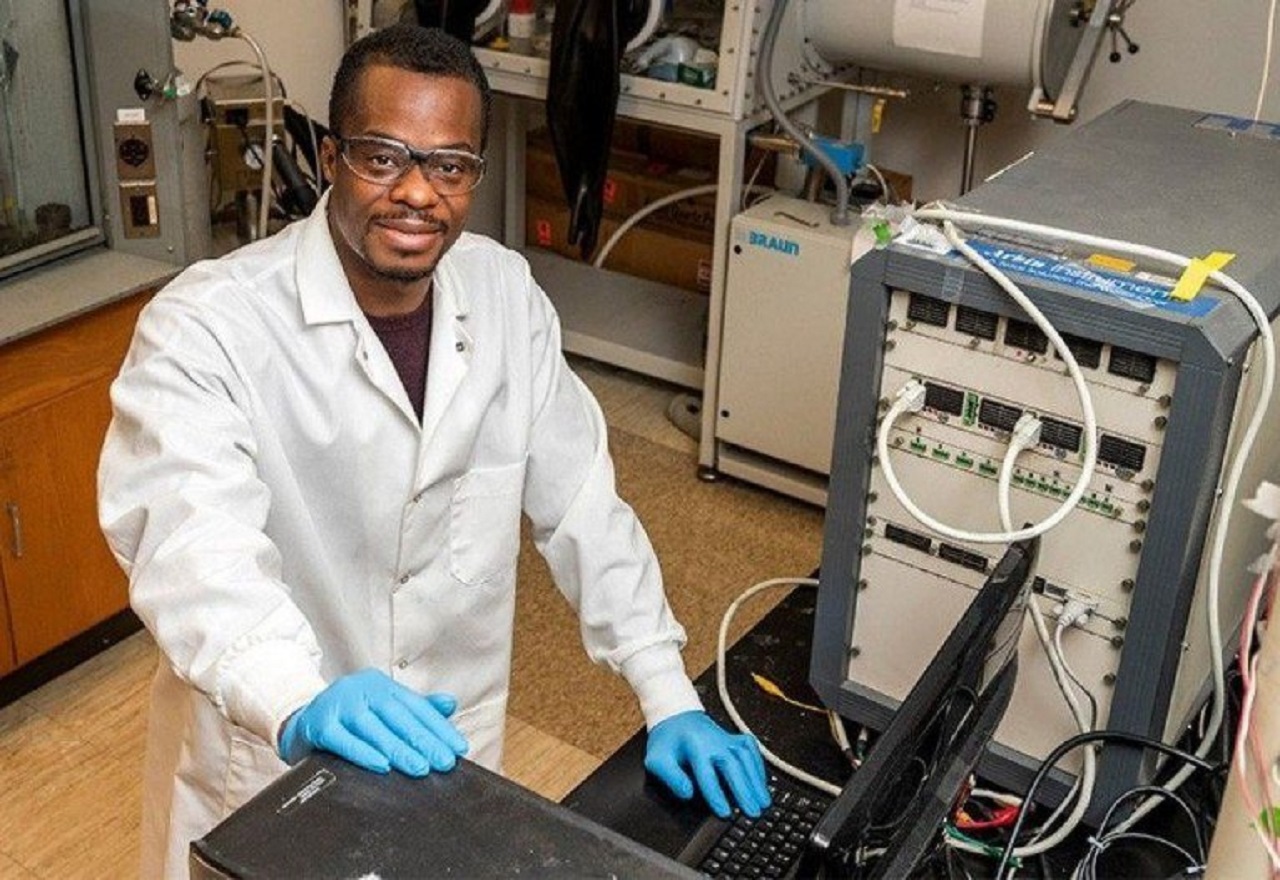
Considering the Possibility of Giving the Automotive Industry the Viability to Develop Hydrogen Cars, a Laboratory in the United States Has Been Committed to Research for the Development of a Catalyst That Can Extract Hydrogen More Easily, Quickly, and Efficiently
Researchers at the Ames Laboratory, which belongs to the U.S. Department of Energy, have created a new type of catalyst that is capable of extracting hydrogen from storage systems more simply and efficiently. During the research advancements, scientists were able to make the entire process occur at room temperature, and without the need to use metals or additives. The idea is to accelerate the arrival of hydrogen cars in the global automotive industry.
Read Also
Improvement in Hydrogen Storage Methods
It is of fundamental importance to improve hydrogen storage capacity to enable the development of more sustainable fuel cells, helping to reduce dependence on fossil fuels and, consequently, the emissions of toxic gases such as carbon dioxide (CO2), which are released directly into the Earth’s atmosphere.
-
Engineers propose a fourth traffic light for intersections – the change promises to affect crossings, queues, and waiting times.

-
Chevrolet Suburban Z71 lands in Brazil with a V8 engine, off-road design, air suspension, seven seats, and colossal size, a rare version imported for around R$ 1.3 million with luxury and exclusivity.

-
The Chevrolet Onix 1.0 turbo achieves 17.7 km per liter on the highway and ranks among the three most economical cars in Brazil in 2026, alongside two more expensive Toyota hybrids available at dealerships.

-
Little sister of the Hilux: Toyota launches Land Cruiser FJ with 4 radical versions, 2.7 engine with 166 hp and 4×4 traction with locking.

According to explanations from chemical engineer Long Qi, one of the main ways to store hydrogen is chemically. However, for chemical storage to be done, it requires dependence on materials that react with hydrogen molecules and retain them in atomic form. Qi’s team is responsible for optimizing this process using a class of materials known as liquid organic hydrogen carriers, or LOHCs.

Importance of Chemical Storage
With the use of chemical storage, large amounts of hydrogen can be stored in small volumes at room temperature. However, for this hydrogen to be useful, a catalyst that can release it is necessary.
This process is called dehydrogenation. In some methods, it is necessary to use a metal-based catalyst, which belongs to the platinum group, a rather expensive and limited supply. In other cases, there is a need for non-reusable additives to release hydrogen, something that can further increase production costs, as these additives have to be added in each new cycle.
According to Qi, the catalyst developed in his laboratory is composed of carbon and nitrogen, with the latter being the basis that makes this system much more efficient. The catalytic activity process occurs at room temperature because the graphitic nitrogen formed during the carbonization process facilitates the release of hydrogen molecules.
The Automotive Industry Will Be the Main Beneficiary of the Fuel of the Future, Obtained Through the Catalyst
According to Qi’s research team, for this incredible technology to be applied in the automotive industry so that it can eventually manufacture less polluting vehicles—namely, hydrogen cars—the total hydrogen storage capacity needs to be close to 6.5% of its gross weight.
The researchers believe that this percentage can be achieved very soon through the creation of an even more efficient catalyst system. In addition, another advantage of this system is that the extraction of hydrogen from storage devices can occur at a much lower cost, providing a supercharge of hydrogen and supplying much more energy for cars to fuel with this fuel of the future, giving them the ability to cover much greater distances.
Professor of chemical and biological sciences Wenyu Huang, co-author of the study, stated that this research will have a very positive impact when applied for the purpose of reducing CO2 emissions, making the automotive industry produce hydrogen cars that are much less polluting and more efficient.










Seja o primeiro a reagir!