





 Portuguese
  English
  Spanish
  5 min of reading
  0 comments


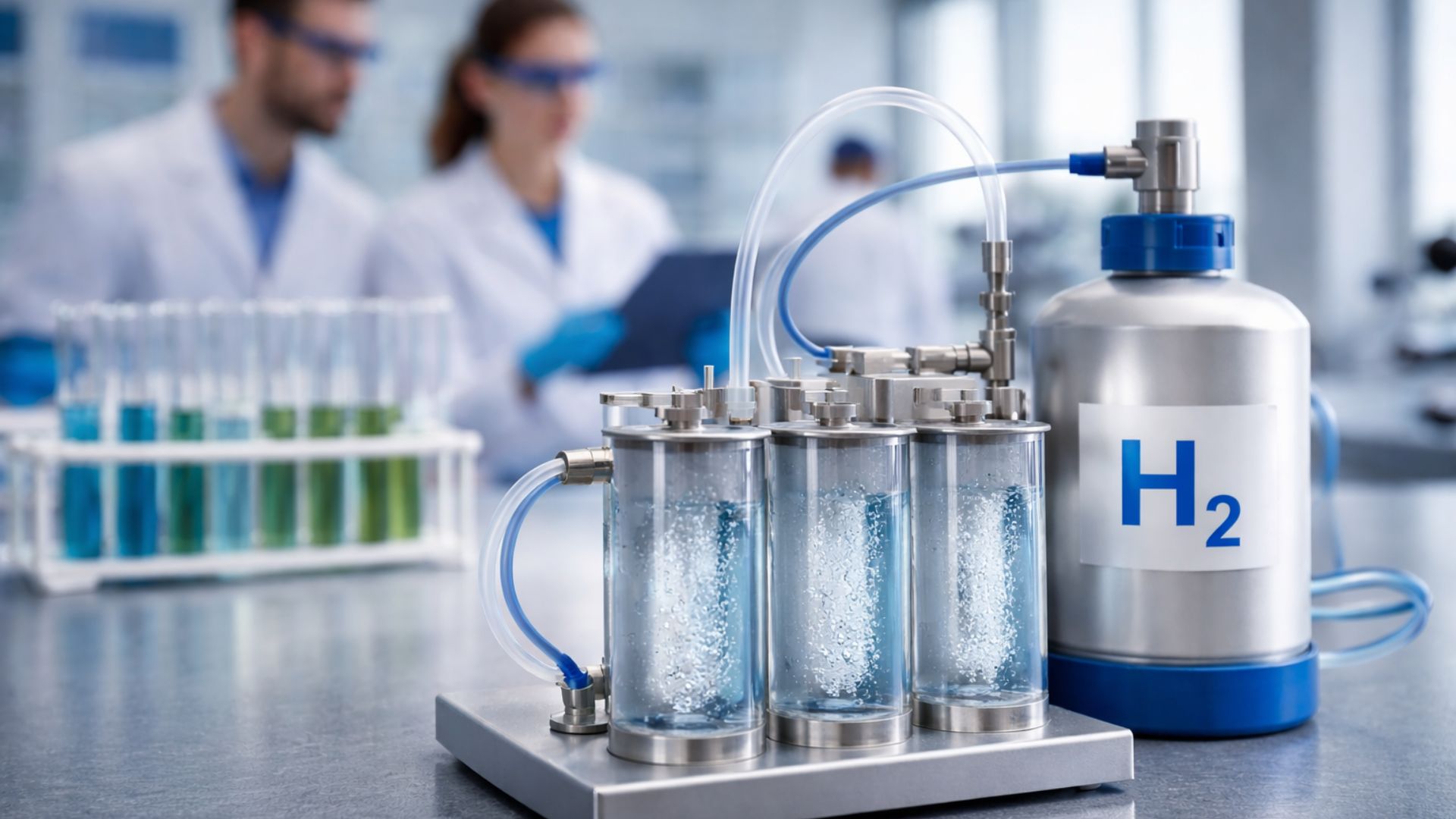
Scientific Discovery in 2026 Reveals a New Catalyst Capable of Transforming Carbon Dioxide into a Clean Fuel Alternative. The Technology Uses Manganese, Reduces Costs, and Advances Global Energy Sustainability.
In 2026, a new catalyst developed by scientists from Yale University and the University of Missouri caught the attention of the scientific community and the global energy sector. According to an article published by the website Segunda Base and Science Daily this Tuesday (3), the study demonstrates an innovative technology capable of converting carbon dioxide into formate, a chemical compound considered strategic for hydrogen storage and application in fuel cells. The differential of the research lies in the use of manganese, an abundant metal that is low-cost and has a lower environmental impact compared to the precious metals traditionally used.
Technology and New Catalyst Developed by Yale and Missouri
Right from the start, the study makes its impact clear: transforming one of the main gases responsible for climate change into clean fuel, efficiently and scientifically proven. In a scenario of pressure for decarbonization and energy transition, the discovery reinforces the role of chemistry applied to sustainability and industrial innovation.
The study was conducted by Justin Wedal, a doctoral student at Yale University, and Kyler Virtue, a graduate student at the University of Missouri. The research was supervised by Professor Neela Hazari from Yale and Professor Wesley Bernskoetter from the University of Missouri. The scientific article was published in a specialized chemistry journal, funded by the Office of Science of the United States Department of Energy.
-
The Brazilian state accelerates industrial competitiveness with a focus on the extraction of strategic minerals to boost the energy transition in Goiás.
-
A Canadian retiree creates a hydroelectric system on a real river, generating energy continuously throughout the day and demonstrating how the power of water can supply a house with stability even in a simple structure.

-
Petrobras reaffirms its commitment to the market and ensures that it will carry out the energy transition safely to maintain national sovereignty.

-
Researchers discover a possible hydrogen deposit of up to 46 million tons beneath an ancient coal basin, and the volume could exceed half of the entire global production.


The central focus of the work was the development of a new catalyst capable of promoting the chemical conversion of carbon dioxide with high efficiency and stability. The innovation lies not only in the material chosen but also in the molecular architecture that supports the reaction, demonstrating a relevant advancement in catalytic technology.
Why Carbon Dioxide Became a Priority in Energy Research
The carbon dioxide is the main gas associated with global warming, a direct result of burning fossil fuels and industrial processes. At the same time, it is an abundant source of carbon, making it a strategic target for chemical reuse.
According to Professor Neela Hazari, the use of CO₂ as a renewable chemical feedstock is now a global priority. Replacing petroleum-derived inputs with recycled carbon directly contributes to the sustainability of the chemical industry, reducing emissions and dependence on non-renewable resources.
Therefore, converting carbon dioxide into value-added products represents a paradigm shift: the gas is no longer just an environmental liability and begins to integrate long-term energy solutions.

Clean Fuel and Sustainability with the Use of Formate
The product generated by the catalytic process is formate, whose protonated form is formic acid. This compound is already produced industrially on a large scale, being used as a preservative, antibacterial agent, and in leather tanning. In recent years, it has also started being studied as a promising energy vector.
Formate is considered an efficient means of hydrogen storage, as it can release it in a controlled manner to fuel cells. This positions it as a viable alternative for clean fuel production, especially when obtained from carbon dioxide captured from the air or industrial processes.
Currently, however, most of the formate available on the market still relies on fossil fuel-based routes, which limit its environmental benefits. The new catalyst represents precisely the possibility of breaking away from this model, strengthening the sustainability of the process.
The Challenge of Metallic Catalysts in the Conversion of CO₂
The chemical conversion of carbon dioxide requires the presence of an efficient catalyst. Historically, the most effective systems have used precious metals. Despite good performance, these materials have high costs, low availability, and significant environmental impacts.
More abundant metals, such as iron, cobalt, or manganese, have always been considered interesting alternatives. However, the main challenge was the low stability of these catalysts, which degraded quickly during the reaction, reducing their efficiency over time. This technical barrier limited the industrial application of the technology and pushed away solutions more aligned with sustainability and circular economy.
How the New Manganese Catalyst Overcame Historical Limitations
The research team managed to overcome this challenge through an innovative approach in the molecular design of the catalyst. By redesigning the structure of the ligand and adding an extra donor atom, the scientists significantly increased the stability of the catalytic system.
Ligands are molecules that bind to the central metal atom and directly influence its reactivity. The structural modification allowed manganese to maintain its catalytic activity for a longer time, even under demanding conditions.
According to Justin Wedal, the results demonstrate how small changes in molecular design can have significant impacts. The new catalyst showed performance comparable to that of precious metal-based catalysts, reinforcing the potential of the technology developed.
Fuel Cells and the Role of Clean Fuel
Hydrogen fuel cells convert chemical energy directly into electricity, with virtually no pollutant emissions. They are considered one of the most promising solutions for decarbonizing sectors such as heavy transport, stationary generation, and decentralized energy systems.
The main hurdle has always been the storage and transportation of hydrogen. In this context, formate emerges as an efficient intermediate solution, facilitating logistics and reducing risks. When produced from carbon dioxide, it further reinforces the concept of clean fuel and a low-carbon economy. The new catalyst enhances the technical viability of this route, bringing academic research closer to commercial applications.
Broader Impacts of Technology for Sustainable Chemistry
In addition to the conversion of carbon dioxide into formate, researchers believe that the principles used in the design of the new catalyst can be applied to other chemical reactions. This paves the way for a new generation of catalysts based on abundant metals, with lower costs and lower environmental impact.
The research also involved the participation of scientists Brandon Mercado and Nicole Picut from Yale University. Support from the United States Department of Energy reinforces the strategic relevance of the study and its alignment with innovation and sustainability energy policies.
A Decisive Step Toward a Low-Carbon Economy
The development of the new manganese-based catalyst represents a concrete advancement in the search for cleaner, more efficient, and accessible energy solutions. By transforming carbon dioxide into formate in a stable and efficient manner, the research demonstrates how science and technology can work together to tackle global climate challenges.
In 2026, as decarbonization targets become increasingly stringent, the possibility of producing clean fuel from a greenhouse gas reinforces the strategic role of sustainable chemistry. More than an academic advance, the study points to real applications that could redefine the relationship between industry, energy, and the environment in the coming decades.








Seja o primeiro a reagir!