





 Portuguese
  English
  Spanish
  3 min of reading
  0 comments


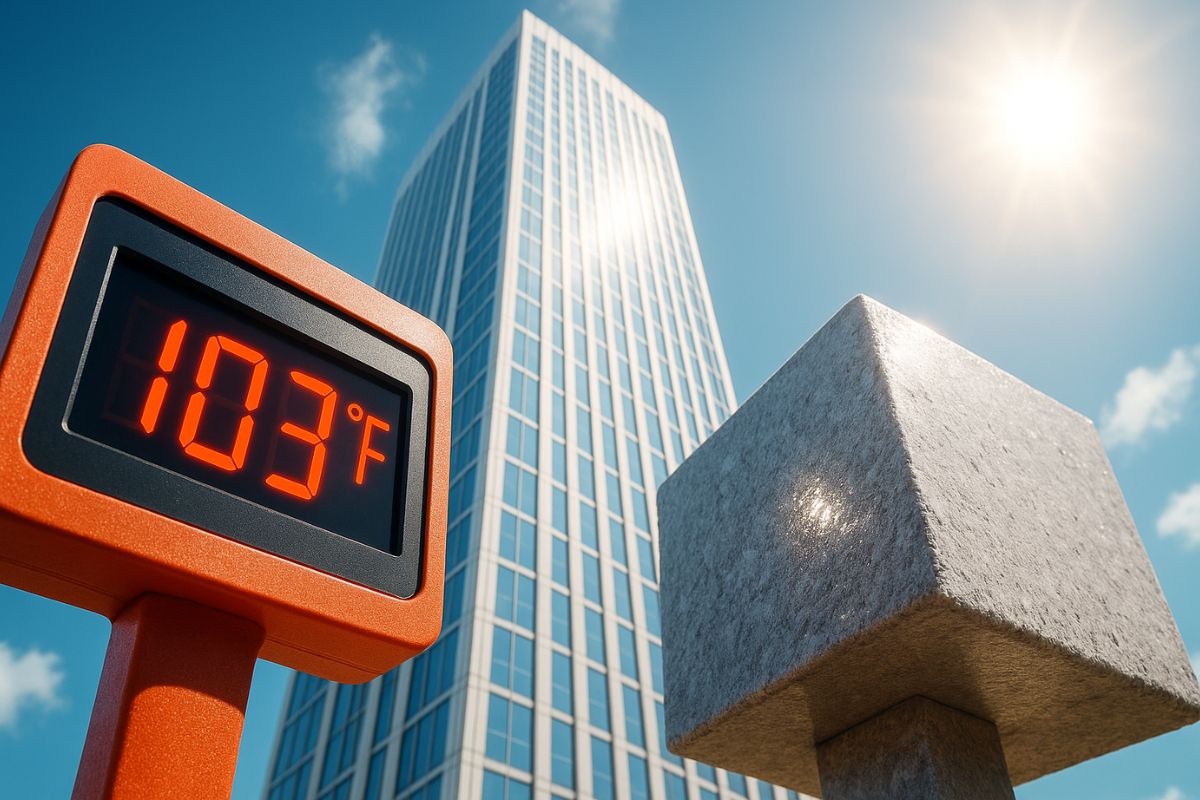
Goodbye, Air Conditioning? New Cement Keeps Buildings Cooler Than The Ambient Air. Chinese Researchers Created A Material Capable Of Reflecting The Sun And Reducing The Internal Heat Of Buildings, Offering A Sustainable Alternative For The Future Of Cities.
A scientific breakthrough may change the way we face extreme heat in the coming decades. Studies published in the journal Science Advances show that a new cement keeps buildings cooler than the ambient air, reducing the need for air conditioning and providing a sustainable solution to tackle climate change.
According to Olhar Digital, the innovation was developed by scientists from the Southeast University in China, in partnership with Purdue University in the United States. In initial tests, buildings made with the material were found to be 5.4 °C cooler than the external air temperature, even under intense sunlight.
How Does The New Cement Work?
Traditional cement absorbs solar radiation and retains heat, contributing to thermal discomfort in urban environments. To address this issue, researchers incorporated ettringite crystals into the new material, which are capable of reflecting sunlight and emitting heat instead of trapping it.
-
In Mexico, a 3,000-year-old Maya site with the dimensions of an entire city may have been built as a colossal map of the cosmos, created to represent the order of the universe and reveal how this people organized space, time, and rituals.

-
Japan wants to build a solar ring of 10,900 kilometers on the Moon to continuously send energy to Earth.

-
Weighing almost 1 ton, with temperatures of up to 3,000°C, the ability to launch 10,000 fragments within a radius of 1 km, capable of penetrating concrete and melting steel, Turkey’s terrifying bomb emerges as one of the most destructive non-nuclear weapons ever presented.

-
After a submarine disappeared beneath the “Doomsday Glacier,” scientists announce a new monstrous machine capable of operating at 3,000 meters depth to return to the heart of the ice and investigate a threat that could raise sea levels worldwide.


This mechanism creates a natural cooling effect, preventing the surfaces of buildings from heating up as much. In practice, the cement transforms buildings from “heat absorbers” into “heat reflectors”, reducing the “heat island” effect common in large cities.
Testing Results And Durability
In tests conducted on the roof of Purdue University, the material proved effective not only in reducing temperature but also in terms of strength and durability. The new cement keeps buildings cooler than the ambient air without losing its essential mechanical properties, ensuring viability for large-scale use.
Additionally, environmental and optical analyses showed that the material withstands adverse conditions, maintaining its properties even after prolonged exposure to sunlight and rain.
Potential Environmental And Economic Impact
One of the most important points of the study is that, with the support of artificial intelligence algorithms, scientists calculated that the new cement could achieve a negative carbon footprint in up to 70 years. This means it could help reduce greenhouse gas emissions in one of the most polluting industries on the planet: construction.
Today, buildings consume about 40% of all global energy, much of it used for cooling systems. If the new cement is adopted on a large scale, energy consumption could drop drastically, lowering costs for families and businesses, as well as reducing pressure on the electrical system during periods of extreme heat.
The Future Of Cities Could Be Cooler
Experts say this type of technology could mark a turning point in how we build cities. The new cement keeps buildings cooler than the ambient air and can be applied to roofs, façades, and sidewalks, transforming urban areas into more livable spaces.
The innovation also reinforces the importance of sustainable solutions to face the increase in global temperatures. In a scenario of record warming, smart materials like this can be key allies to reduce climate impacts and improve quality of life.
The development of this innovative cement shows that science can provide real alternatives to reduce reliance on air conditioning and create more sustainable cities.
And you, would you live in a building made with this new cement? Do you believe it could replace air conditioning in the future? Share your opinion in the comments; we want to hear from those facing the challenges of heat in large cities.







Seja o primeiro a reagir!