





 Português
  Inglês
  Espanhol
  3 min de leitura
  1 comentário


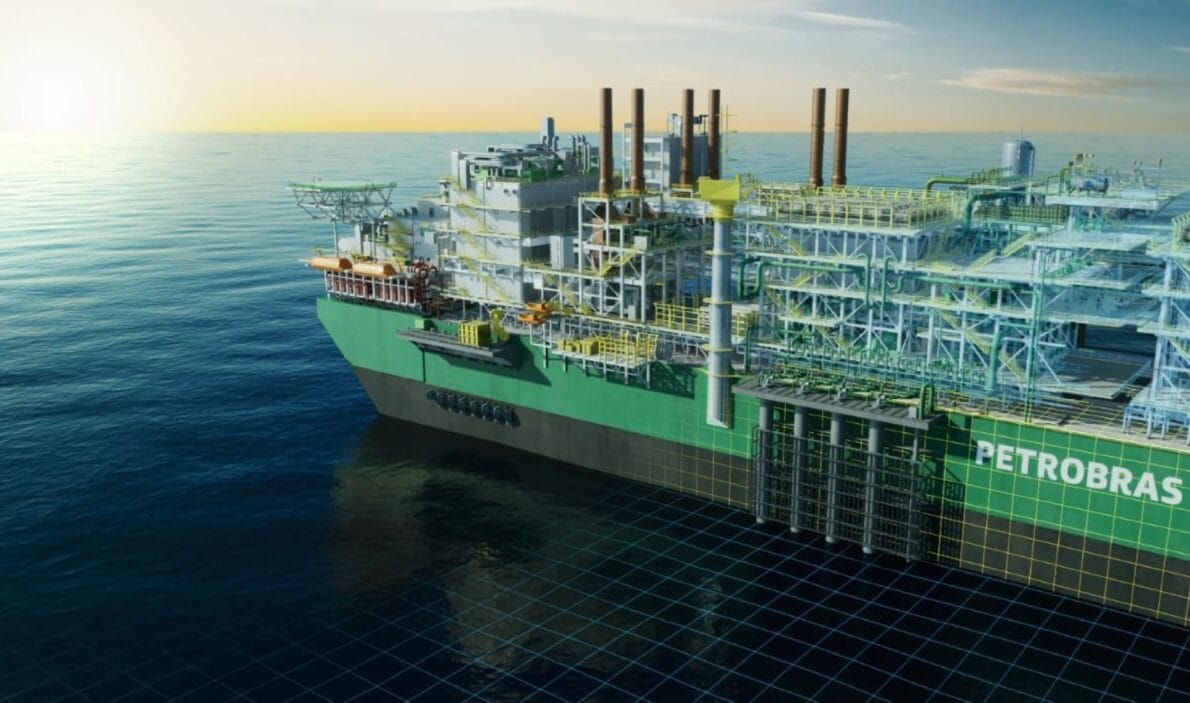

The New Platforms Will Be Installed in the Atapu and Sépia Fields, in the Pre-Salt Layer of the Santos Basin, with Production Expected to Begin in 2029 and 2030
In a strategic move to expand its operations in the pre-salt, Petrobras has signed contracts with Seatrium for the acquisition of two new oil FPSO platforms, P-84 and P-85. These oil contracts mark a significant step for the exploration of the Atapu and Sépia fields, in ultra-deep waters of the Santos Basin, according to the website Petronotícias.
Participation of the Brazilian Shipbuilding Industry
Despite the importance of the oil contract between Petrobras and Seatrium, the participation of the Brazilian shipbuilding industry in the works will be limited. The P-84 and P-85 platforms will have a local content of only 20% and 25%, respectively. Most of the construction of the oil platforms will be carried out in Singapore, home to Seatrium, and in China. Brazilian shipyards, such as BrasFELS in Angra dos Reis (RJ) and Jurong Aracruz in Aracruz (ES), will need to focus on the construction of modules and commissioning.
Currently, the BrasFELS shipyard is involved in the construction and assembly of modules for the P-78 platform, intended for the Búzios field. The Jurong Aracruz shipyard recently completed the FPSO Anita Garibaldi, which began operations in August 2023.
-
Offshore industrial demand in Macaé skyrockets with the recovery of oil and gas and could grow by up to 396% by 2026 in the Campos Basin.
-
Offshore industrial demand in Macaé surges with the recovery of oil and gas and could grow by up to 396% by 2026 in the Campos Basin.
-
Brazilian giant expands borders in the Southeast: Petrobras confirms new oil discovery in ultra-deep waters in the pre-salt of the Campos Basin.

-
Alert in the global energy market: Severe tropical cyclone hits the coast and disrupts gas production at major plants in Australia, threatening global supply.


Capacity and Efficiency of the New Platforms of Petrobras and Seatrium
Each of the new platforms will have a daily oil production capacity of 225 thousand barrels and a processing capacity of 10 million cubic meters of gas. In the Atapu and Sépia fields, the platforms will join the already operational P-70 and FPSO Carioca, enhancing production in these locations.
The P-84 and P-85 projects stand out for their efficiency in reducing emissions. It is estimated that the greenhouse gas emissions intensity per barrel of oil equivalent produced will be reduced by 30%, positioning these units among the most efficient to come into operation in Brazil. This efficiency is due to the adoption of advanced technologies such as the All Electric configuration, optimizations in the processing plant, ventilated gas recovery, deep seawater intake, use of variable speed drives, cogeneration, recovery of flare gases, and geological CO2 capture, use, and storage.
Sustainable Technologies Incorporated in Petrobras’ Contract
The P-84 and P-85 will be equipped with several sustainable technologies, including:
- Zero Routine Ventilation: Recovery of ventilated gases from the ballast tanks and the processing plant.
- Deep Seawater Intake: Use of water drawn from greater depths for cooling operations and other processes.
- Variable Speed Drives in Pumps and Compressors: Improvement in energy efficiency.
- Cogeneration (Waste Heat Recovery Unit): Utilization of waste heat for power generation.
- Zero Routine Flaring: Recovery of flare gases through a closed flare system.
- Valves with Requirements for Low Fugitive Emissions: Reduction of unintentional emissions.
- CO2 Capture, Use, and Geological Storage: Treatment and storage of CO2 produced alongside the gas.
With production expected to begin between 2029 and 2030, the P-84 and P-85 platforms represent a significant advancement for Petrobras in the exploration of the pre-salt, establishing themselves as emblematic projects both for their production capacity and sustainability.









Estamos precisando de um grande estaleiro para construção dessas plataformas no país. Temos material, mão de obra, equipamentos e projetistas, mas nos falta vontade política. Várias plataformas já foram fabricadas no Brasil com sucesso total e vários estaleiros foram fechados. Perdemos o emprego de milhares de trabalhadores e tiramos produção de nossas siderúrgicas. E depois não sabem porque existe tanta miséria no país…