





 Portuguese
  English
  Spanish
  5 min of reading
  0 comments


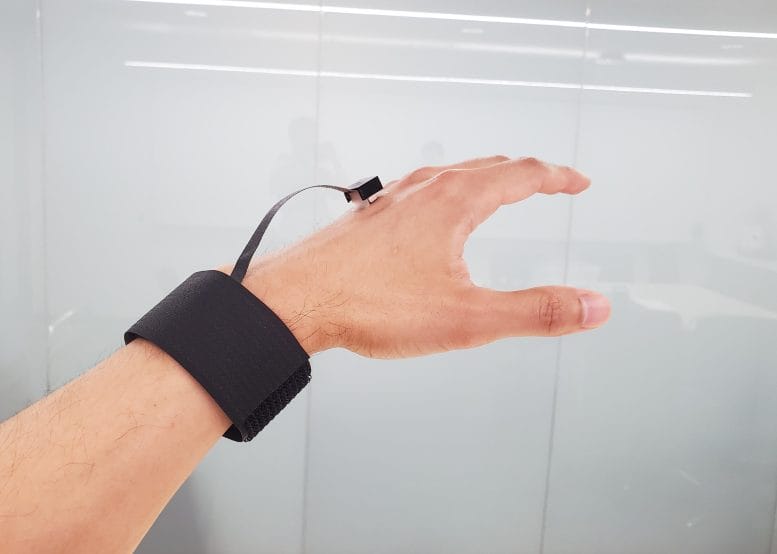
Wearable Device Simulates Human Touch with Unprecedented Precision. Innovation Could Transform Areas Like VR, Healthcare, and Remote Communication
A new technology developed by engineers at Northwestern University promises to change how we interact with the digital world. The new wearable device, compact, lightweight, and wireless, can reproduce a wide range of tactile sensations directly on the skin.
The new wearable device goes beyond simple vibrations and creates refined movements, such as pressure, twisting, sliding, and even stretching. All of this in a device that fits in the palm of your hand and can be used on any part of the body.
More Than Simple Vibrations
Currently, most haptic technologies on the market only offer limited vibration patterns. They cannot keep up with the complexity of human touch, which involves various sensors in the skin.
-
Japan is transforming dirty diapers from babies and the elderly into an ambitious and surprising project that could forever change the way the world deals with one of the most difficult types of waste to dispose of.

-
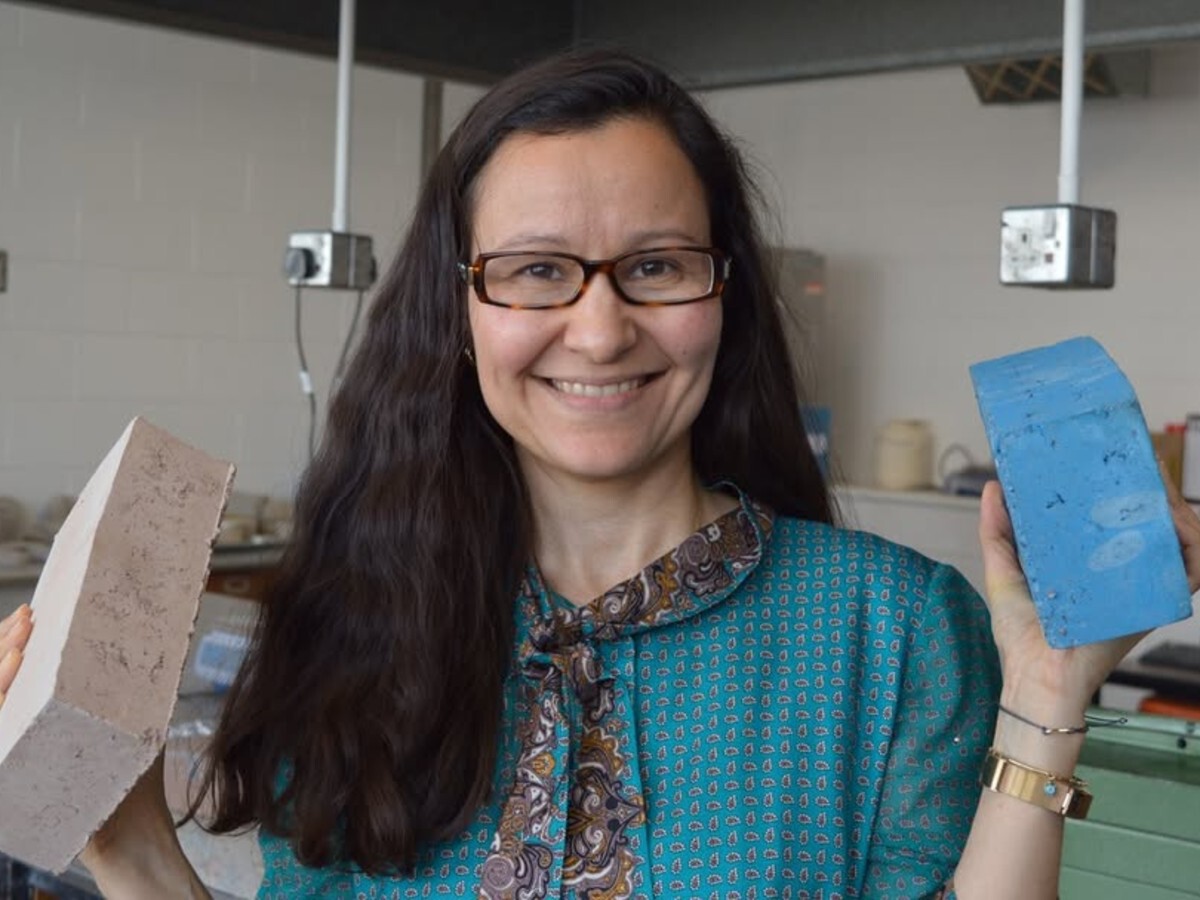
Goodbye to waste: a Brazilian created a revolutionary brick that uses construction debris, has already entered the markets of the United Kingdom and the USA, and promises to shake up the global construction industry.
-
China has created a mass-produced hypersonic missile that costs the same as a Tesla, and this is changing everything in modern warfare because the United States cannot defend itself without spending millions.

-
100% Brazilian technology transforms agricultural waste into a meat-scented ingredient using fungi from the Amazon rainforest. The process does not use excessive water or chemicals, and it also increases the nutritional value of the final product.


The new solution created by the Northwestern team aims to fill this gap. It applies controlled and directed forces to simulate what we actually feel when touching an object.
The study presenting this innovation was published in the journal Science. It shows how the new wearable device can create a more realistic sensation of touch by moving in any direction.
Through combinations of force and speed, it is possible to generate complex and subtle tactile sensations. This opens up new possibilities for the use of haptic technologies.
Small, Portable, and Wireless
The device’s structure includes a small rechargeable battery and Bluetooth connectivity. Thus, it can easily integrate with smartphones, virtual reality headsets, or wearable devices.
The idea is that it can be used in various ways, from immersive experiences to medical applications and accessibility.
The researchers point out various uses. For example, the device can simulate textures on a flat screen, which helps when buying clothes online.
It can also assist visually impaired individuals in navigating spaces or allow hearing-impaired people to feel music through their skin. In remote medical consultations, it can generate tactile feedback, bringing more realism to the service.
Force and Direction in Touch

“Almost all haptic actuators really just poke the skin,” said John A. Rogers, who led the project. He explains that human skin responds to much more than just a simple touch. The goal was to create a device that applies different types of force: pushing, twisting, sliding. According to him, the new actuator can do all this in a programmable and precise way.
Rogers is a professor of engineering and bioelectronics, working in various areas at Northwestern University. He collaborated with Yonggang Huang, a professor of mechanical, civil, and environmental engineering. Kyoung-Ho Ha, Jaeyoung Yoo, and Shupeng Li also contributed as co-authors of the study.
Challenge of the Wearable Device: Reproducing Human Touch
In recent decades, visual and auditory technologies have evolved significantly. Virtual reality glasses and advanced sound systems are examples of this. However, the sense of touch has lagged behind.
Haptic technologies have changed little. Even the most modern systems only offer simple vibrations.
One of the reasons is the complexity of human touch. The skin has several types of sensors, called mechanoreceptors. They are located in different layers of the skin and react to stimuli such as pressure and stretching.
Reproducing these sensations requires very precise control. Until now, the available technologies could not meet this demand.
“Part of the reason why haptic technology lags behind video and audio in its richness and realism is that the mechanics of skin deformation is complicated,” said J. Edward Colgate, co-author of the study.
“The skin can be poked or stretched sideways. Skin stretching can occur slowly or quickly and can happen in complex patterns across a complete surface, like the entire palm of the hand.” He highlights that understanding and simulating this dynamics has been a great challenge.
The Actuator with Total Freedom
To overcome this, the team developed an actuator with total freedom of movement, or FOM. This actuator is not limited to one type of movement.
It can apply force in any direction on the surface of the skin. This stimulates all types of skin sensors, offering a sensation closer to real touch.
According to Colgate, the FOM device is the first of its kind: small, portable, and capable of performing all these movements. It can be used individually or in groups, forming matrices that generate even richer sensations, such as pinches or taps.
The operation of the new wearable device is based on a magnet and wire coils. These coils generate a magnetic field when electricity passes through them.
This field interacts with the magnet, producing enough force to move the actuator in any direction. The combination of actuators allows for the creation of complex touch patterns.
“Getting a compact design and strong force output is crucial,” said Huang, responsible for theoretical development. “Our team developed computational and analytical models to identify ideal designs, ensuring that each mode generates its maximum force component while minimizing unwanted forces or torques.”
Music, Texture, and New Experiences with the Wearable Device
Additionally, the wearable device features an accelerometer that measures orientation and movement. Thus, it adapts tactile feedback according to the context. If held in the hand, for example, it detects whether the palm is facing up or down. It also tracks speed, rotation, and acceleration.
This feature helps create more natural interactions. If someone runs their finger across a screen simulating different fabrics, the wearable device reacts distinctly to the touch of silk or velvet. This allows for more realistic experiences in online shopping, for example.
Another interesting application is in music. The team has managed to convert sounds into physical sensations. By varying the intensity and direction of vibrations, users could differentiate between musical instruments. They were even able to map tones into different tactile patterns.
“We managed to break down all the characteristics of music and map them into tactile sensations without losing the subtle information associated with specific instruments,” said Rogers. He believes that the technology can better bridge the physical and digital worlds, making interactions more natural.
With information from SciTechDaily.







Seja o primeiro a reagir!