





 Portuguese
  English
  Spanish
  4 min of reading
  0 comments


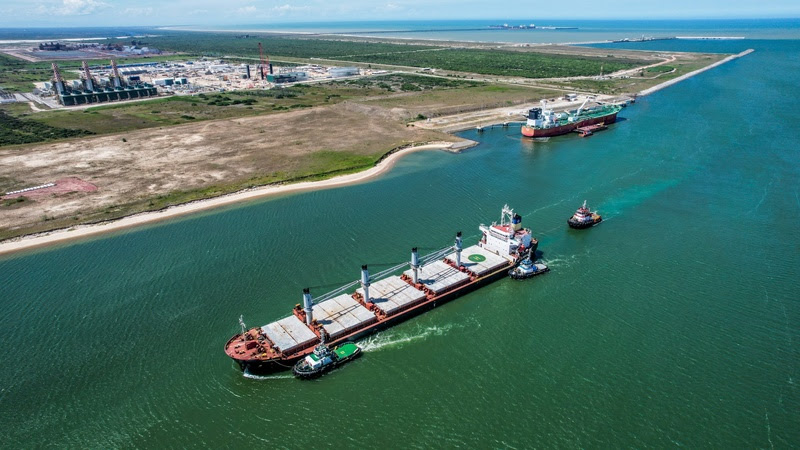
UN Global Compact Launches Guide for Port and Maritime Decarbonization in Brazil, Promoting Energy Transition and Reducing Emissions in the Sector.
The UN Global Compact, through its Brazil Network, released an innovative guide aimed at decarbonization in the national port and maritime sectors. The document seeks to support the energy transition, fostering sustainable practices and reducing pollutant gas emissions, aligning with the sustainable development goals established by the UN. This effort demonstrates a serious commitment to sustainability and the future of maritime trade in the country.
Produced through a collaborative effort, the guide was developed by the Ocean Business Working Group, which is led by the Port of Açu. This working group is recognized as Brazil’s first corporate hub specifically aimed at accelerating the energy transition in ports and maritime transportation operations. This initiative of the UN Global Compact not only represents a significant advancement for Brazil but also sets a standard to be followed globally. By embracing the guidelines of the Global Compact, the maritime industry can effectively contribute to decarbonization and environmental preservation.
Accelerating Port and Maritime Decarbonization in Brazil
In order to accelerate port and maritime decarbonization in Brazil, the UN Global Compact – Brazil Network is launching the first version of a crucial guide for the sector, developed by the Ocean Business Working Group. This group is linked to the Action Platform for Water and Ocean, being the first corporate hub in the country specifically designed to promote the energy transition in ports and maritime transportation. In addition to its in-person launch, the content is available online, providing a comprehensive view of global discussions surrounding decarbonization in the port and maritime sectors.
-
Ocean Giant Could Change Everything: Nuclear Container Ship Project Promises to Transport 16,000 Containers Without Using Fossil Fuels
-
Hormuz Strait: Hundreds of Ships and Oil Tankers Stranded After Attacks in the Middle East
-
World’s Largest Electric Ship, China Zorrilla, Will Connect Argentina and Uruguay Across the Río de la Plata with a $200 Million Investment and Operations Planned for 2026
-
How A 20-Ton Anchor Holds 200,000-Ton Ships Even Under Extreme Winds And Why It Fails In The Deep Ocean

Challenges and Opportunities in the Port and Maritime Sector
The guide highlights not only the main challenges of this agenda but also explores the numerous opportunities available, especially for Brazil, which has both the potential and resources to strategically position itself at the forefront of this scenario. The document was presented at the event ‘SDGs in Brazil 2024’, the largest corporate sustainability event in Brazil, held on September 20th at the Delegates Dining Room, at the UN headquarters in New York. The presentation was conducted by Fernanda Sossai, head of Port Development at the Port of Açu.
Maritime transportation plays a vital role in global trade and represents a considerable source of greenhouse gas emissions (GHG), accounting for approximately 3% of global emissions, according to the International Maritime Organization (IMO).
Reduction Targets and Future Challenges
The IMO has set ambitious targets for reducing these emissions, aiming for a 30% reduction by 2030, an 80% reduction by 2040, and striving to reach net-zero emissions by 2050. Without mitigation measures, emissions associated with maritime transportation could increase by 50% to 250% by 2050. In Brazil, with its extensive coastline of 7,367 km, the so-called blue economy contributes about 19% to 21% of the national GDP, according to FGV (2018). Approximately 95% of Brazilian exports are carried out via maritime transportation, according to data from the National Bank for Economic and Social Development (BNDES).
Decarbonization: A Necessity and Opportunity
The transition to a zero-emission economy in the maritime and port sector is more than an environmental urgency; it is an opportunity for a just and inclusive transformation. Despite the many pathways still to be explored, including various fuel alternatives under global study, it is crucial to be proactive. We must seek solutions that are not only efficient but also equitable, meeting the needs of different groups, highlighted Carlo Pereira, CEO of the UN Global Compact – Brazil Network.
The guide is the result of over a year of dedication from the Ocean Business Working Group, which began its activities in July 2023 with the participation of 60 companies. This initiative is part of the agenda of the Ocean Stewardship Coalition, led by the Global Compact’s oceans team based in Norway, and will be coordinated by the Brazil Network.
Challenges and Opportunities in Port Decarbonization
In 81 pages, the material details the challenges and opportunities for the sector, including decarbonization ecosystems for ports and alternative fuels. Brazil is exploring several technologies in search of alternative fuels for maritime transportation, such as biodiesel, HVO (green diesel), ethanol, and methanol. The choice of the best alternative depends on numerous factors, such as costs, energy density, available technologies, hazardousness, supply infrastructure availability, application for different types of vessels and routes, explained Rubens Filho, executive manager of Environmental Affairs at the Brazilian network of the Global Compact.
Tools to Improve Sustainability
Each fuel must be analyzed in its advantages and disadvantages in terms of performance and environmental impact. The port sector has a unique opportunity to be a catalyst for improving the efficiency and sustainability of industries in response to the challenges posed by climate change. Investing in sustainable technologies, resilient practices, and renewable energy solutions will position ports as competitive hubs for energy transition and climate adaptation, emphasized Eugenio Figueiredo, CEO of the Port of Açu.
Success Stories and Future Expansions
The guide also presents national and international case studies, specific recommendations, and an analysis of decarbonization on the governmental agenda. The UN Global Compact – Brazil Network aims to expand the Working Group to build joint solutions and experience sharing among various actors involved in the maritime and port industry, providing a space for pilot projects and innovations to occur.
Source: Rafael Bastos






Seja o primeiro a reagir!