





 Portuguese
  English
  Spanish
  4 min of reading
  1 comment



Opportunity In Ashes: Partial Substitution Of Cement In Concretes And Mortars With Volcanic Ash Is Revolutionizing The Construction Industry
A revolutionary discovery: The search for sustainable materials has turned the unexpected into a solution. Volcanic ash, a legacy of one of the largest natural disasters in Spain, emerges as a promising alternative to traditional cement. This advancement not only challenges the conventions of the construction industry but also paves the way for more eco-efficient buildings.
The path to sustainability in construction is paved with volcanic ash. The adoption of volcanic ash in construction is a testament to innovation and the industry’s commitment to sustainability. As we explore new materials and techniques, we open the way for a future where construction not only respects the environment but also actively contributes to its preservation.
Volcanic Ash: From Tragedy To Innovation In Gran Canaria


Eruptions Launch This Construction Material: The Unique Properties
Produced during volcanic eruptions, volcanic ash consists of a rich mixture of minerals and volcanic glass. Its unique properties – high mechanical strength and significant reduction in environmental impact – position it as ideal candidates in sustainable construction.
-
With 74% of companies facing difficulties in hiring, technicians and engineers in renewable energy are becoming scarce in Brazil and are essential to support the expansion of solar, wind, and green hydrogen projects.

-
Historic bankruptcy of Centauro shocks the market, and the century-old company puts more than 500,000 products, machines, and complete infrastructure up for online auction.

-
New shoe factory in Ceará is expected to create 400 jobs and strengthen the local economy.

-
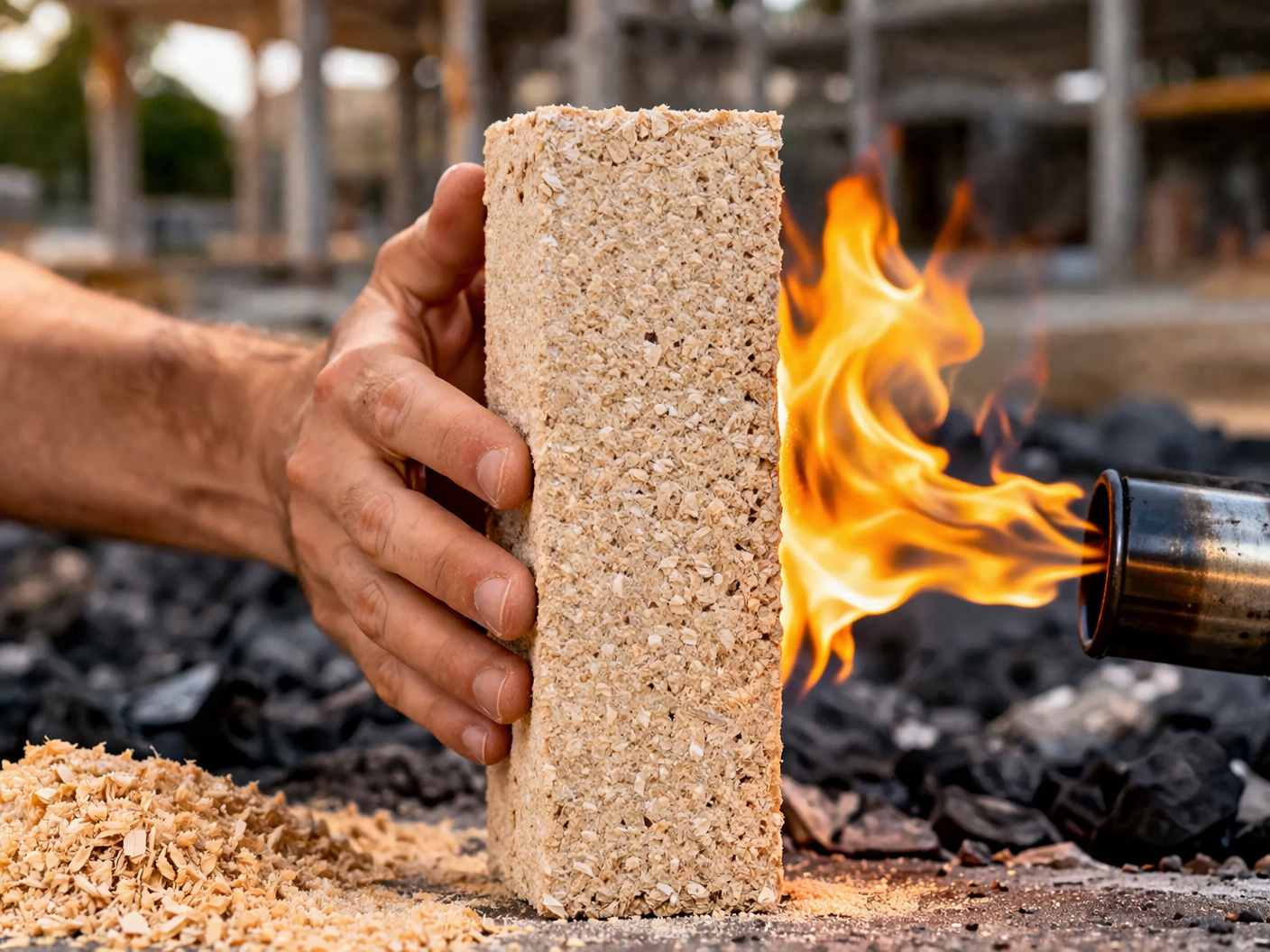
No one imagined it, but a mixture of sawdust with a mineral that fights fires surprises scientists with a result that changes the course of fire-resistant construction.
The chemical composition of volcanic ash varies depending on the type of eruption and can contain aluminosilicates and compounds of iron, calcium, and potassium. Typically, this material exhibits pozzolanic properties, which means it reacts with calcium hydroxide to form stable compounds.
Scientific Research Confirms: Volcanic Ash Can Surpass Cement In Durability And Strength
In terms of mechanical strength, several studies have shown that the use of ash as a partial replacement for cement in concretes and mortars can enhance strength properties, especially if particles smaller than 45 microns are used.
With proper grinding, volcanic ash can be used to produce materials that are more resistant than Portland cement. In fact, it is precisely this that is intended to be replaced and is considered responsible for the heat wave effect occurring in cities.
From a sustainability perspective, using these waste materials in the construction industry helps reduce CO2 emissions associated with conventional cement production. Additionally, it represents a viable alternative for disposing of and adding value to such waste.
Its Applications Range From Supplementary Cement To Construction Blocks
Ash used in construction is highly valued for its properties as a building material. The ash from the La Palma volcano has unique characteristics due to its high silica, alumina, and iron content. In fact, they form a conglomerate similar to cement, although naturally.
These properties make ash suitable as a partial substitute for cement in concrete production. Several companies in the construction and building materials sector have shown great interest in the ash from the La Palma volcano.
Its use is planned both in the Canary Islands and on the peninsula, taking advantage of its proximity by boat. Previous research had already demonstrated the properties of volcanic ash, but the eruption of La Palma volcano placed this source of sustainable construction material in the spotlight.
Project That Promises To Change The Future Of Construction Worldwide
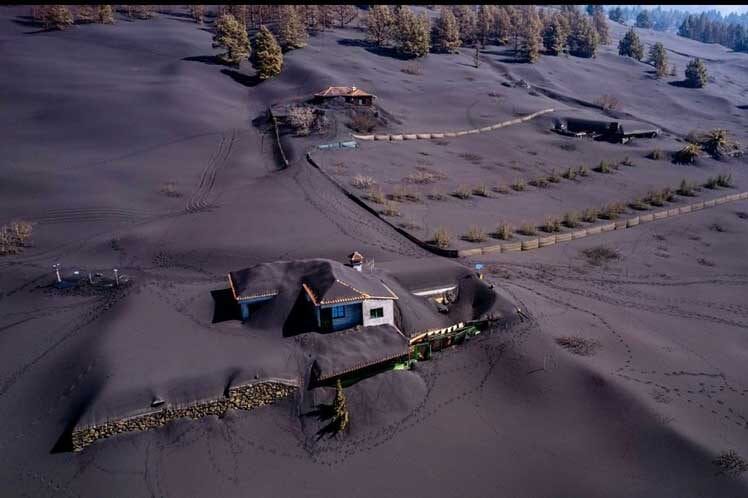
The eruption of the La Palma volcano, which began on September 19, 2021, generated a large amount of volcanic ash. It is estimated that the eruption produced about 230,000 tons of ash in the first few days (imagine during the entire process, which was the longest in the history of the archipelago). This is how they propose to use ash for construction in this part of Spain:
The Proresvolcán project is a pioneering initiative aimed at converting La Palma’s volcanic ash into a valuable resource for the construction industry. Funded by the Ministry of Education and supported by academic institutions and companies in the sector, the project seeks not only to validate the technical and environmental feasibility of using ash but also to promote the adoption of more sustainable practices in the industry.
“This project seeks to transform volcanic waste into materials for the production of mortars and concrete in place of part of the cement content,” explains the coordinator of Proresvolcán, Elena de la Fuente.
The volcanic waste will be used as a main component, and the properties of the obtained material will be verified. She adds: “Reducing the dependence on non-renewable resources in the production of construction materials and reducing the CO2 emissions associated with cement manufacturing will be encouraged.”
According to Elena de la Fuente, among the advantages presented by the project is that “the pollution caused by concrete manufacturing is decreased,” and “20% of the cement will be replaced by ash,” thereby reducing the amount of ash from the volcano that is considered waste.
Through this innovation, construction with volcanic ash is not just a possibility; it is an emerging reality, promising to revolutionize the way we build the future.







Já a muitos anos, mais de 50 anos, as cinzas vulcânicas são usadas em cimentos e isso aumenta o seu custo. Chama-se cimento Pozolâmico, foi muito utilizado no Brasil, pelas propriedades benéficas que as cinzas vulcânicas traziam ao cimento. Também foi usado o cimento de com Escória de Alto Forno, mais barato, mas desaconselhável para estruturas, pois bemefica as corrosões dos aços estruturais.
Portanto, nenhuma novidade no assunto.