





 Portuguese
  English
  Spanish
  3 min of reading
  0 comments


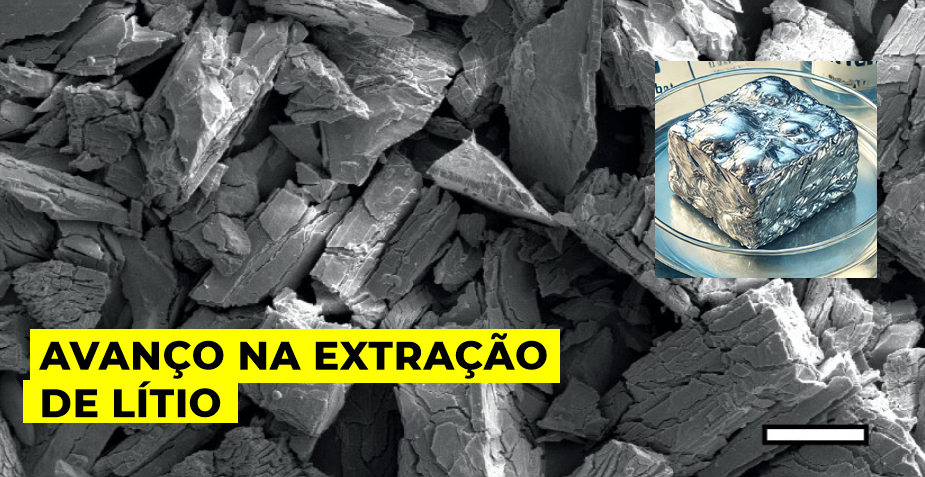
A Significant Advance for Clean Energy! Scientists Have Developed a Sustainable Lithium Extraction Method That Drastically Reduces CO₂ Emissions
The growing demand for lithium, essential for batteries in electronic devices and electric vehicles, drives the search for more sustainable extraction methods. Recently, researchers from Penn State developed an innovative technique that uses electric current and hydrogen peroxide to extract lithium from spodumene, a common mineral.
This new method can reduce CO₂ emissions by 75.3% and extraction costs by 35.6%, making it a promising alternative to traditional processes, which are highly polluting and energy-intensive.
The Traditional Lithium Extraction Problem
Currently, lithium is extracted through two main avenues: the evaporation of brines and rock mining.
-
Motorola launched the Signature with a gold seal from DxOMark, tying with the iPhone 17 Pro in camera performance, Snapdragon 8 Gen 5 that surpassed 3 million in benchmarks, and a zoom that impresses even at night.

-
Satellites reveal beneath the Sahara a giant river buried for thousands of kilometers: study shows that the largest hot desert on the planet was once traversed by a river system comparable to the largest on Earth.

-
Scientists have captured something never seen in space: newly born stars are creating gigantic rings of light a thousand times larger than the distance between the Earth and the Sun, and this changes everything we knew about stellar birth.

-
Geologists find traces of a continent that disappeared 155 million years ago after separating from Australia and reveal that it did not sink, but broke into fragments scattered across Southeast Asia.

Brine extraction accounts for about 70% of global production and relies on the evaporation of large saltwater solution ponds, a time-consuming and environmentally harmful process. The removal of lithium from the soil can render the area barren, preventing vegetation growth.
The rock-based method involves high temperatures, reaching up to 1,100 °C, and the use of aggressive chemicals, such as strong acids. This process consumes an abundance of energy while generating operational risks and considerable environmental impacts.
The New Electrochemical Method
In light of these challenges, the team led by Feifei Shi, assistant professor of energy engineering at Penn State, developed an innovative method based on applying an electric field to spodumene.
This approach allows for the electrochemical leaching of lithium, meaning its dissolution without the need for high temperatures or aggressive chemical agents.
In initial tests, the method showed an efficiency of 92.2%, comparable to traditional techniques but with lower energy consumption and reduced environmental impact.
An essential factor in this improvement was the use of hydrogen peroxide, which facilitated leaching by reducing the chemical barriers of the reaction.
Benefits and Impacts
<pThus, the new method promises to significantly reduce the costs and environmental impacts of lithium extraction.
According to Zhen Lei, professor of energy and environmental economics at Penn State, the cost reduction primarily occurs due to the lesser need for chemicals and the energy efficiency of the process, which uses only electricity, unlike conventional methods that depend on both electricity and natural gas.
Another crucial factor is the scalability of the new technology. While brine extraction is limited by the area of evaporation ponds, the electrochemical method can be more effectively scaled up by simply increasing the amount of spodumene processed and the electric current applied.
Future Prospects
The research paves the way for creating new solutions that can make lithium mining more sustainable and viable on a large scale.
The next step, according to the researchers, is to develop a method to selectively recover the extracted lithium in the form of lithium chloride or lithium hydroxide, essential products for the battery industry.
For Feifei Shi, this technology could revolutionize mining, becoming a model for the application of electrochemical processes in the extraction of other minerals. “We truly believe this is a revolution. Electrochemistry will open doors to many interesting research in the mining and mineral processing sector“, he stated.
Study published in the journal Nature.








Seja o primeiro a reagir!