





 Portuguese
  English
  Spanish
  4 min of reading
  0 comments


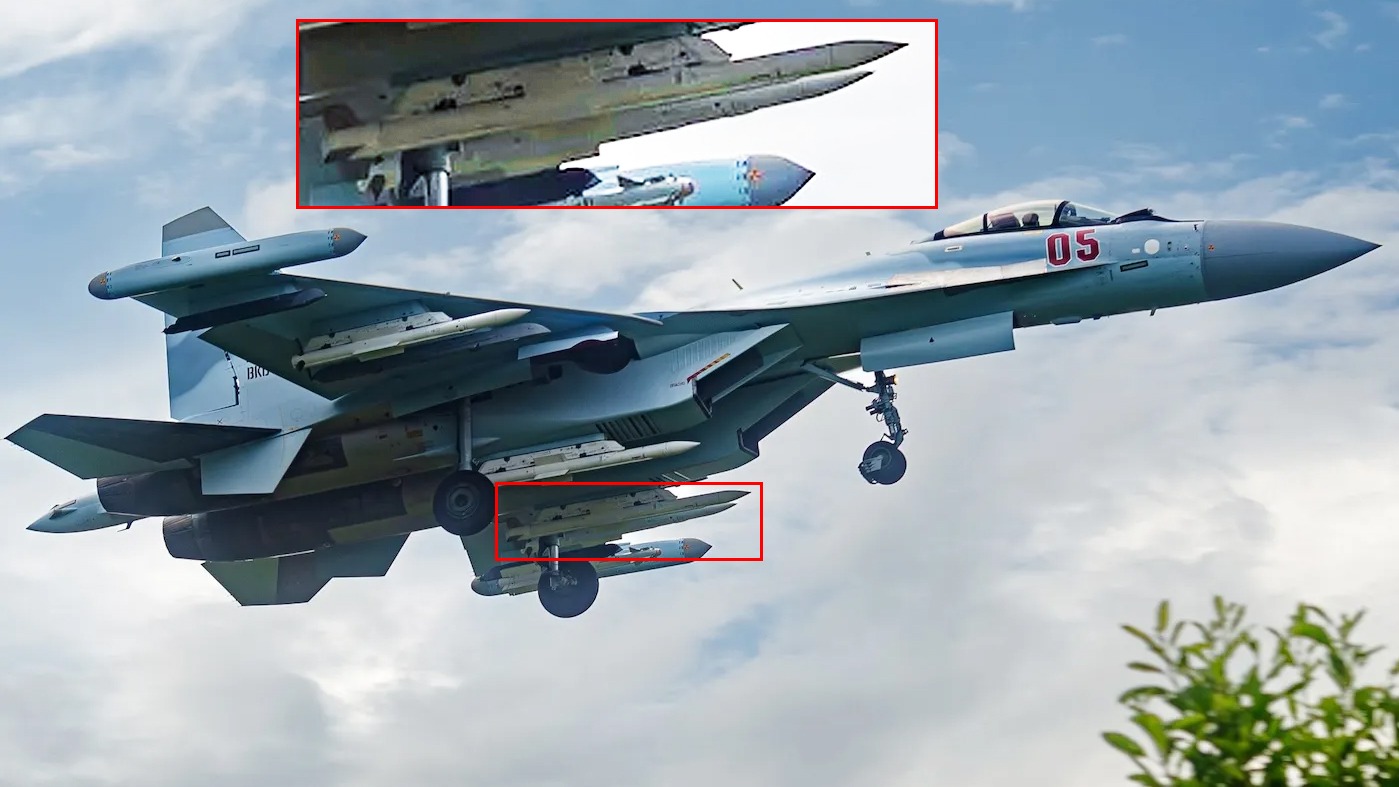
Russia May Have Started Using a New Aerial Weapon in the Ukraine War. Visual Evidence and Wreckage Found in Ukrainian Territory Indicate That the R-77M Air-to-Air Missile Is Being Employed in Combat, Representing an Unprecedented Challenge for Ukrainian Pilots.
Russia Appears to Have Introduced a New Air-to-Air Missile in Its Military Campaign in Ukraine. Recently Released Images Show the Use of the R-77M, an Enhanced Version of the R-77, Also Known as AA-12 Adder by NATO.
This New Weapon Represents a Significant Advancement Over the Previous Model and Increases the Difficulty for the Ukrainian Air Force to Deal with Aerial Threats.
One Image Shows a Su-35S Fighter from the Russian Aerospace Forces Armed with Two R-77Ms. The Missiles Are Positioned Under the Engine Air Inlets.
-
How the terraforming of Mars can transform the planet: artificial aerosols can increase the temperature by up to 35°C in 15 years, creating conditions for liquid water.

-
Scientists drilled nearly 8,000 meters into the ocean floor above the fault that caused the 2011 tsunami in Japan and discovered that a layer of clay 130 million years old was responsible for making the wave much worse than any model had predicted.

-
Thousands of years after causing the largest eruption of the Holocene, one of the world’s largest supervolcanoes is rebuilding itself beneath the sea south of Japan, receiving new magma and alarming scientists with its transformation.

-
China has activated a magnet 700,000 times more powerful than the Earth’s magnetic field that operates for over 200 consecutive hours while consuming little energy, and now the world wants to know what Beijing plans to do with this technology in 2026.
On the Same Aircraft, There Are Also Two R-77-1s Installed Under the Wings, Along with an Infrared-Guided Missile from the R-73/74 Series and Electronic Countermeasure Pods.
Visual and Technical Differences
The Most Important Thing Is That the R-77M Has Clear Visual Differences Compared to the Previous Model.
Its Cross-Shaped Tail Fins Have a Straight Cut, Unlike the Lattice Surfaces Used in Older R-77s. Additionally, the Control Surfaces on the Missile’s Body Are Shorter.
But It’s Not Just the Appearance That Has Changed. The R-77M Features a New Dual-Pulse Rocket Engine and an Improved Radar Seeker.
The New Engine Ensures Constant Thrust, Allowing for Better Maneuverability and Extended Range.
This Means That the So-Called “No Escape Zone” Is Expanded, Making the Missile More Dangerous to Its Targets.
Combat Use and Recovered Wreckage
Although the Photo of the Su-35S Lacks Precise Date or Location, There Is Another More Direct Indication of the Use of the R-77M: An Image Showing the Wreckage of a Missile in Ukraine.
The Recovered Piece Has Fins Compatible with Those of the R-77M, Suggesting That the Missile Was Indeed Fired in Combat.
If Confirmed, This Would Mean That Russia Has Already Put the New Model into Operation, Giving It a Technological Advantage over the Ukrainians.
History of the R-77 Program
The Original R-77 Began Development in the 1980s. The Aim Was to Create an Equivalent to the American AIM-120 AMRAAM.
However, the Initial Version Only Entered Service in the 1990s, After the Fall of the Soviet Union. Due to the Economic Crisis, Production Was Limited and Focused on Exports.
Russia Only Began Receiving the R-77 in Larger Numbers with the R-77-1 Version, Which Arrived in Time to Be Used in Syria in 2015. This Version Brought Modest Improvements, Retaining the Lattice Fins.
Advancements with the R-77M
The Development of the R-77M, Initially Called K-77M, Sought Deeper Changes.
The Missile Gained Conventional Control Surfaces, a Dual-Pulse Engine, and an Even More Advanced Radar Seeker.
These Changes Allowed Its Internal Use in Fighters like the Su-57, in Addition to Reducing Its Radar Signature.
Unconfirmed Reports Suggest That the Range of the R-77M May Be Twice That of the R-77, Reaching About 100 Miles.
The Actual Performance, However, Depends on Many Factors, Such as Altitude, Speed, and Maneuvers of the Target and the Launch Aircraft.
The Manufacturer Vympel Claims That the R-77M Outperforms the American AIM-120C-7 and Is on Par with the AIM-120D. Although the Official Data for the American Missile Is Classified, It Is Believed to Have a Range of Between 120 and 160 Kilometers.
Capability Against Various Threats
Another Point Mentioned by Vympel Is That the R-77M Can Target Surface-to-Air Missiles, Including Those Approaching from the Rear.
These Claims, However, Have Yet to Be Independently Verified and Should Be Taken with Caution.
In 2020, Images of the R-77M Being Carried by a Su-57 Emerged. There Were Also Records of the Izdeliye 180-PD, a Version of the Missile with Ramjet Propulsion, Designed to Offer Even Greater Range.
According to Reports, the Izdeliye 180-PD Was Developed as a Private Project by Vympel. However, It Is Unclear Whether the Russian Government Has Actually Adopted This Version for Military Use.
Impact on the War and Comparison with Rivals
Even Without the 180-PD, the Use of the R-77M Already Represents a Considerable Advancement Over the R-77-1. The New Weapon Can Reach Targets at Distances Greater Than Those Covered by Ukrainian Missiles, Such as the AIM-120C.
The Ukrainian Pilot Andrii “Juice” Pilshchykov, Killed in 2023, Commented on the Impact of the R-37M, Another Russian Long-Range Missile. According to Him, These Weapons Complicate Aerial Missions and Increase Risks for Pilots.
In This Scenario, the Introduction of the R-77M Only Makes the Situation More Complex for the Ukrainians.
Competition with China and the U.S.
Despite the Advancements, Experts Point Out That Russia Is Still Behind China. The Asian Country Is Already Using the PL-15 Missile, Which Gained Attention in Recent Confrontations in Asia.
Furthermore, There Are Indications That New Chinese Weapons Are Already in Service.
In the United States, Programs Such as AIM-174B and AIM-260 Show That the Country Is Also Focused on Developing Missiles with Greater Range and New Capabilities.
The AIM-260, for Example, Was Designed to Replace the AMRAAM with Superior Performance While Maintaining the Same Size.
Although Facing Economic and Industrial Limitations, Russia Continues to Work on Missiles That Aim to Surpass Their Western Equivalents.
The Possible Introduction of the R-77M Reinforces This Strategy and Represents a New Challenge for Ukrainian Aviation — and Perhaps Other Air Forces in the Future.









-

-

-

8 pessoas reagiram a isso.