





 Portuguese
  English
  Spanish
  6 min of reading
  0 comments



New Bridgestone Tire Enters The Market With The Mission To Succeed The Champion R269, Bringing More Mileage Performance, Technologies For Heat Dissipation, Protection Against Stone Retention And A Proposal Thought Out For Long Distance Road Use In Brazil.
The R289 tire is born with high responsibility in the brand’s portfolio. It arrives to occupy the place of the R269, a model described as a sales and performance champion, but does so with the promise of going further. According to the presentation made at the company’s test track in São Pedro, the new product delivers 5% more performance than its predecessor and incorporates a series of evolutions in design, materials, and structure.
The proposal of the new tire is not limited to a generational change. The idea is to offer a more efficient solution for transporters, truck drivers, and fleet owners who travel long distances and face the specific conditions of Brazilian roads. The launch also reinforces a local development strategy, with internal testing, validation in real operation, and technologies focused on durability, cost per kilometer, and retreading.
New Tire Takes The Place Of A Sales Champion
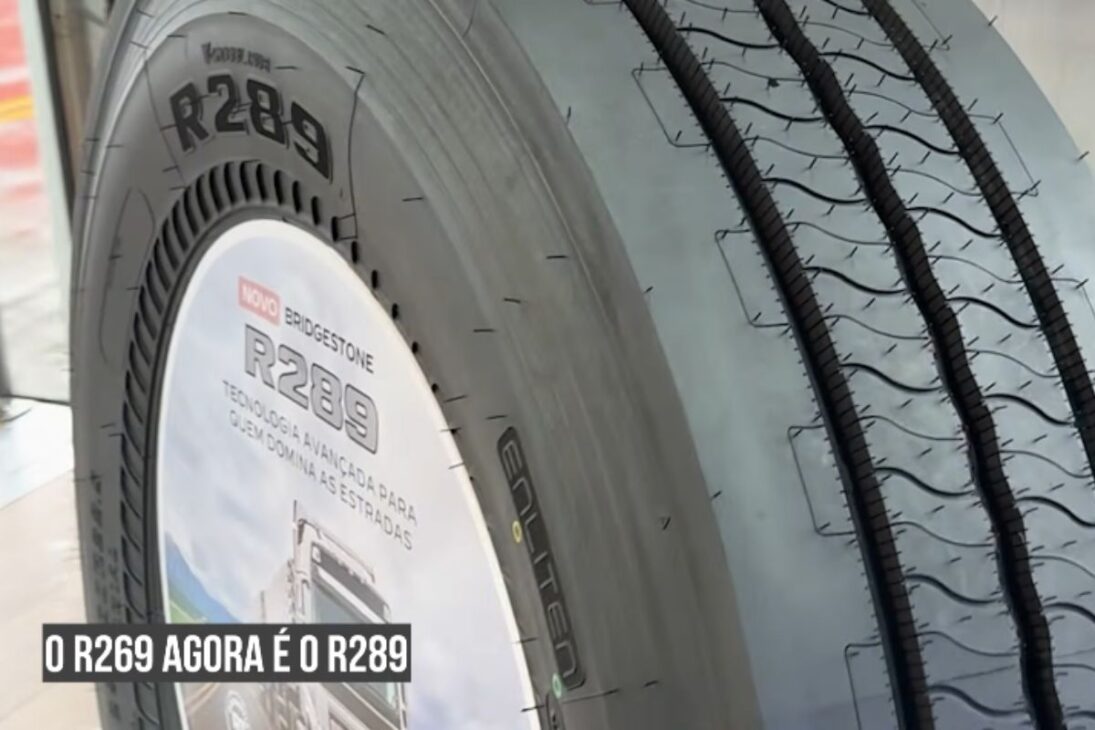
The R269 was treated as one of the brand’s key products, both in sales and performance. Therefore, the new tire arrives with the mission of replacing an already established model in the market, something that naturally increases expectations around its debut.
-
After a submarine disappeared beneath the “Doomsday Glacier,” scientists announce a new monstrous machine capable of operating at 3,000 meters depth to return to the heart of the ice and investigate a threat that could raise sea levels worldwide.

-
NASA has set a date for the beginning of the end of Earth, and it won’t be an asteroid or an explosion: the planet will slowly lose its oxygen over the course of 1 billion years because the Sun is getting hotter every day.

-
Archaeologists have discovered a colossal submerged wall in the Atlantic, dating back 7,000 years and weighing 3,300 tons, regarded as the largest prehistoric submerged structure ever found in France.

-
Scientists have discovered a gigantic magnetic anomaly hidden beneath the soil of Australia that mirrors the shape of the entire continent and holds geological records of two and a half billion years that could change what we know about the Earth.


According to the explanation provided, the company has invested over R$ 1 billion in the Santo André plant in recent years to bring new technologies in materials and designs.
This move allowed the development of a product different from its predecessor, featuring a different sidewall structure, new tread configuration, and solutions aimed at enhancing performance.
The central point of the launch is clear: the R289 was not conceived as a simple adjustment of the R269, but as a complete evolution to surpass the previous model.
Design With Three Grooves Changes The Visual And The Tire Proposal
One of the most visible differences of the new tire is in the tread design. The model adopts three main grooves, a solution that is usually more associated with urban profile tires, but that here has been applied to a long-distance road product.
This choice increases the presence of rubber in the tread, but without simply repeating the logic of greater depth.
The product engineering combined new materials and another structural distribution to avoid the negative effects of excessive heating.
In practice, the tire design was thought to deliver more mileage even with a different configuration from its predecessor.
The proposal also relies on micro-cuts and block details that help improve flexibility, grip, and control of irregular wear.
5% Greater Performance Comes From Material, Structure, And Real Road Use
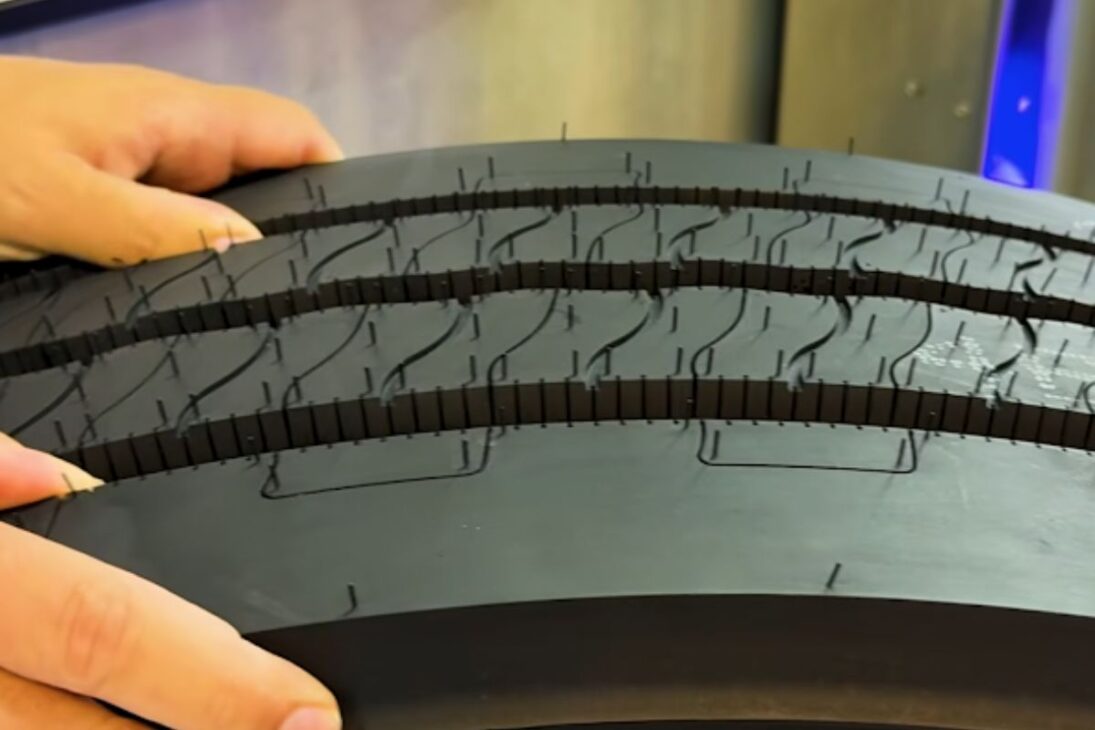
The most important data presented by the brand is the gain of 5% performance in relation to the R269. According to the technical team’s explanation, this advance is linked to the combination of compounds applied in specific areas, structural reinforcements, and a new development package.
The shoulder region, the belt package, the tread rubber, and the sidewall of the tire received specific solutions to increase yield and resistance.
Even with slightly shallower tread depth compared to the previous model, the R289 delivers superior mileage.
This result, according to the presentation, was not restricted to the lab. The tire was tested in real operation, with partner transporters and millions of kilometers driven in Brazil, which reinforces the practical nature of the announced gain.
Technology Helps Tire Handle Heat Better
One of the main enemies of rubber is high temperature. Therefore, the new tire incorporates features aimed at heat dissipation, especially in the bead area, near the wheel and brake drum, where heating tends to be greater.
The cited technology includes a system with fins that, as the tire spins, helps cool this area. Additionally, the sidewall also receives specific compounds with better heat dissipation capacity.
This care is important because controlling temperature means preserving the integrity of the tire and extending its lifespan.
In a product designed for long distances, this factor directly impacts performance and operational cost.
Structural Reinforcement And Protection Against Stones Increase Durability
In addition to thermal work, the new tire received reinforcements in the bead and belt package. The structure was designed to increase the resistance of the casing and reduce the risk of damage that can compromise the product’s reuse over time.
Another highlight is the concern with stone retention. The groove design was developed to facilitate the expulsion of stones that, in yards and circulation areas, can lodge in the tread and advance to the casing.
The brand explained that the angled shape and the details of the design help the tire perform this expulsion movement during driving. This reduces a type of silent damage that often shortens the life of the casing and increases the cost of operation.
Warranty Until The Third Retreading Increases The Value Of The Casing
One of the strongest points of the launch is the warranty of the casing until the third retreading, provided that the process is done within the Bandag network and with the products from that network.
According to the explanation provided, the warranty covers manufacturing defects during the first life, the first retreading, the second retreading, and even the third retreading.
This point repositions the tire not just as an initial-use item, but as a long-lasting asset within the transport operation.
The logic behind this proposal is to reduce the total cost for truck drivers and fleet owners while avoiding the premature disposal of casings.
The more times the structure can be safely reused, the greater the economic and environmental return of the tire.
Product Was Thought Out For The Reality Of Brazilian Roads
The brand emphasized several times that the new tire was developed based on Brazilian conditions. The test track in São Pedro allows simulating different surfaces, regions, braking, water volumes, handling behavior, and wear situations, creating an environment that serves as a kind of technical portrait of the country.
This local adaptation appears as an important advantage, as different markets require different responses.
The technical team itself noted that there are tires developed for neighboring countries that work well on certain terrains and uses but would not necessarily deliver the same result in Brazil.
That is why the R289 was presented as a tire for Brazil, tested here and adjusted to meet local road, temperature, surface, and operational requirements.
Launch Targets Dealers, Fleet Owners, And Transporters
According to the presentation, the new tire starts to arrive on the market from March 16, with distribution through the dealer network and also direct presentation to fleet owners and brand clients.
The strategy shows that the manufacturer wants to quickly position the product as the natural successor to the R269, taking advantage of its network of truck centers and the already established relationship with transporters throughout the country.
The launch reinforces a broader view of the product. The new tire was not presented merely as a replacement part, but as a solution that combines mileage, retreading, lower cost per use, and adaptation to the real conditions of Brazilian roads.
New Tire Bets On Performance And Operational Cost
In the end, the R289 arrives on the market with a very objective proposal. It needs to replace a model with a strong reputation while also showing that it can deliver better results on the road.
The arguments used for this revolve around 5% superior performance, new tread architecture, heat dissipation, casing reinforcement, stone expulsion, and warranty until the third retreading.
Everything indicates that the focus of the project was to increase the tire’s efficiency without losing sight of what matters most to those who drive: durability, safety, and operational cost.
Do you think this new R289 tire has what it takes to surpass the R269 on Brazilian roads?






-

2 pessoas reagiram a isso.