





 Portuguese
  English
  Spanish
  4 min of reading
  0 comments



Global Naval Revolution: The New Chinese Aircraft Carrier, Equipped with Advanced Technology, Emerges as Potential Challenger to the US Navy
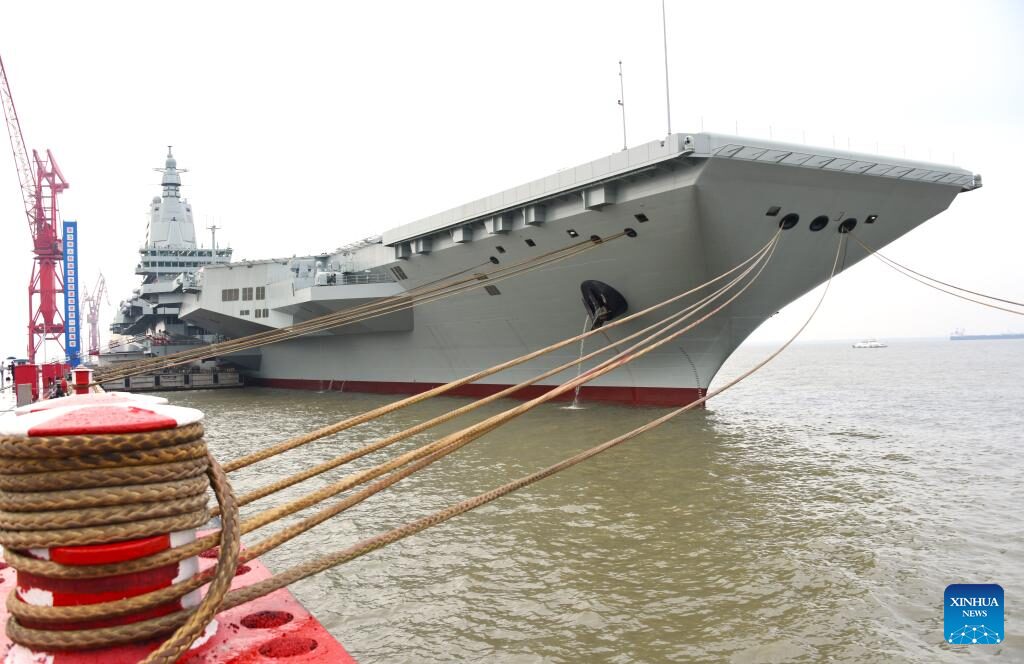
The China has made significant strides in the field of naval defense, with the recent introduction of its most advanced aircraft carrier, the Fujian, the third to be built by the People’s Liberation Army Navy in just 12 years.
This new aircraft carrier, following in the footsteps of the Liaoning and Shandong, promises to change the balance of power in the Pacific, directly competing with the naval supremacy of the US Navy. The Fujian is equipped with revolutionary aircraft launch technology, similar to that used by the newest American aircraft carrier, the USS Gerald R. Ford.
The Evolution of Chinese Aircraft Carriers
The development of China’s aircraft carriers began with the Liaoning, introduced in 2012. Originally built for the Soviet Union, the Liaoning was acquired by China after the dissolution of the USSR, undergoing a modernization process before being incorporated into the Chinese Navy.
-
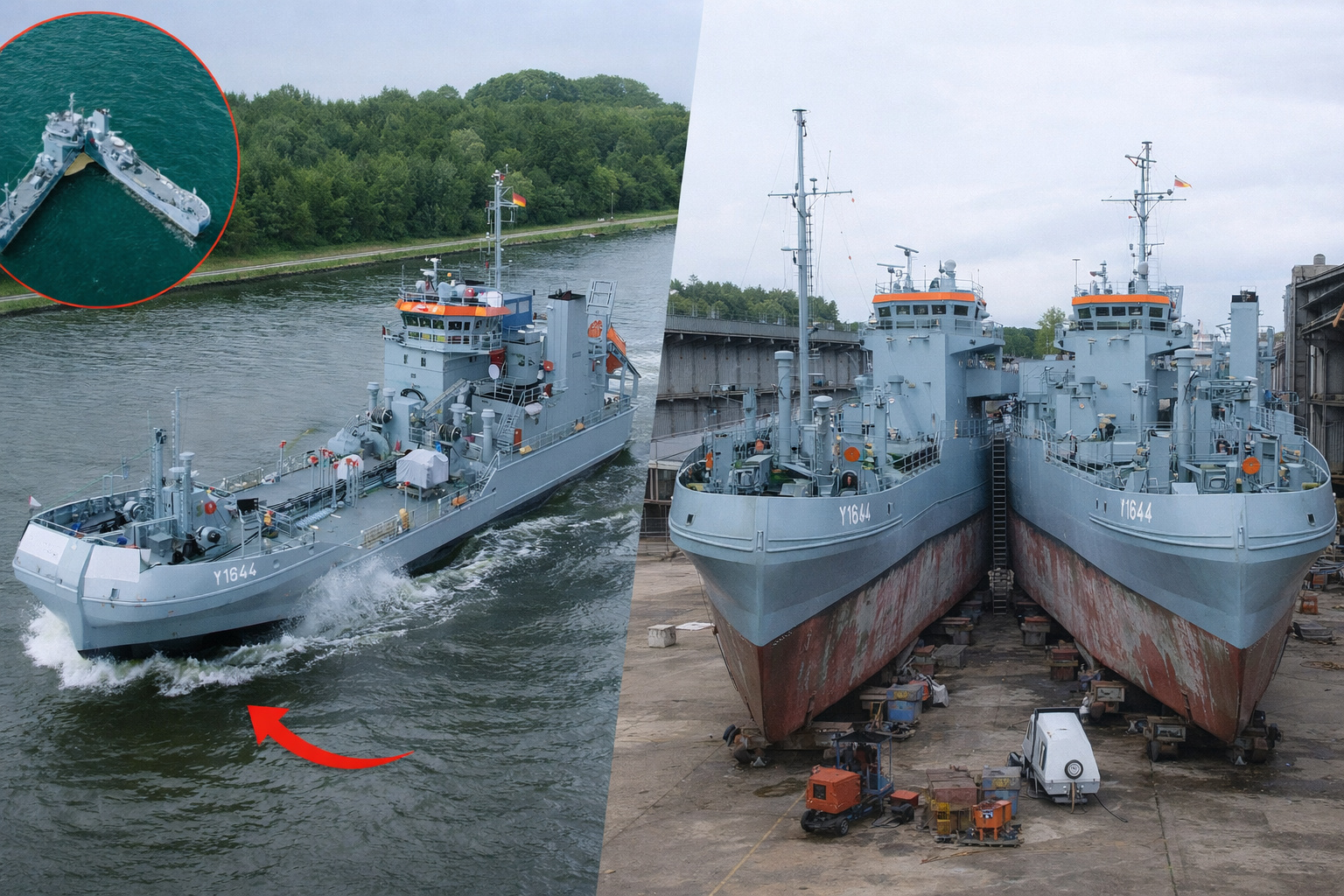
The German ship Bottsand splits its hull in two halves in the middle of the ocean to swallow spilled oil on the surface, separating the oil from the water inside a 790 cubic meter tank and then closing again. It is the only ship in the world factory-designed to split in half as part of normal operations, and the crew of six people who operate everything is civilian.
-
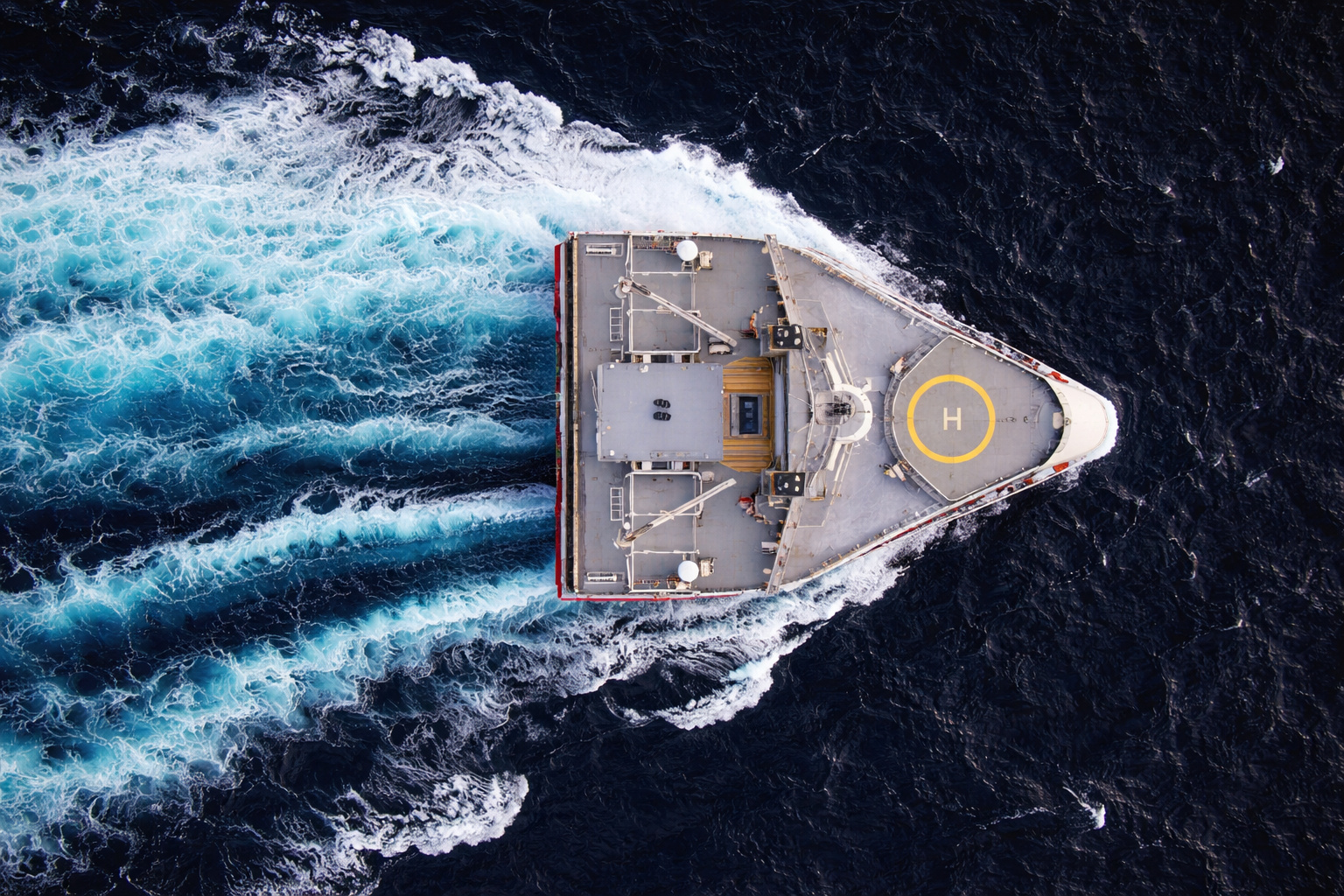
With almost 70 meters in width at the stern and a shape resembling a “giant slice of cheese,” the Ramform Titan tows up to 24 seismic cables to sweep the ocean floor in 3D and reveal oil reserves hidden beneath kilometers of sediment.
-
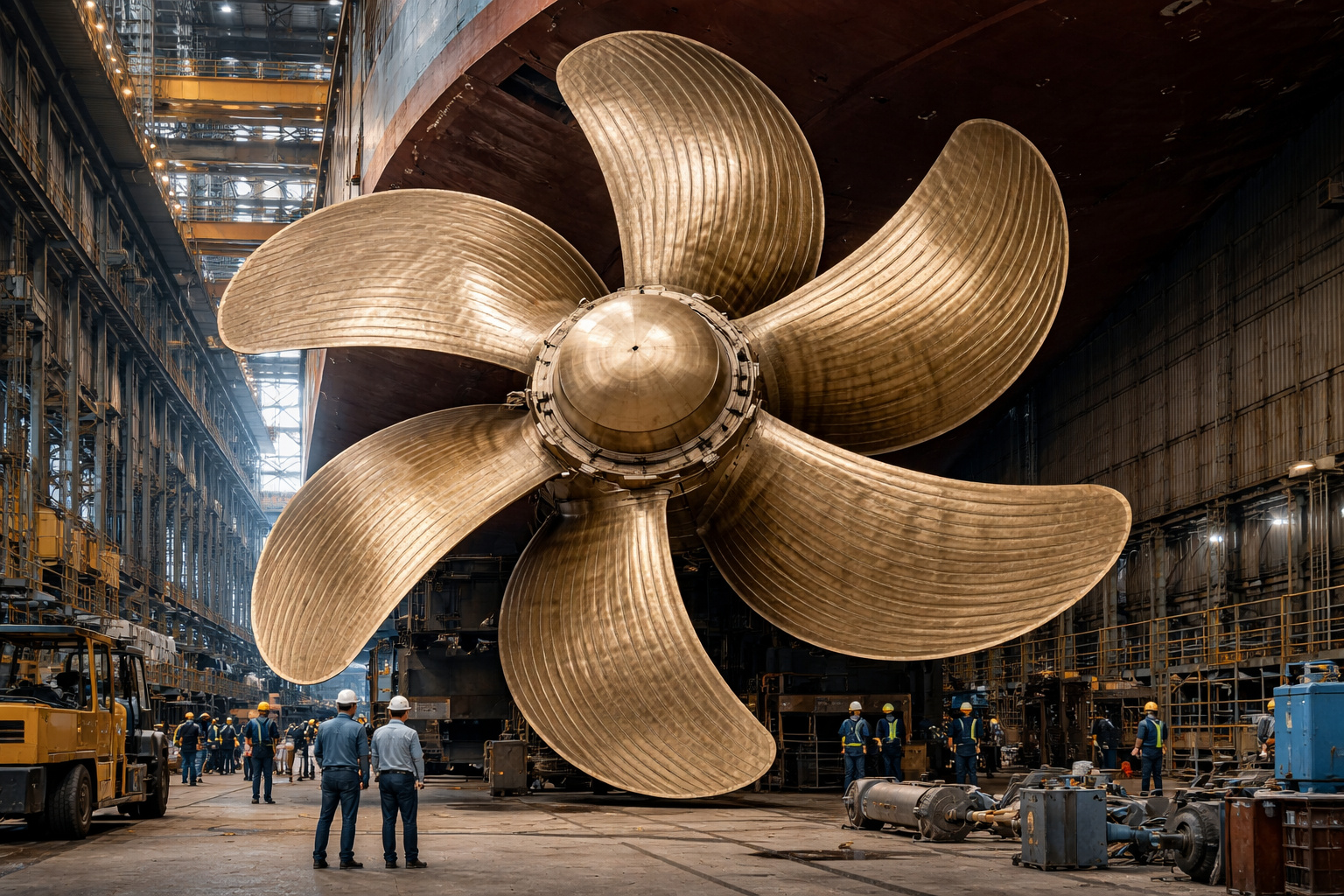
How a 131-ton, 11-meter propeller supports 90% of global trade and transforms the largest container ships on the planet.
-
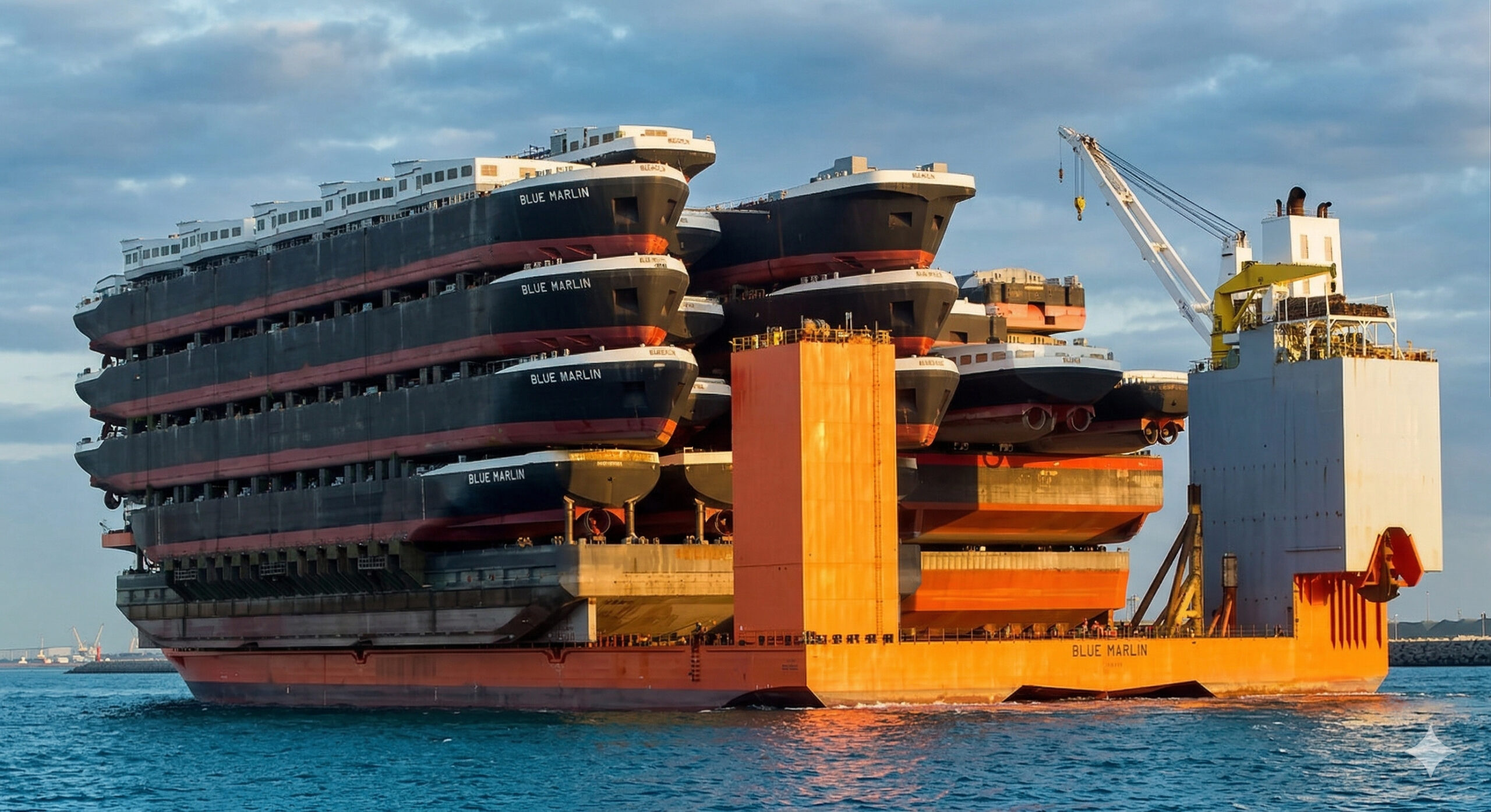
With a length of 225 meters and a capacity of 76 thousand tons, this ship “sinks” its own deck down to 28 meters deep to accommodate war destroyers, oil platforms, and giant radars floating above, and then emerges with everything intact on top like a colossal tray crossing oceans.

At 1,005 feet long and a displacement of 60,000 tons, the Liaoning can carry about 40 aircraft, including J-16 fighters and utility and anti-submarine helicopters. However, its ski-jump based aircraft launching technology limits the aircraft’s payload and prevents the operation of heavier planes, such as the C-2 Greyhound used by the US Navy.
The second aircraft carrier of the Chinese Navy, the Shandong, was the first to be built entirely in China. Despite representing a significant advancement in technological independence, the Shandong shares the same limitations as the Liaoning, using a ski-jump instead of a catapult to launch aircraft. This limitation puts China at a disadvantage compared to the US Navy, which has used steam catapults for over half a century.
Technological Advancement with the Fujian
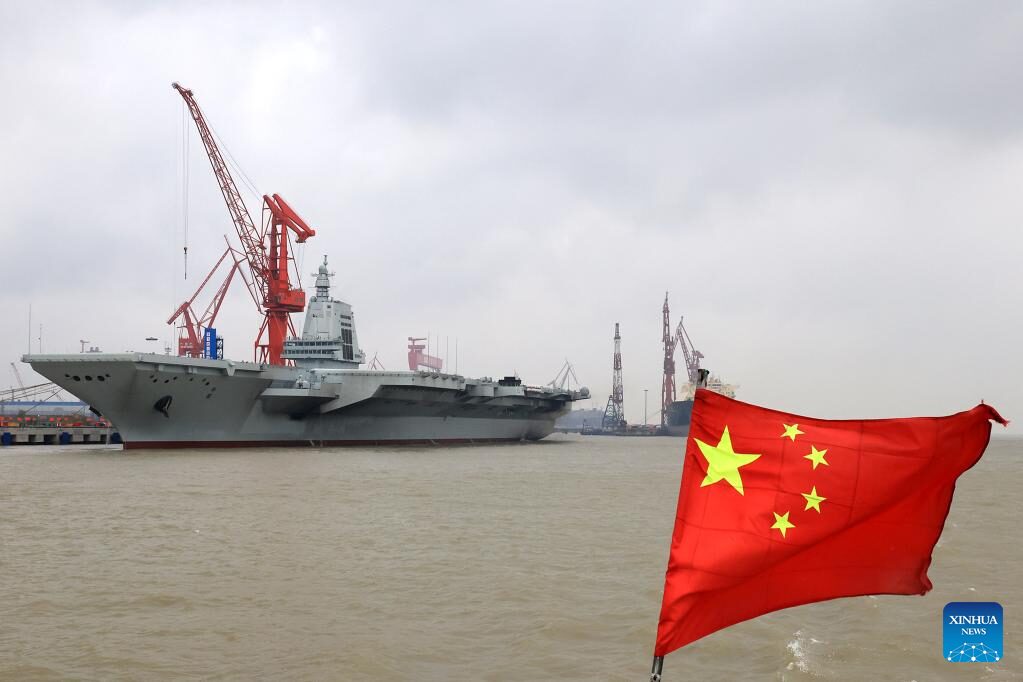
With the introduction of the Fujian, China seems poised to overcome these limitations. This new aircraft carrier is the largest ever built by China, measuring 1,036 feet in length and a total displacement of 80,000 tons, only 20% less than the USS Gerald R. Ford. Additionally, the Fujian is the first Chinese aircraft carrier to be equipped with electromagnetic catapults, a technology that allows for launching aircraft with greater payloads, significantly improving range and firepower.
The Fujian’s electromagnetic catapult system is inspired by the powertrains of electric cars, using a flywheel and a spool to store and release energy. This energy is then transferred to a steel cable that pulls the aircraft across the flight deck, launching it into the air. While different from the EMALS system used by the US Navy, the Chinese system represents a significant advancement for the Chinese Navy, which until then relied on simpler technologies.
The Comparison with the US Navy
The US Navy has been a pioneer in the use of electromagnetic aircraft launching systems, with the introduction of the USS Gerald R. Ford in 2017. The EMALS (Electromagnetic Aircraft Launch System) has replaced traditional steam catapults, providing greater efficiency and less stress for sailors on board. EMALS is capable of conducting up to 270 aircraft launches per day in wartime, a 33% increase over steam catapults.
Although the Chinese system differs in some respects, such as the use of a “parasitic current clutch” to generate electromagnetic force, the adoption of this technology represents a significant achievement for China. In just 12 years, the Chinese Navy has gone from a relatively modest naval force to one capable of rivaling the US Navy in terms of technology and operational capabilities.
Implications for Global Geopolitics
The Fujian is expected to enter service in the coming years, raising China’s total number of aircraft carriers to three. While this number is still half that of the US Pacific Fleet’s aircraft carriers, China’s rapid pace of construction and technological innovation indicates that the country is determined to close this gap. If China continues at this pace, it may very well catch up to the US Navy in terms of both quantity and quality of aircraft carriers in the coming decades.


The naval growth of China is a reflection of its global ambitions and its desire to project power beyond its borders. With the Fujian, China demonstrates that it is ready to challenge the supremacy of the US Navy, establishing itself as a first-rate naval power. The big question that remains is how the United States and its allies will respond to this emerging challenge.
Conclusion
The introduction of the Fujian aircraft carrier marks a turning point in the naval competition between China and the United States. Equipped with advanced aircraft launching technology, the Fujian not only represents a significant advancement for the People’s Liberation Army Navy but also signals China’s intention to establish itself as a global naval power. As the Fujian prepares to enter service, the world will closely watch the implications of this new era of naval rivalry.









Seja o primeiro a reagir!