





 Portuguese
  English
  Spanish
  4 min of reading
  4 comments


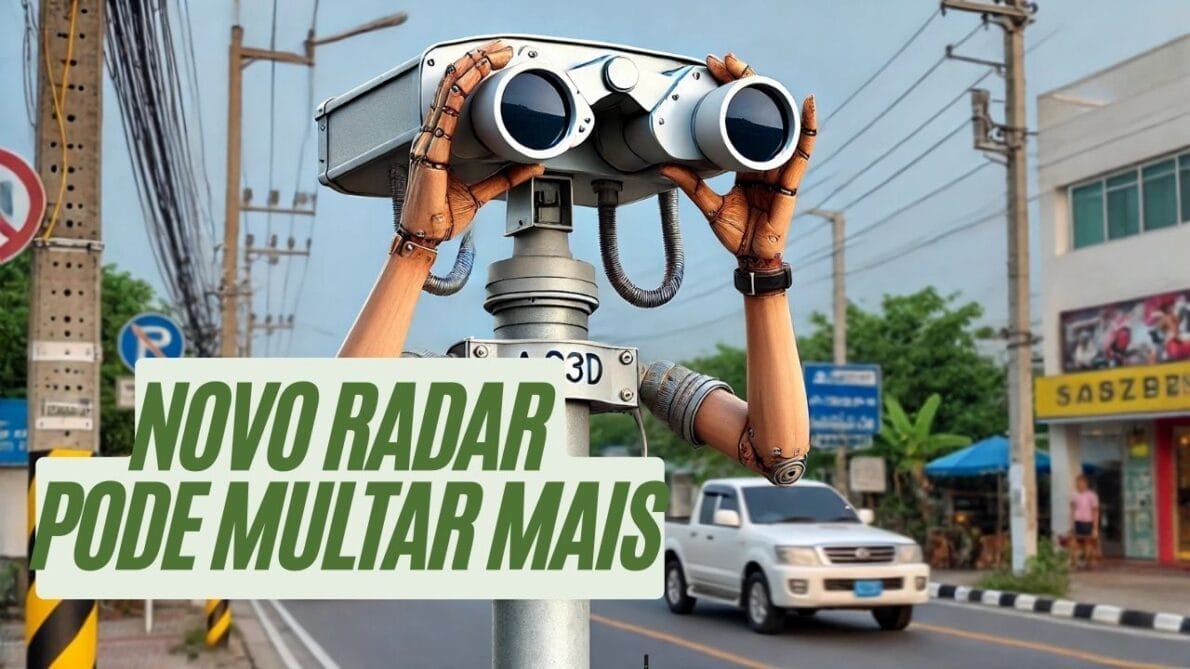


Get Ready, Driver! The New Radar Has Arrived and, With It, Your Chances of Skipping a Fine Are as Remote as Winning the Lottery. Now, It’s Not Enough to Hit the Brake When You Spot the Equipment from a Distance. This Advanced Device Is Ready to Catch Traffic Violations from 100 Meters Away. Installed in Various Regions of Brazil, the New Radars Promise to Transform Traffic Safety with More Effective and Accurate Technology.
The new radar in question uses Doppler technology, a modern system that emits electromagnetic waves capable of detecting traffic violations from a considerable distance. Unlike conventional radars, it not only measures vehicle speed but also accurately identifies other traffic violations. Thanks to the principle of the Doppler effect, the radar can monitor vehicle movement. When a wave emitted hits a moving car, the change in the frequency of the wave reflected back allows the system to accurately calculate speed, even if the driver tries to brake when approaching the equipment.
Traffic Violations Detected by the New Radar
This new radar is a true “big brother” of the roads. It Goes Beyond Flagging Speeding Drivers, managing to record various traffic violations such as:
- Running a red light;
- Using a cell phone while driving;
- Illegal turn;
- Driving against traffic;
- Stopping on the pedestrian crossing.
This broad monitoring capability is a response to the need for improved vigilance on Brazilian streets. The goal is clear: to increase safety and educate drivers for more responsible behavior.
-
Brazilian city bets on the business environment to generate jobs and attract investments in the energy sector — secretary reveals strategy at Macaé Energy 2026.

-
50 viaducts, 4 tunnels, 28 bridges, and 40 kilometers of bike paths: BR-262 in Espírito Santo will receive 8.6 billion reais for the largest engineering project in the state’s history, inspired by the Immigrant Highway in São Paulo.

-
Brazil produces too much clean energy and doesn’t know what to do with it: over 20% of solar and wind capacity was wasted in 2025 while investors flee and 509 renewable generation projects were abandoned in the last year.

-
Piauí will produce a new fuel that replaces diesel without needing to change anything in the truck’s engine and reduces pollutant gas emissions by half: truck drivers from all over the Northeast are already celebrating the news that will arrive later this decade.


Advantages of Implementing Doppler Radars
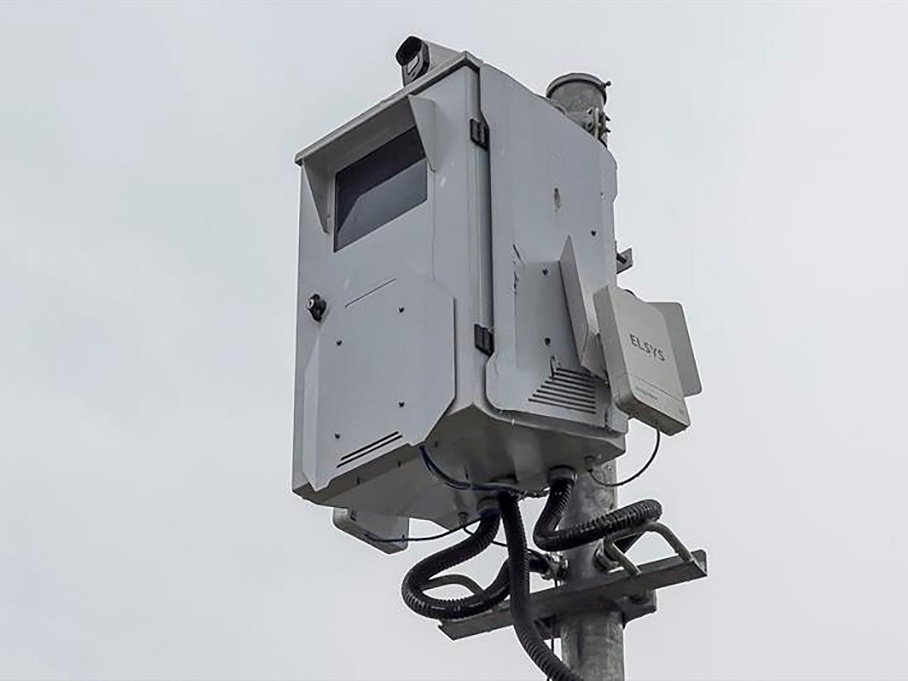
The benefits of Doppler radars go beyond merely issuing fines. With quick installation and no need for infrastructure on the road, these devices cause fewer disruptions to traffic. In addition, simplified maintenance makes the system more efficient and cost-effective in the long run.
Another positive aspect is the use of these radars as an educational tool. By ensuring more effective fine application, it is expected that drivers will adopt safer habits. Authorities hope that the presence of the radars, in itself, will have a positive impact on traffic behavior and reduce the number of accidents.
Quality Control and Certification of the New Radars
To ensure the accuracy and reliability of the new radar, the devices undergo rigorous quality control processes. They are certified by Inmetro (National Institute of Metrology, Quality, and Technology) and monitored by Contran (National Traffic Council). Certification and regular testing ensure that the radars function correctly, applying penalties fairly and within the required standards.
As more radars are installed on Brazilian streets and roads, a significant change in how drivers operate their vehicles is expected, contributing to safer and more civilized traffic.
Where Does the Money Collected from Fines Go?
A recurring question among drivers is: what happens to the money from fines? According to the Brazilian Traffic Code (CTB), the collected amount must be used exclusively for purposes related to traffic safety and education, such as:
Signage: Installation and maintenance of traffic lights, signs, and crosswalks.
Traffic Engineering: Projects to optimize flow and safety.
Policing: Acquisition of equipment and expansion of the enforcement staff.
Traffic Education: Awareness programs for drivers, cyclists, and pedestrians.
The use of resources must be transparent and monitored. The law requires that the responsible agencies inform how the money is being spent, allowing society to follow up and demand the efficiency of these actions.
Challenges in Applying Resources
Despite clear guidelines, the results of initiatives funded by traffic fine money are not always noticeable. Reasons for this include:
Lack of Planning: Poorly planned actions may have little effectiveness.
Corruption: Funds diverted for other purposes.
Insufficient Priority: Traffic safety may not be a primary focus of authorities.
For investment in safety to be effective, good resource management, social control, and prioritization of actions that truly make a difference in traffic conditions are necessary.
The new Doppler radar has arrived to revolutionize traffic violation monitoring in Brazil. With its ability to detect a wide range of violations, the device promises to make streets and roads safer, encouraging more conscious behavior from drivers. However, for the money from fines to truly contribute to improving traffic, correct application of resources must be ensured. Transparency and social control are essential to transform the reality of Brazilian traffic, making it safer for all.






A melhor maneira de educar um condutor e público geral é através de conscientização, nas escolas , faculdades,fábricas , indústrias nas igrejas, existem muitas possibilidades de educar sem precisar “meter a mão” no bolso do trabalhador que há sofre com tantos impostos e taxação do governo…
Brasileiro não aguenta mais ser roubado 🤨
E justo que tenha a placa de velocidade e radar pelo menos ah 100 metros, do contrário isso não passará de uma pegadinha para arrecadar dinheiro dos contribuintes
O dinheiro arrecadado vai pra todos os lugares, menos para a educação. Se houvesse educação de trânsito neste país não precisaríamos de radar. O dinheiro vai servir para aumentar o número de radares e engrossar os bolsos do governo.