





 Portuguese
  English
  Spanish
  5 min of reading
  0 comments


Camouflaged Prototypes Of The New Renault Duster Have Appeared Again In Tests In Brazil And Reinforce The Signs Of Renewal Of The SUV.
According to information from the portal Motor1, camouflaged units of the new generation of Renault Duster were seen circulating in Brazil, indicating that the SUV is undergoing testing in national territory.
The most recent records, made on roads in the interior of São Paulo and disclosed by specialized profiles and industry vehicles, point to an advanced validation stage of the model.
Videos published on social media, including material attributed to the profile @placaverde, show the SUV with heavy camouflage.
-
A French brand placed a car on four huge red balloons to prove that its suspension made the vehicle “float,” and the surreal scene became one of the most iconic and unusual images in automotive history.

-
Jeep Avenger begins production in Brazil, debuting as the brand’s new entry-level SUV and inaugurating an unprecedented phase by becoming the first national Jeep manufactured outside of Goiana, as part of a R$ 3 billion plan.
-
Costing R$ 12,490, the new Shineray Urban Lite 150 “cheap one” arrives in Brazil with a CVT transmission, digital dashboard, and LED lights, making it more affordable than the Biz and targeting those who want to abandon the bus.
-
Ducati brings to Brazil the Superleggera V4 Centenario: 228 hp that become 247 with a track kit, carbon fiber and carbon-ceramic brakes, estimated price between R$ 1.5 and 2 million, deliveries only in 2027.

The presence of the car in circulation suggests that Renault is assessing the project under real-use conditions, a common procedure before a potential launch or model update.
Renault Expands SUV Offering And Keeps Duster In The Portfolio
The movement comes as the manufacturer expands and repositions its offering of sports utility vehicles in the country.
In recent months, the brand has begun focusing efforts on products such as the Kardian, positioned at the base of the portfolio, and the Boreal, presented as a higher segment option.

In this context, the Duster’s permanence in the local strategy was mentioned by the company’s leadership.
In an interview with Motor1.com Brazil, Ariel Montenegro, cited as CEO of Renault-Geely Brazil, stated that the model will remain in the national portfolio and declared that its lifecycle “is not over yet.”
According to him, “at some point, there will be a renewal of the Duster. We are not going to abandon it.”
The statement reinforces that the brand maintains plans for the utility, although it has not detailed timelines or technical specifications for the Brazilian market.
New Duster From India Indicates Design Similar To The European Dacia Duster
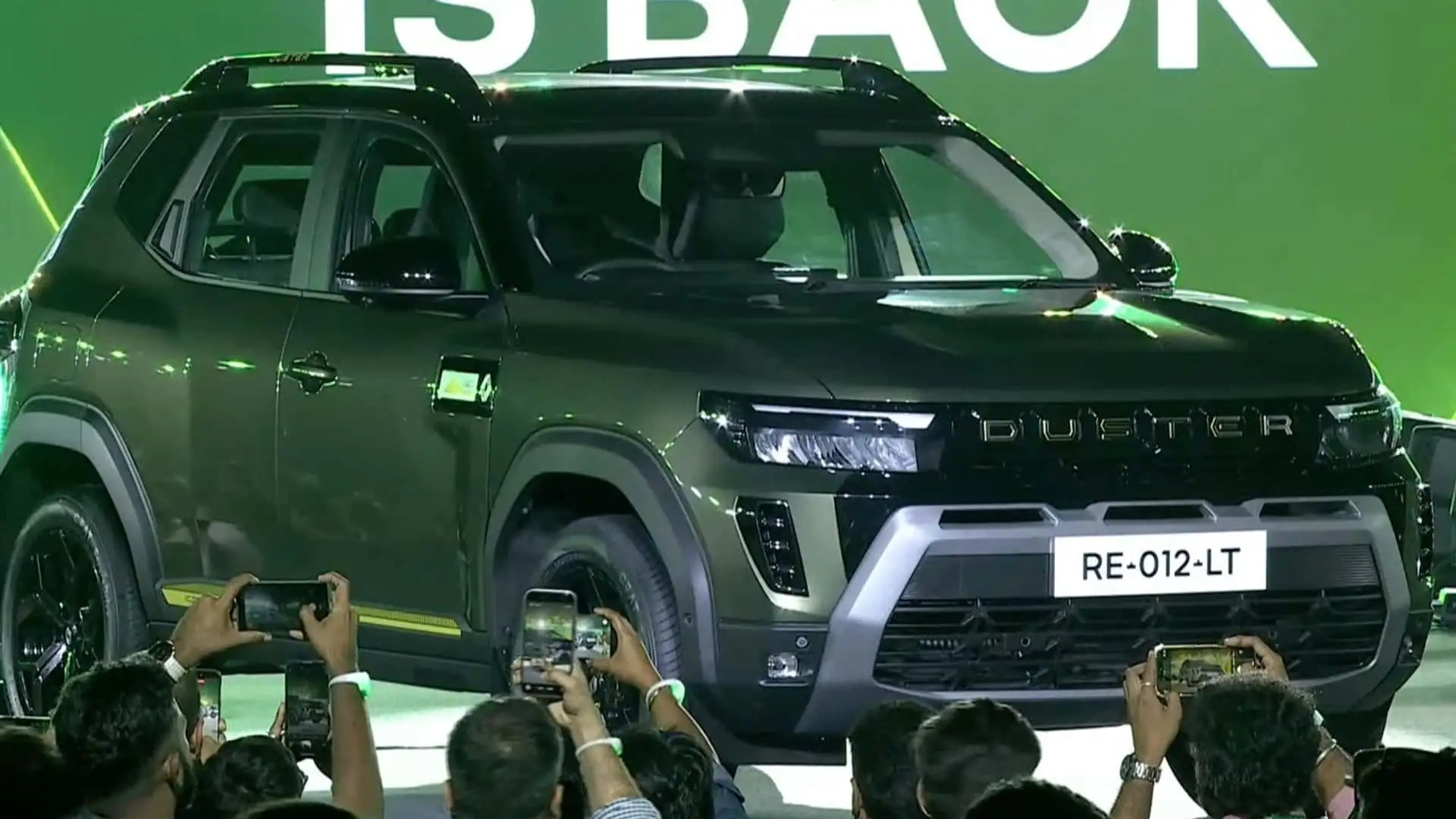
While tests are progressing in Brazil, Renault introduced a new generation of Duster in India.
The model displayed in that market retains the base and design aligned with the European Duster sold under the Dacia brand, but adopts the French manufacturer’s own visual identity.
Among the observed differences are the application of Renault’s diamond logo on the rear and the word “Duster” prominently featured on the front grille.


The regional adaptation strategy has been used in other markets and is part of the global operations of the alliance.
Specialized publications indicate that the Indian version may feature different mechanical sets, including turbo options and, in the future, electrified alternatives.
So far, however, Renault has not officially confirmed which engines would be destined for Brazil.
RGMP Platform May Replace The Current Base Of The Duster In Brazil
In technical terms, industry reports indicate that the new generation should adopt the RGMP, which stands for Renault Group Modular Platform.
The architecture is described by the company as a modular base capable of producing different models and body styles within the group’s global strategy.
Currently, the Duster sold in Brazil uses an evolution of the B0 platform, applied by Renault since the last decade in vehicles like Logan and Sandero.
A potential migration to RGMP would represent a significant structural update, according to analyses published by the specialized press.
The modular platform is also mentioned in institutional materials as being compatible with electrification solutions in the medium and long term.
Still, the brand has not confirmed whether the Brazilian Duster will feature hybrid versions or when this could occur.
Dimensions Of The European Duster Serve As A Reference For The New Model
The Indian Renault did not disclose, in the initial presentation, all the detailed measurements of the new Duster.
As a reference, the European Duster sold by Dacia has 4,343 millimeters in length, 2,657 mm of wheelbase, 1,921 mm in width, and 1,616 mm in height, in addition to a minimum trunk capacity announced at 594 liters, according to official data from the manufacturer in the United Kingdom.

In Brazil, the Duster currently in line has a capacity of 475 liters in the luggage compartment, according to information released by Renault on its official website.
The dimensions of the future national model have not yet been confirmed.
The Boreal, indicated by the brand as a higher segment SUV within the recent strategy, presents larger dimensions compared to the European Duster, according to data published by automotive industry vehicles.
This difference helps to delineate the positioning of each product in the lineup.
Patio Sightings In São Paulo Gather Camouflaged Prototypes From Renault
In addition to sightings in motion, the IG Carros portal published images of a patio in the São Paulo region with several camouflaged Renault vehicles.
Among them were units identified as Duster, as well as examples of the Boreal and the Koleos.
The report describes prototypes at different levels of camouflage, which usually indicates distinct phases of validation and testing.
Renault has not officially commented on the content of the images up to the time of publication of the articles.
In the same location, according to IG Carros, there were two Volkswagen models, a T-Cross and a Polo, both with green plates.
The vehicle does not specify what the purpose of these cars in the yard might be, and there is no official confirmation regarding any technical comparisons or competitive analysis.
With the circulation of prototypes on public roads and the registration of camouflaged units at facilities in the state of São Paulo, the project’s advancement becomes more visible.
However, Renault has not yet announced launch dates, versions, or specifications for the Brazilian market.
In light of this, the confirmation of timelines and technical details will depend on official communication from the manufacturer, while testing continues in the country.









-

-

-

-

-

-

58 pessoas reagiram a isso.