





 Portuguese
  English
  Spanish
  4 min of reading
  0 comments


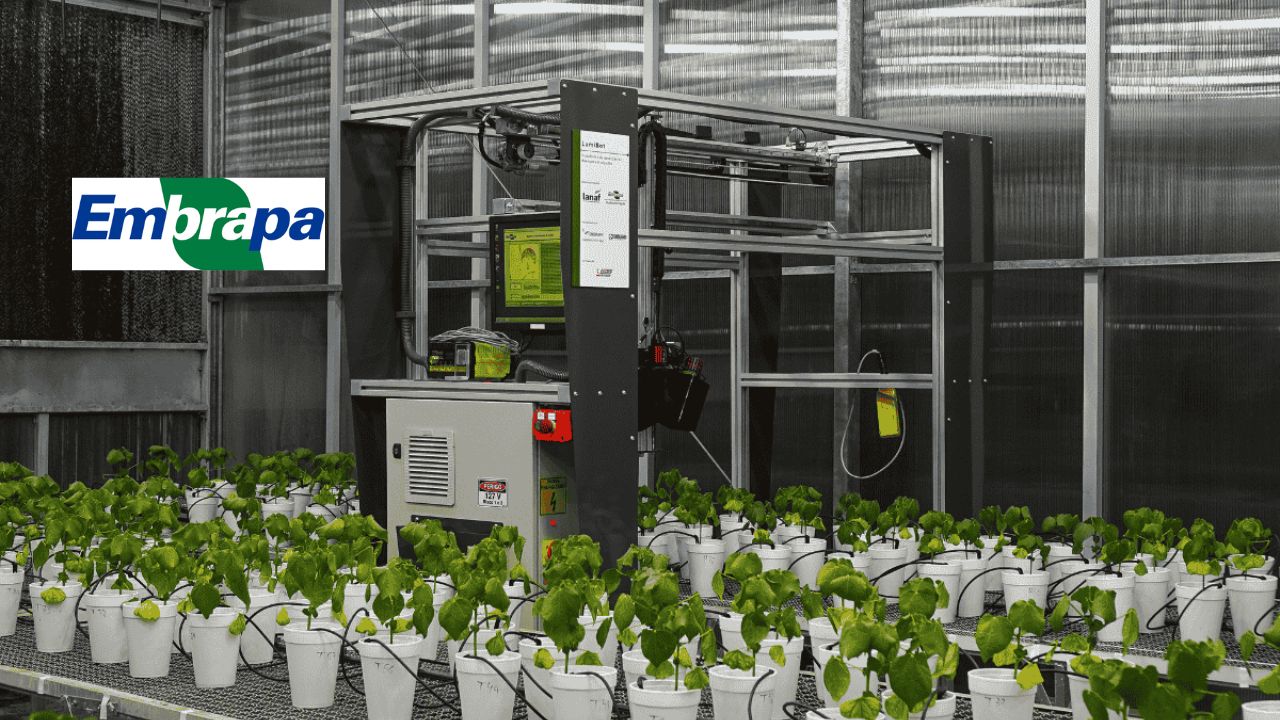
The Robot Uses Ultraviolet-Visible Light and Artificial Intelligence for Early Diagnosis of Diseases in Crops Such as Cotton and Soybean, Reducing Losses and Use of Pesticides.
A new robotic system created by Embrapa Instrumentação, in partnership with the Mista Cooperative for Agribusiness Development – Comdeagro, identified, when there are still no visible symptoms, the presence of nematodes — pests that cause serious damage — in cotton and soybean crops in Brazil.
The technology aims to make diagnosis faster, reduce the use of pesticides, and increase the sustainability of the crops.
The prototype called LumiBot operates at night, in the state of São Paulo, using ultraviolet-visible light and artificial intelligence, and has already achieved accuracy rates above 80%.
-
Motorola launched the Signature with a gold seal from DxOMark, tying with the iPhone 17 Pro in camera performance, Snapdragon 8 Gen 5 that surpassed 3 million in benchmarks, and a zoom that impresses even at night.

-
Satellites reveal beneath the Sahara a giant river buried for thousands of kilometers: study shows that the largest hot desert on the planet was once traversed by a river system comparable to the largest on Earth.

-
Scientists have captured something never seen in space: newly born stars are creating gigantic rings of light a thousand times larger than the distance between the Earth and the Sun, and this changes everything we knew about stellar birth.

-
Geologists find traces of a continent that disappeared 155 million years ago after separating from Australia and reveal that it did not sink, but broke into fragments scattered across Southeast Asia.

What Is and How the Embrapa Robot Works
The LumiBot combines robotics, light, and artificial intelligence to map diseases in cotton and soybean plantations.
During the process, the robot illuminates the leaves with ultraviolet-visible light and captures the emission of fluorescence (light that plants reemit after being excited) to detect physiological changes.
Images are recorded in about seven seconds per leaf, in a dark environment to eliminate external interferences, and analyzed by algorithms trained to distinguish between diseases and other types of plant stress (such as drought or nutritional deficiency).
According to researcher Débora Milori, study coordinator, “we have been able to generate data and models with accuracy rates above 80%, in addition to differentiating diseases from water stress.”
Who Is Behind It and Where the Project Takes Place
The development is led by Embrapa Instrumentação, in São Carlos (SP), with support from Comdeagro, in Mato Grosso.
The prototype has been tested in a greenhouse, which means it is not yet fully operational in the field — but preliminary results are promising.
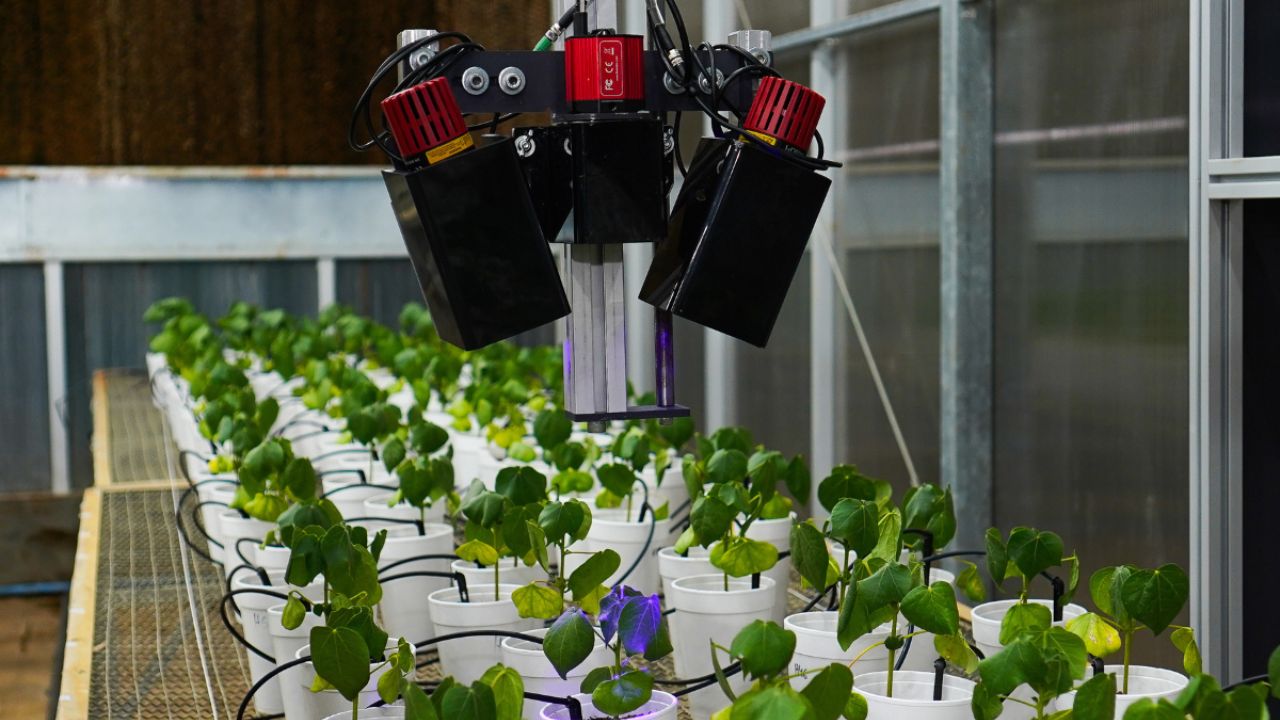
The equipment will be officially presented during the National Symposium on Agricultural Instrumentation (Siagro), from October 14 to 16, at the Embrapa Agricultural Automation Experimental Field in São Carlos.
Crops such as cotton and soybean, which are of great economic relevance to Brazil, face significant annual losses caused by nematodes — microorganisms that attack roots and compromise plant growth.
It is estimated that losses exceed R$ 4 billion in cotton production and R$ 27 billion in soybean production.
With the robot, early diagnosis allows for the application of pesticides only in affected areas, reducing costs, chemical use, and environmental impacts, while improving crop efficiency.
Challenges and Next Steps
Although the prototype has already shown effectiveness, it is still in the “greenhouse” stage — that is, in a controlled environment.
The next step is to adapt it for use in field crops, attaching the system to agricultural vehicles such as sprayers or rover-type robots.
Another challenge lies in ensuring that the light, cameras, and algorithms function under real cultivation conditions — with variations in soil, climate, leaf position, and other interferences — in order to maintain the accuracy already achieved in the tests.
Impact on Agribusiness and the Environment
In addition to increasing producers’ profitability by preventing losses and optimizing pesticide use, the project strengthens precision agriculture in Brazil.
As consultant Sérgio Dutra emphasizes, “This avoids the excessive use of chemical pesticides and reduces environmental impact, an important advance for precision agriculture in Brazil. It is also possible to improve fiber quality and ensure greater profitability for the producer.”
From an environmental standpoint, by applying pesticides only where there is infestation, the dispersion of chemical products in the soil and water is reduced, promoting a more sustainable use of resources.
What the Embrapa Robot Represents for the Future
This type of technology represents a paradigm shift: from manual, reactive, and generic monitoring to automated, early, and localized detection.
The combination of robot + light + artificial intelligence paves the way for fast, precise, and less invasive diagnoses in the field.
In this regard, LumiBot could serve as a model for other crops beyond cotton and soybean, extending the use of similar technologies to different plants, pathogenic agents, and cultivation systems.
Thus, it can be concluded that the robot using light and artificial intelligence for disease diagnosis in cotton and soybean marks a significant step toward a smarter, more efficient, and sustainable agriculture.
With information from Agro Estadão and Embrapa.






Seja o primeiro a reagir!