





 Portuguese
  English
  Spanish
  4 min of reading
  11 comments


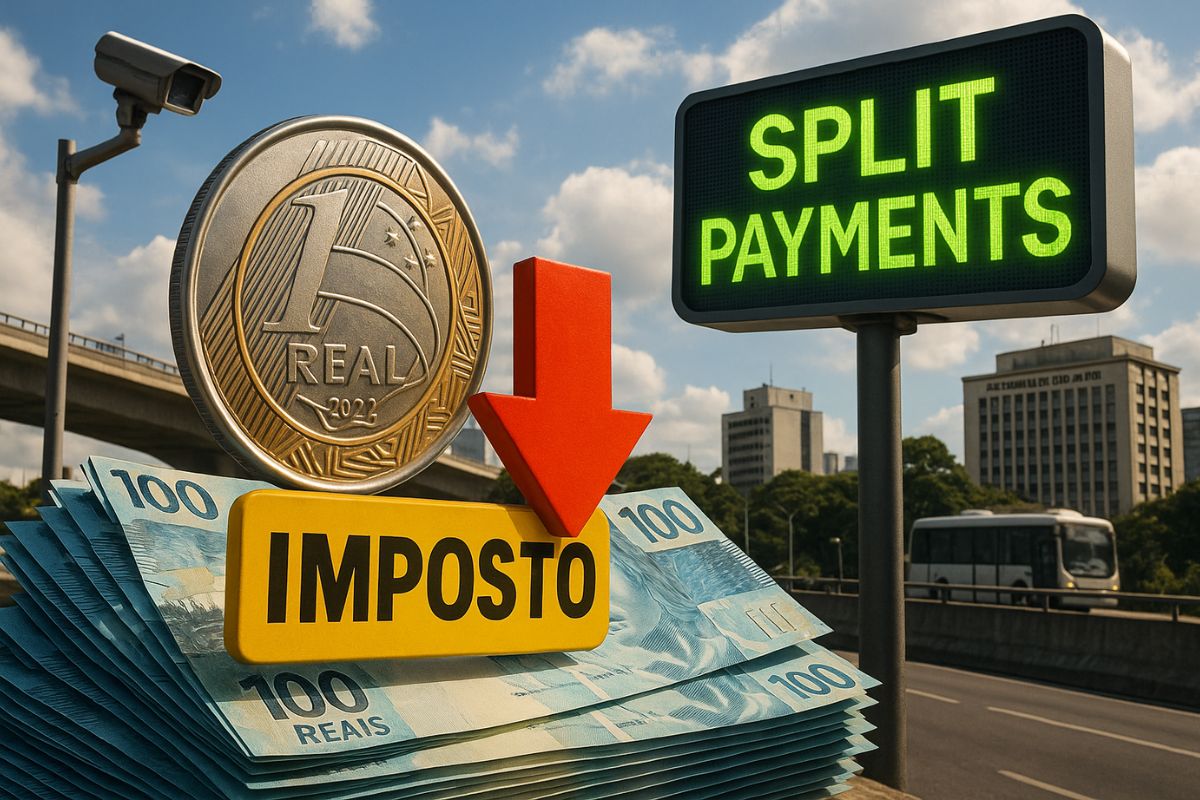


With Platform 150 Times Larger Than Pix, Government Plans to Automate Collection with Split Payments, Reducing Tax Evasion and Changing Business Cash Flow, Says Lavínia Ramos Accountant.
The new tax system that will begin testing in 2025 is expected to completely transform the way taxes are collected and paid in Brazil. According to accountant Lavínia Ramos, the model, described as 150 times larger than Pix in data volume, will allow all commercial transactions to be tracked in real time, with taxes automatically deducted through the mechanism called Split Payments.
The technology is part of the implementation of the tax reform, approved in 2024, and aims to replace the subsequent collection of taxes with a system of instant and automatic billing. According to estimates from technicians involved in the project, collections could increase between R$ 400 and R$ 500 billion per year, reducing fraud and defaults.
How The New Tax System Works
The platform is designed to integrate payments, issuance of invoices, and automatic transfers to public coffers at federal, state, and municipal levels.
-
Oil surged to $115 a barrel due to the war in the Middle East, and diesel in Brazil has already risen to R$ 7.45 per liter, while the United States…

-
Brazilian city bets on the business environment to generate jobs and attract investments in the energy sector — secretary reveals strategy at Macaé Energy 2026.

-
50 viaducts, 4 tunnels, 28 bridges, and 40 kilometers of bike paths: BR-262 in Espírito Santo will receive 8.6 billion reais for the largest engineering project in the state’s history, inspired by the Immigrant Highway in São Paulo.

-
Brazil produces too much clean energy and doesn’t know what to do with it: over 20% of solar and wind capacity was wasted in 2025 while investors flee and 509 renewable generation projects were abandoned in the last year.


Unlike Pix, which only records who sent and who received the money, the new system will also register the reason for the transaction, automatically linking the payment to the electronic invoice.
As a result, each commercial operation will be traceable and auditable, making it harder to commit fraud, discrepancies, and errors.
According to Lavínia Ramos, the tax will be calculated and collected at the moment of purchase or service provision, eliminating the time companies currently have to settle taxes like PIS, Cofins, ISS, or ICMS.
The Split Payments, the core of the system, automatically divides the amount paid: part goes to the seller and part is transferred directly to the government entities, with no need for a payment guide.
The entrepreneur will receive the net amount, already deducted of the taxes.
Impact On Companies And Cash Flow
Currently, companies receive the total amount from sales and pay taxes at later dates, which allows to manage working capital and even temporarily invest these resources.
With the new tax system, this dynamic will change radically.
The amount of taxes will be withheld at the time of sale, preventing the entrepreneur from using this money before the collection.
For many businesses, especially small and medium-sized, this could mean a loss of financial breath as there will no longer be the “breathing period” between collecting revenue and paying taxes.
Experts point out that the impact should vary by sector.
Companies that rely on a high volume of input purchases may feel the immediate effect, readjusting product and service prices.
The system, however, also promises to reduce accounting errors and bureaucratic costs by eliminating part of the accessory obligations and manual calculations.
Real-Time Monitoring And Combating Tax Evasion


The new tax model is expected to function as a central tracking platform for national transactions, cross-referencing data from payments, invoices, and accounting records.
Any discrepancy between the amount paid and the amount declared on the invoice will be automatically identified, preventing the operation from proceeding until the error is corrected.
The Federal Revenue Service states that the system should drastically reduce tax evasion and eliminate so-called “note companies”, shell companies used to issue false invoices and mask irregular operations.
In addition, automation is expected to reduce human errors and increase efficiency in tax transfers to the three levels of government.
Timeline And Implementation Phases
The project began testing in 2025, in a pilot phase, and is expected to partially go into operation in 2026.
The timeline provides for progressive expansion until 2032, when the system should be 100% operational.
During the transition, companies will continue to collect taxes in the current formats, but will gradually begin to integrate into the digital environment of the new model.
In the long term, the Federal Revenue Service hopes to create a fully automated tax ecosystem, with the possibility of tax cashback for low-income families, returning part of the taxes paid on consumption.
The Taxpayer Side
In addition to the changes for companies, the new system will also impact the average citizen.
With all purchases and services tracked in real time, personal transactions will be more transparent, but also more exposed to fiscal control.
On the other hand, automation promises to simplify the consumer’s life, eliminating the need to manually declare information about expenses and taxes in some cases.
The integration between payments, invoices, and taxes should make the system more predictable and less prone to errors, although it raises concerns about privacy and data concentration.
The new tax system represents a milestone in the modernization of Brazilian tax collection, combining technology, automation, and total traceability of transactions.
While the government bets on efficiency and transparency, the productive sector fears loss of financial autonomy and indirect cost increases.
What do you think about this? Do you believe this new model will simplify tax payments or increase state control over the finances of companies and citizens? Share your opinion as your view helps to understand the real impact of this transformation.









Coitado do pedreiro, carpinteiro, da cabeleireira e do pintor, pra pegar como exemplo. Metade do ganho vai pro governo, aplicar em “obras”.
Matéria um pouco tendenciosa não.
Então quem é Rico fica mais Rico e quem é mais pobre fica mais **** enfim o AMOR VENCEU NÃO AO DINHEIRO DIGITAL
Esse controle é necessário e deveria ser adotado já há muito tempo, tornando o Brasil um país justo com os envolvidos nos diversos tipos de transações. A máxima “devo não nego, pagarei quando puder” deixa de ser usada e a justiça fiscal é finalmente adotada.
Vá se foder filho da **** . **** **** do governo