





 Portuguese
  English
  Spanish
  3 min of reading
  0 comments


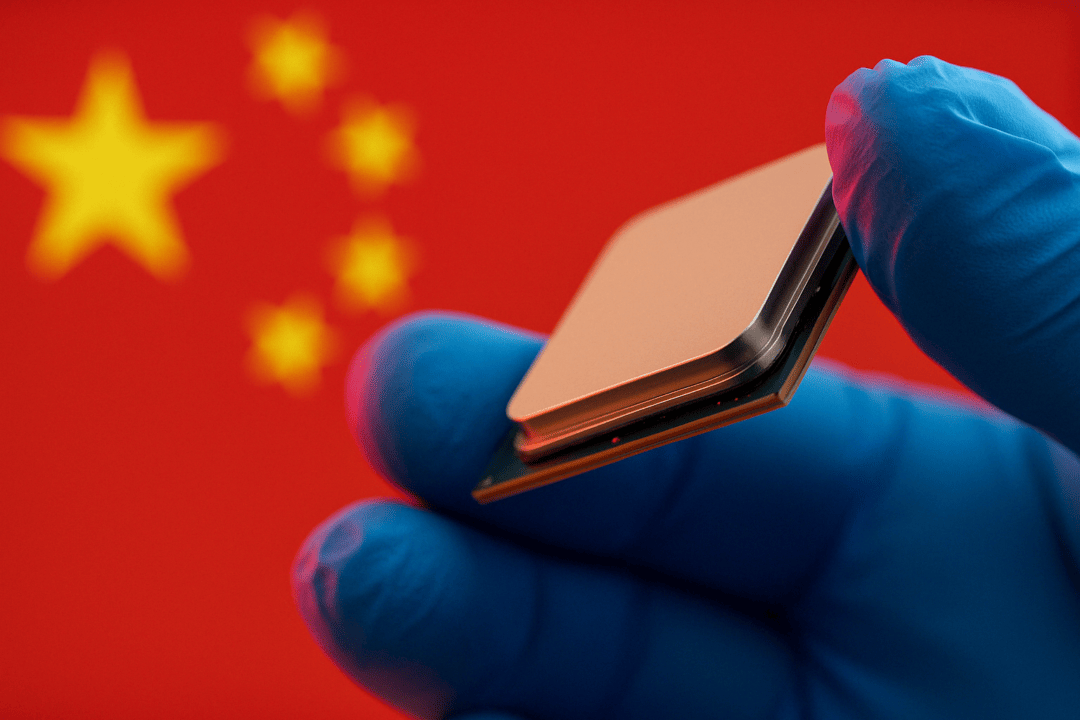
China Just Announced A Significant Advancement In The Semiconductor Industry: A New 2D Transistor That Can Increase Processor Speeds By Up To 40% And Reduce Energy Consumption By 10%
Chinese researchers announced a technological breakthrough that could change the course of the semiconductor industry. A new 2D transistor, made without silicon, has been developed in China and promises performance up to 40% higher than current chips, with 10% less energy consumption.
The information was released by the South China Morning Post (SCMP), based on a study published in the journal Nature.
A Change In Direction
The innovative transistor was created by a team led by Professor Hailin Peng from Peking University (PKU).
-
What if the Sun disappeared suddenly? Simulation shows Earth in darkness within minutes, extreme cold, and rapid collapse of life on the planet.

-
A 2,400-year-old iron foundry has been discovered in Senegal with 100 tons of slag, 35 furnace bases, and signs of nearly eight centuries of continuous metallurgical activity.

-
Four humans are flying towards the Moon inside the Orion capsule launched by the SLS rocket, and on April 6, Artemis II will disappear behind the far side of the Moon without communication with Earth for nearly an hour.

-
Worlds covered by water, atmospheres filled with hydrogen, and the possibility of life beyond Earth: ocean planets are rewriting the map of cosmic search and forcing scientists to rethink where to look.


According to Peng, this technology represents more than just an incremental advancement. He compared the innovation to a complete lane change on the road to chip development. “If innovations in chips based on existing materials are considered a ‘shortcut,’ then our development of transistors based on 2D materials is like ‘changing lanes’,” he told SCMP.
The Structure Of The New Transistor
The developed transistor is of the GAAFET type (Gate-All-Around Field Effect Transistor). Unlike the traditional FinFET — which wraps the transistor’s source on three sides — the GAAFET completely surrounds the source with the gate on four sides. This improves electrostatic control and allows for a stronger and faster current.
In practice, the transistor operates like an electronic switch. It has three main parts: the source, the gate, and the drain.
The gate is the element that controls the flow of electric current between the source and the drain. In the new design, the gate surrounds the entire source, increasing control and reducing losses due to static electricity. This results in greater efficiency and speed.
Bismuth Oxiselenide As A Key Material
The differentiator of the Chinese transistor is the use of a new material: bismuth oxiselenide. This compound has been used as a semiconductor in the “atomically thin” 2D transistor, according to the study.
Bismuth offers significant advantages over traditional silicon. It is more flexible and less brittle. Additionally, it provides higher carrier mobility, which means electrons move more quickly under the influence of an electric field.
The material also has a high dielectric constant, which means greater capacity to store electrical energy, contributing to the device’s efficiency.
Strategic Potential For China
If the new transistor is successfully applied in chips, it could represent more than just a technological leap.
The creation of a chip based on this transistor could surpass products from American giants like Intel.
According to the researchers, it could allow China to avoid current limitations in purchasing advanced chips and bypass technological barriers imposed by U.S. companies.
A Milestone In Transistor Research
The study was published on February 13 in the journal Nature, one of the most important in the scientific community.
The project is described as a new pathway for the future of chips, breaking away from silicon’s dominance in semiconductor manufacturing.
The team from Peking University believes that the 2D architecture and the unprecedented material form a combination with the potential to change the industry.
Scientists highlighted that the GAAFET architecture was already known, but that the use of bismuth in a two-dimensional design is the true innovation. The new Chinese transistor could soon be part of the world’s fastest and most efficient processors.










Seja o primeiro a reagir!