





 Portuguese
  English
  Spanish
  4 min of reading
  0 comments


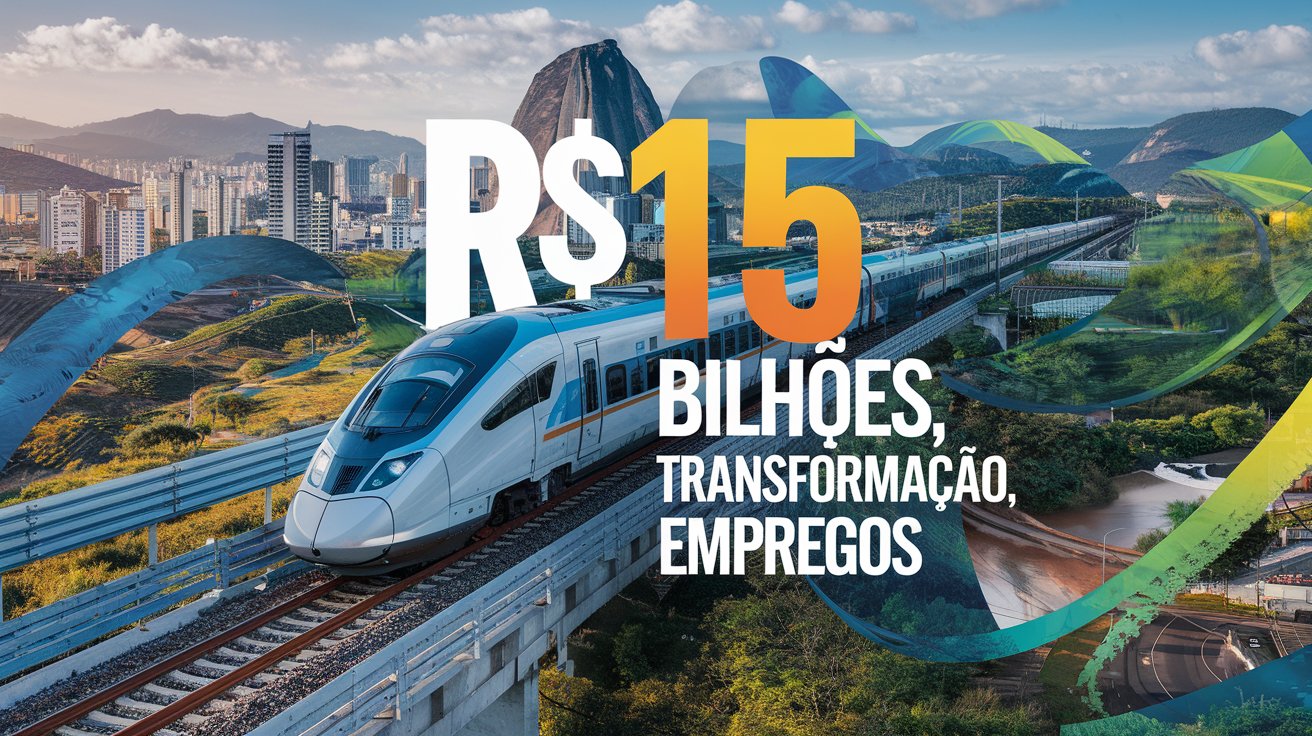
Highly Anticipated Intercity Train Project (TIC) Is Becoming a Reality! With an Impressive Investment of R$ 15 Billion, It Will Connect São Paulo to Baixada Santista in Just 1h30, Generating No Less Than 13,000 Jobs!
The long-awaited project of the Intercity Train (TIC) between São Paulo and Baixada Santista is finally beginning to take shape and promises to revolutionize rail transport in the state.
The proposal, which aims to serve more than 1.8 million passengers per year, will have a robust investment of R$ 15 billion and has the potential to generate around 13,000 direct jobs during its execution.
The connection between the São Paulo capital and the Baixada Santista region will be made in just 1h30, making life easier for millions of people who daily face long traffic jams to travel between the two locations.
-
Work at Vale! The company is recruiting individuals with high school, technical, and higher education in areas such as maintenance, operations, and technology, with 400 immediate openings in 6 states, salaries of up to R$ 10,000, and 100% online applications.

-
Australia accelerates the search for foreign workers in 2026 with an official list of in-demand professions that includes drivers, programmers, and nurses, salaries starting from AUD 76,515 per year, and visas that can lead to permanent residency.

-
The Macaé City Hall starts the week with job openings that promise to boost hiring and open doors for qualified professionals and newcomers to the market, with a focus on offshore positions.

-
Future profession with immediate earnings: Specialist reveals how a solar energy technician earns R$ 8,000 per month by taking advantage of the explosion in demand across the entire country.


Various Route Options Are Being Evaluated
Among the route options being analyzed, the first alternative is the use of the Serra do Mar railway, which already connects the Port of Santos to São Paulo.
This is the most direct route and, therefore, the fastest.
However, for this plan to become a reality, a contract with the responsible concessionaire for that stretch will be necessary, which may pose challenges in terms of negotiation and additional costs.
The second option involves the construction of a new connection in Mongaguá, which would require a layout that circumvented the mountains, an area with less gradient, facilitating the implementation of a rail route.
For this alternative, it would be necessary for the train to depart from the Pinheiros Station in São Paulo.
The construction of this new line could represent a significant advancement, but it will also require considerable investment in infrastructure and project feasibility analysis.
The third proposed option contemplates the use of the right-of-way of the Imigrantes highway, which also connects the city of São Paulo to Baixada Santista.
Although this is a potentially viable alternative, the use of an existing highway could demand significant adaptations to accommodate the rail system, increasing costs and construction time.
Timeline and Outlook for the Project
This dream of seeing a train connecting São Paulo to Baixada Santista is not new.
The demand for a more efficient and faster means of transportation between these two locations is longstanding, being a long-standing claim by the population suffering from intense traffic on the region’s highways.
The development of the project officially began in February 2024, and the program gained more attention with the endorsement of the State’s Investment Partnerships Program of São Paulo (PPI-SP), which formally initiated the process.
According to the established timeline, the construction project is expected to be completed by the 2nd quarter of 2026, with the conclusion of the initial stages slated for the end of 2025.
The Inter-American Development Bank (IDB) is conducting the development phase, bringing its expertise to ensure that the project meets international quality and sustainability standards.
The expectation is that, throughout the development, adjustments will be made as the works progress and new feasibility analyses occur.
Economic Impact and Benefits for the Region
The construction of the Intercity Train will not only transform the logistics of transport between São Paulo and Baixada Santista but also have a significant economic impact in the region.
With 13,000 new job positions created, the project will invigorate various sectors, such as civil construction, logistics, and maintenance, promoting economic growth both in the capital and in Baixada Santista.
Moreover, the speed of transport between the two regions may attract more tourists and facilitate the movement of workers, students, and entrepreneurs, boosting local commerce and tourism.
The reduction of traffic on the highways will also help decrease pollution and time spent in transit, leading to improvements in the quality of life for the population.
The Importance of the Intercity Train for Urban Mobility
The Intercity Train project represents a milestone in urban mobility in the state of São Paulo.
With the population of São Paulo and Baixada Santista continuously growing, the demand for faster, sustainable, and more efficient transportation solutions has never been higher.
The TIC emerges as a response to this need, offering a transport alternative capable of accommodating a large number of passengers in a short time.
With the implementation of the train, it is expected to relieve the road system and provide a safer and more comfortable option for those needing to travel between the two regions.
The reduction of traffic jams will be one of the greatest benefits for drivers, especially on saturated highways that have been a constant concern for years.
Promising Future: The Impact of the Intercity Train on São Paulo Mobility
As the project progresses, it is possible that new solutions for rail transport will emerge over the years.
The Intercity Train could serve as a model for other integration projects between different metropolitan regions of Brazil, positively impacting urban mobility in the country.
The expectation is that the project will be completed within the established timeline and that the inauguration of the train will take place in the near future, benefiting millions of passengers who rely on more efficient and quality transportation.
In summary, the Intercity Train project promises not only to connect São Paulo to Baixada Santista quickly and efficiently but also to generate thousands of jobs and stimulate the local economy, with lasting benefits for the population of the capital and the coastal region.









Seja o primeiro a reagir!