





 Portuguese
  English
  Spanish
  3 min of reading


Student Develops 3D Printed Humidifier That Does Not Use Electricity. The Device Functions Like a Tree and Will Soon Be Available on the Market
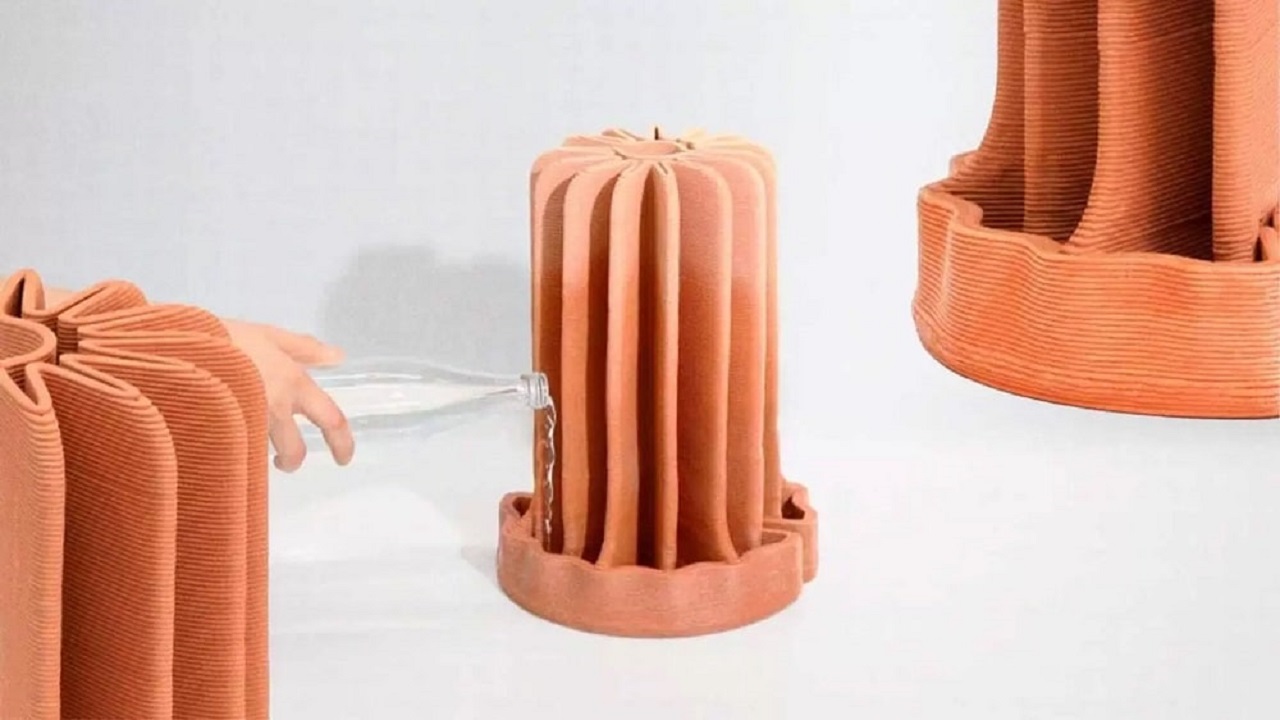
A new developed humidifier promises to revolutionize the segment, given that it does not require electricity to operate and can be produced by a 3D printer. Made as a master’s project by designer Jiaming Liu at the German university of Folkwang University of the Arts, the Print Clay Humidifier is made with clay and uses only the laws of physics to function.
3D Printed Humidifier Is Inspired by Trees

According to the project developer, its unique shape, achieved through 3D printing, is essential for the device to function correctly. It is difficult to develop it by hand or through other forms of injection molding. The 3D printed humidifier, which does not require electricity, is inspired by plants and trees. The bottom part, where the water is stored, mimics the soil.
The extension curves, inserted inside the storage container, are responsible for water absorption just like a tree functions. The main part is responsible for carrying the liquid to the top and distributing it as if they were trunks and branches.
-
While the world looks at oil, the war with Iran is already disrupting helium supply from Qatar, affecting car and iPhone chips, threatening AI expansion, and putting pressure on aluminum packaging at the highest value in four years.

-
Global warming will expose a treasure hidden under the ice of Antarctica and may spark an international dispute over gold and valuable minerals.

-
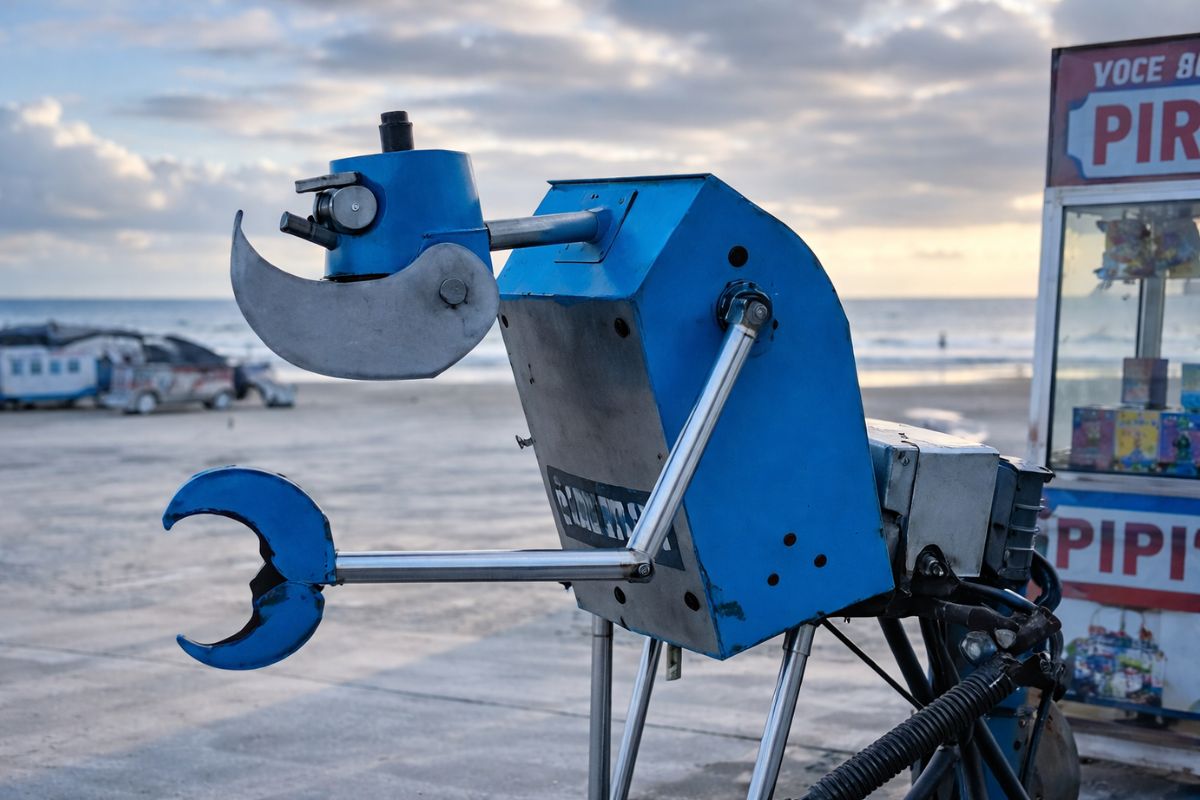
A street vendor from Praia Grande built a robot made of scrap from scooters and washing machines that pulls his popcorn cart on the beach, emits sounds, and interacts with customers, becoming an attraction on the coast of São Paulo.
-
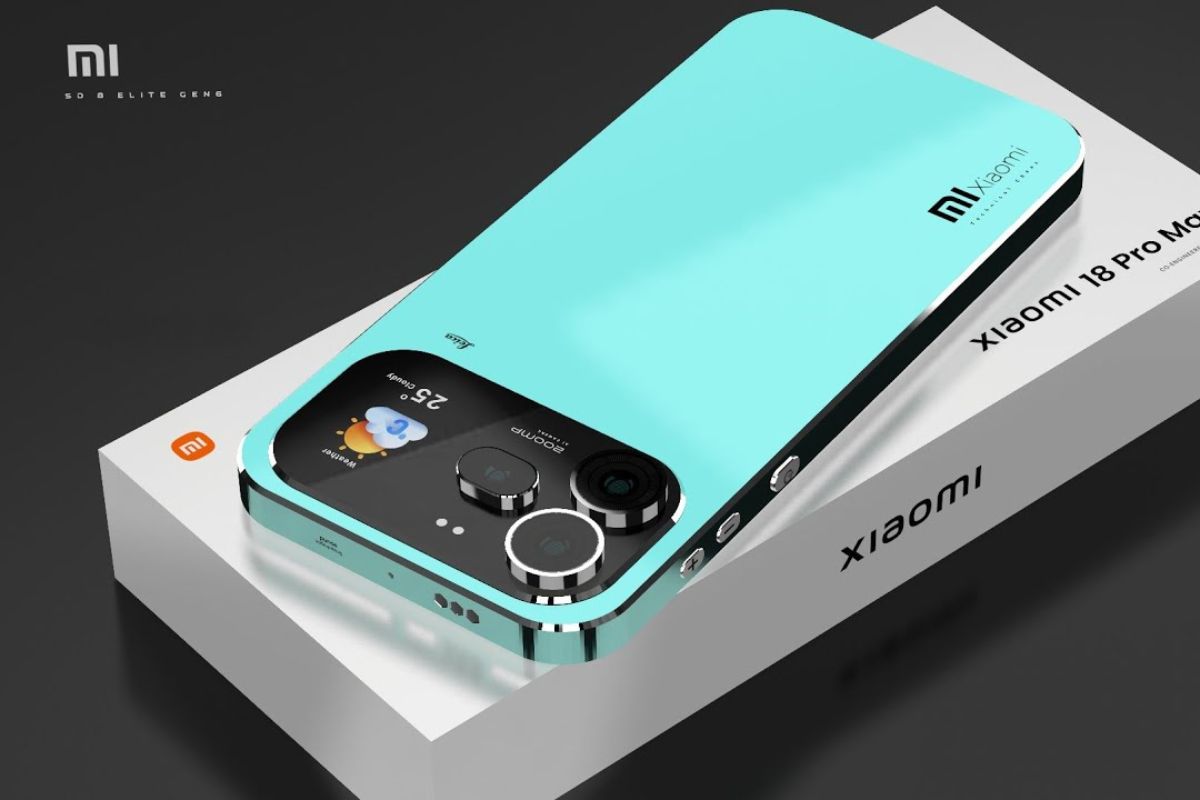
The specifications of the Xiaomi 18 Pro Max have been leaked, and the highlight is a dual 200 MP camera with a new 22-nanometer technology that promises to consume less energy and capture details in shadows and bright areas using LOFIC HDR.

The evaporation process without electricity from the device is similar to that of terracotta pots when they cool their contents. The three pieces are printed in just one piece and can store half a liter of water.
On the outside, it is lined with glass to prevent leaks. The “roots” and the top part of the trunk must come into direct contact with the air and water. They are responsible for absorbing water from the container through the pores in the clay.
Advantages of the Humidifier That Does Not Need Electricity
After conducting various tests, Liu discovered that the accordion shape may be the best option for absorbing and evaporating water, given that it increases the surface area in contact with the air. The unique structure of the 3D printed humidifier allows it to absorb and evaporate water better compared to traditional models.
Another benefit, according to the designer, is the micropores in the clay, where the evaporation rate is much higher, absorbing more water and evaporating it faster. The designer tested several materials for more than two years. The previous model was made of concrete. With the use of clay in the 3D printer at the university, he was also able to understand the impact of ceramics on the environment.
Through these tests, Liu discovered that the union of clay and ceramics, with one-third of it being recycled, creates a stronger structure with greater absorption capacity. The designer also developed a smaller model, at a 1:2 scale, which functions as an aroma diffuser. However, the device is not yet on the market, as Liu does not have any company willing to finance large-scale production, but he states that he would be happy to launch it on the market.
Mini Portable Air Conditioner Arrives in Brazil
While Liu’s invention has not yet reached the market, there is a new product in the country that may be the solution for many people’s hot days: a mini portable air conditioner.
The device is a mini air conditioner produced by the German company “Pro Technology,” and unlike common products, the device uses only water, and it was this difference that made the equipment stand out in the market, as its production cost is the lowest.










Seja o primeiro a reagir!