





 Português
  Inglês
  Espanhol
  3 min de leitura


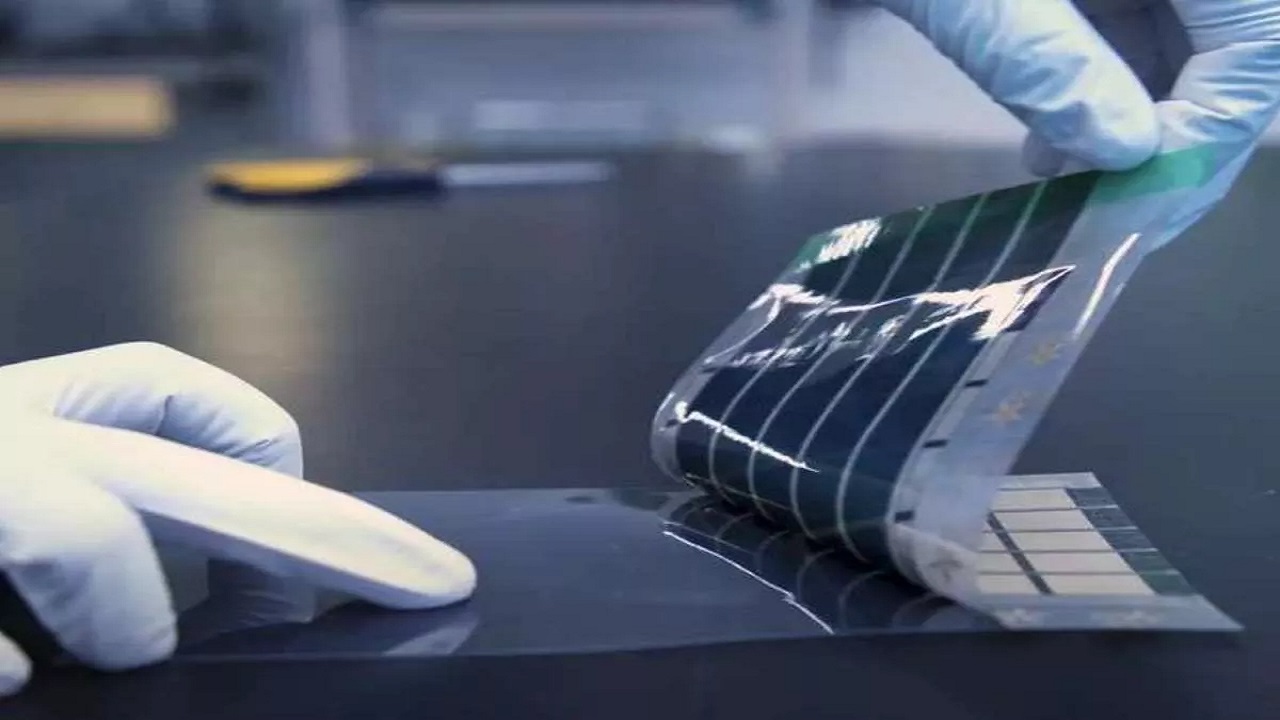
The Development Of This New Solar Power Device Is By The Massachusetts Institute Of Technology (MIT), Which Believes In Innovation And Constant Update Of The Renewable Energy Sector.
A team of engineers from the Massachusetts Institute of Technology (MIT) developed ultralight fabric solar cells, which are capable of quickly and easily transforming any surface into a power source. The cells are extremely thin, and even though they are lighter than conventional solar panels, they can generate up to 18 times more energy per kilogram (kg). These new ultralight solar panels are made of semiconductor inks, created through printing processes.
New Ultralight Solar Panels Are Implanted In High-Strength Material
The main advantage of the solar cells being thin and lightweight is that they can be applied to different types of surfaces; however, the disadvantage is that they are quite fragile. So, to solve this problem, the engineers came up with the idea of using a specific type of fabric that is lightweight yet very strong.
Weighing only 13g/m² (thirteen grams per square meter), the fabric commercially known as Dyneema was the most viable option in the eyes of the engineers, as this fabric is made of highly durable fibers.
-
The Sol do Agreste Photovoltaic Complex begins operations in Pernambuco and accelerates the expansion of solar energy in Brazil, directly impacting the reduction of emissions and strengthening the sustainable energy matrix.

-
The Sol do Agreste Photovoltaic Complex begins operations in Pernambuco and accelerates the expansion of solar energy in Brazil, directly impacting the reduction of emissions and strengthening the sustainable energy matrix.

-
Renewable energy advances over protected areas in Brazil, and a survey by the Energy Transition Observatory reveals silent impacts that challenge environmental conservation and pressure sensitive traditional territories.

-
Rio Grande do Sul accelerates energy transition: State invests in renewable technologies and consolidates decarbonization strategies and pathways to attract billions in new industrial investments.


During the assembly process of the new solar panels, the engineers added to the solar cells a UV-curable adhesive that is only a few microns thick, making it easy for the cells to adhere to the fabric, forming an ultralight solar structure that is mechanically robust.
Engineers Explain What Ultrathin Solar Cells Are Made Of
The engineers at the Massachusetts Institute of Technology used nanomaterials in the form of inks suitable for graphic printing. In the process, the engineers coat the solar cell structure by applying several layers of electronic materials on a releasable substrate, prepared with only 3 microns thickness.
From there, screen printing is used — a type of technique used to “print” images on t-shirts — and an electrode is deposited on the structure to complete the new solar module. Once this part is finished, the engineers can then remove the printed module, which is about 15 microns thick, from the plastic substrate. And thus, the new ultralight solar power device is ready.
High-Strength Solar Cells
In the testing phase of the new solar power device, the engineers from Massachusetts found that it could generate up to 730 watts of power per kilogram (kg) when they are independent and around 370 watts per kilogram (kg) when implanted in Dyneema fabric, which is at least 18 times more potent per kilogram (kg) than solar cells previously developed.
According to a field analysis conducted by the co-author of the study, Mayuran Saravanapavanantham, a conventional solar panel installation on a roof in Massachusetts has a power output of around 8,000 watts. So, to generate the same amount of energy, the photovoltaic fabric would only add 20 kg (44 pounds) to the roof of a house.
The research scientist Jeremiah Mwaura from the MIT Electronic Research Laboratory reported that even though the solar cells are much lighter and more flexible than conventional cells, they need to be encased in another type of material to avoid any impact from the environment.
“Encasing these solar cells in heavy glass, as is standard with traditional silicon solar cells, would undermine the value of the current advancement, so the team is developing ultrathin packaging solutions that would only add a fraction of the weight of the current ultralight devices,” the research scientist reported.










Seja o primeiro a reagir!