





 Portuguese
  English
  Spanish
  4 min of reading
  0 comments


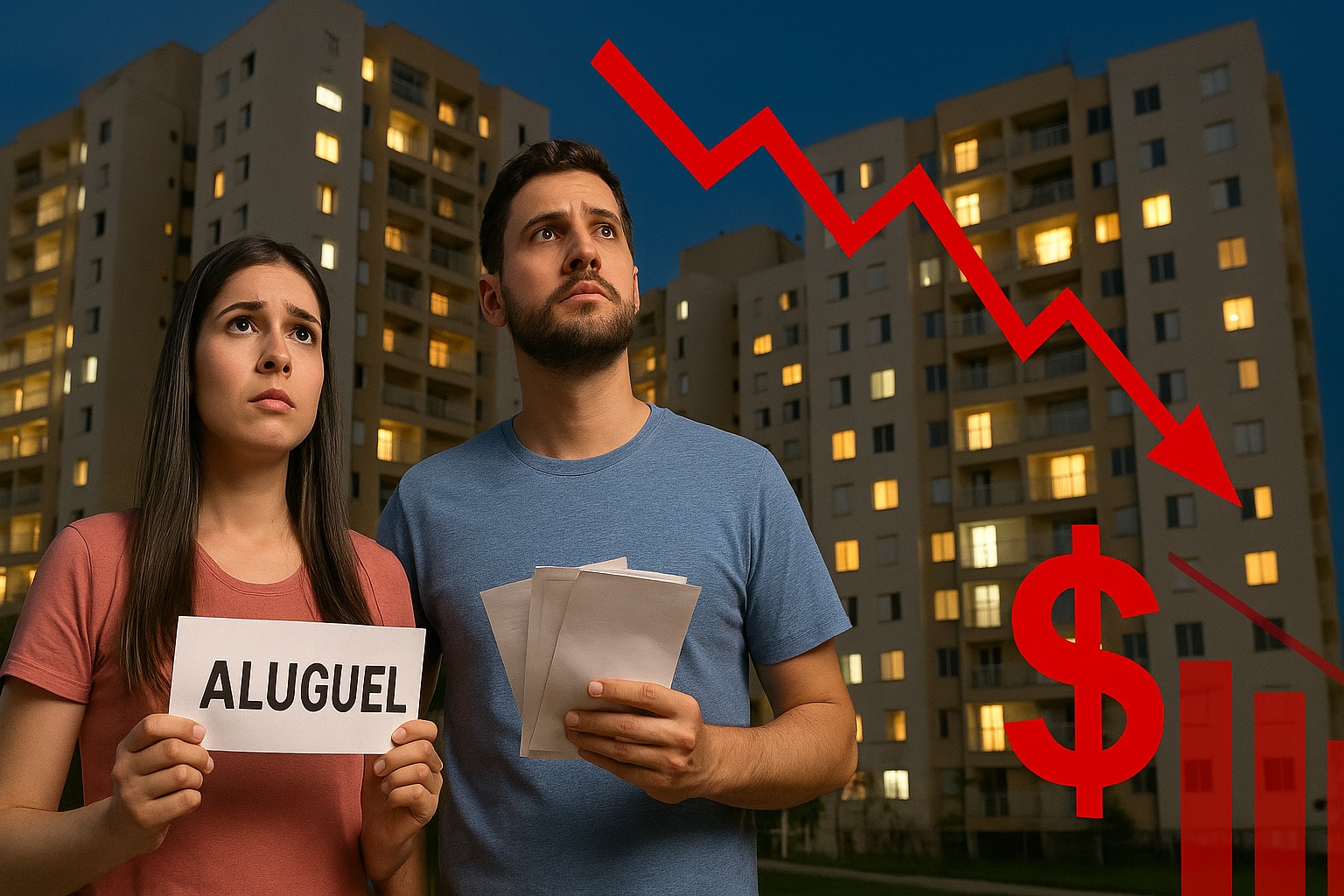
Number of Brazilians Paying Rent Increases 45% in Eight Years, Reaches 17.8 Million Homes, and Exposes Historic Decline of Homeownership in Brazil.
The housing profile in Brazil is undergoing a historic transformation. Data from the PNAD Continuous, released by IBGE, reveals that the number of Brazilians paying rent has increased by 45.4% in the last eight years, rising from 12.3 million households in 2016 to 17.8 million in 2024. During the same period, homeownership declined significantly, with the proportion of owned or financed homes decreasing from 73% to 67.6%.
This movement represents a historic decline of homeownership, reversing one of the greatest symbols of financial stability for Brazilians. If owning a home was once synonymous with personal achievement, today the growth of rental households shows that the housing market and culture are reconfiguring.
Rental Increase and Change in Housing Profile
The survey shows that in 2016, 18.4% of Brazilians lived in rented properties. Eight years later, this share has reached 23% of the population, revealing consistent growth across all regions of the country.
-
The government requests the Federal Revenue Service for a new system to automate the income tax declaration, reducing errors, time, and bureaucracy for millions of Brazilians.

-
Pix in installments, international Pix, and contactless payment without internet: the Central Bank revealed the new features coming to the tool that is already used by almost every adult in Brazil.

-
Mercado Livre has just started selling medications with delivery in up to three hours to your door, and this move could completely change the way Brazilians buy medicines on a daily basis.

-
In Dubai, rising tensions from the war in the Middle East are causing super-rich individuals to leave the Gulf and direct their fortunes to a new financial refuge in Asia.


Experts emphasize that this is not just a consequence of urban policies or migrations but a broader phenomenon with cultural and economic roots.
According to IBGE, the increase in rent accompanies the expansion of average income and the popularization of digital rental platforms. Additionally, the greater market concentration in the Southeast helps explain the accelerated growth in this type of housing.
Cultural Factors and the New Behavior of Rental Homes
Another relevant piece of data is the significant increase in single-person households. By 2024, 18.6% of households were occupied by only one person, up from 12.2% in 2012. This change is associated with an aging population and also with changing habits, as more people—especially women—choose to live alone.
According to William Kratochwill, a researcher at IBGE, “in many single-person households, there are people over 60; at this stage, the children have already left home, and many have become widowed.” States with a older population, such as Rio de Janeiro and Minas Gerais, lead this trend.
Homeownership Decline: From Dream to Challenge
The reduction in the share of owned homes to 67.6% is an indicator of the historic decline of homeownership as a national priority. For decades, real estate financing was the main pathway to homeownership; today many Brazilians delay or even abandon this goal.
In addition to high construction costs and financing rates, experts point out that professional mobility and the search for flexibility also influence the decision.
The result is a market in which renting in Brazil is no longer just a temporary alternative but has become a permanent option for millions of families.
Impacts on the Brazilian Real Estate Market
The Brazilian real estate market is already feeling the effects of this change. The growth of rental households boosts sectors related to rental, such as property management, specialized real estate agencies, and digital platforms.
In parallel, the construction sector needs to adapt its business models, expanding projects specifically aimed at rental, as is already happening in capitals like São Paulo and Belo Horizonte.
Experts also emphasize that this change opens the door to new economic arrangements, such as the increase of real estate funds focused on residential rentals and the entry of large developers in projects aimed at the so-called “multifamily”, entire buildings intended exclusively for rent.
Housing in Brazil: A New Social Reality
The data from IBGE reflect not just numbers but a cultural transformation. If previously stability was measured by homeownership, today factors such as flexibility, geographical mobility, and practicality have taken on greater importance in housing choices.
The growth of rental households and the decline of homeownership in Brazil reveal a generational shift, where young people prioritize experiences, quality of life, and freedom of movement over taking on long real estate debts.
What to Expect in the Coming Years
The trend is that the increase in rent will continue in the coming years, accompanying the aging population, the expansion of single-person households, and changes in consumption habits.
The decline in homeownership may compel public policies focused on affordable housing and social renting, while the private sector should accelerate the development of long-term rental projects.
According to experts, Brazil is facing a historic transformation in housing, and the challenge will be balancing the right to access housing with the need to adapt to the new consumer profile.
And you, do you believe that the future of housing in Brazil will be dominated by renting, or do you still see room for a return to the dream of homeownership?









Seja o primeiro a reagir!