





 Portuguese
  English
  Spanish
  3 min of reading
  0 comments


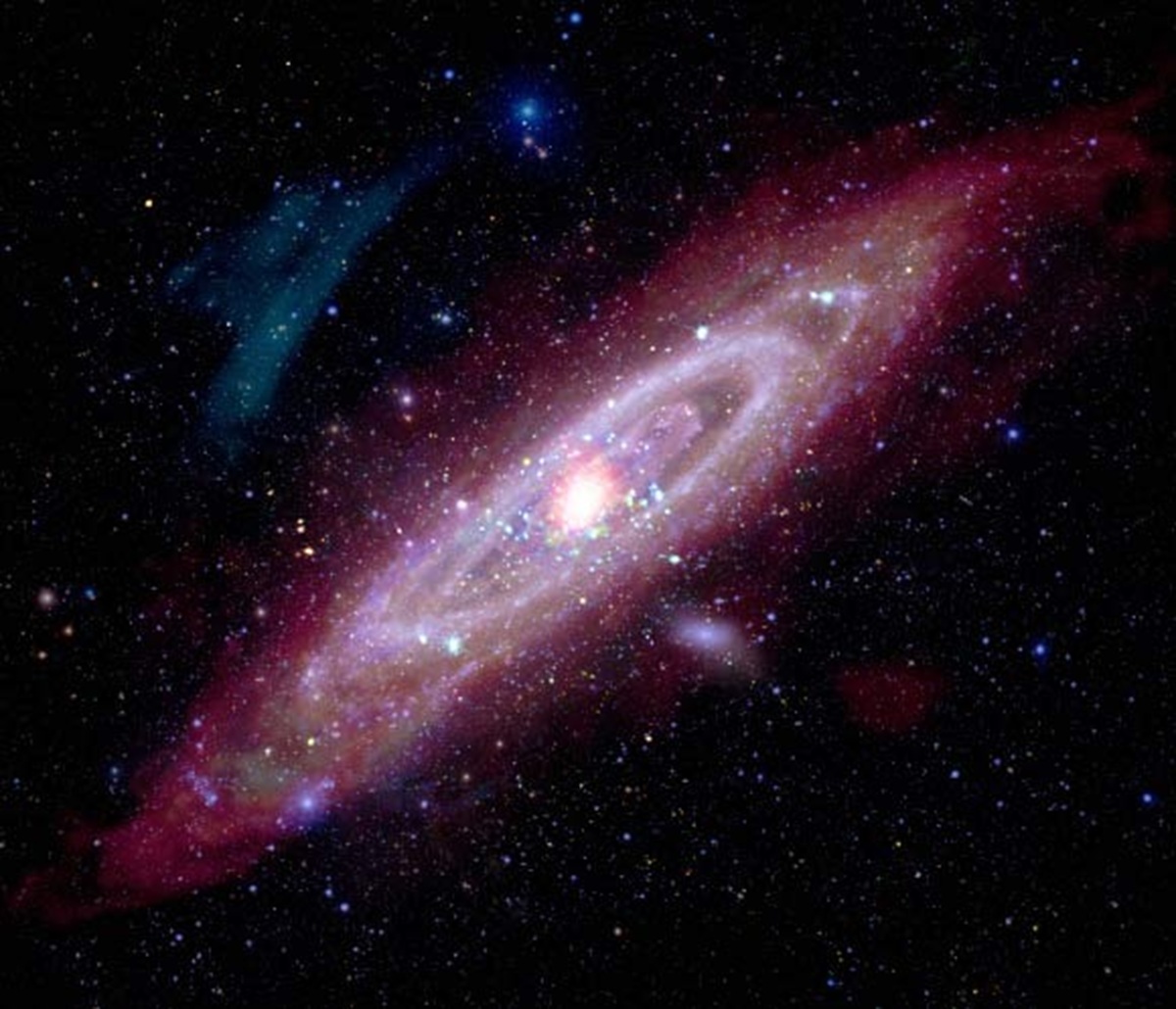
New Image of Andromeda Galaxy Combines Data from Various Telescopes and Honors the Legacy of Astronomer Vera Rubin.
A new image of the Andromeda Galaxy was released by astronomers at NASA.
Using data from space and ground-based telescopes, scientists were able to capture the closest spiral galaxy to the Milky Way in an unprecedented way.
The result impresses with the details revealed and the combination of different types of light.
-
China has created a mass-produced hypersonic missile that costs the same as a Tesla, and this is changing everything in modern warfare because the United States cannot defend itself without spending millions.

-
100% Brazilian technology transforms agricultural waste into a meat-scented ingredient using fungi from the Amazon rainforest. The process does not use excessive water or chemicals, and it also increases the nutritional value of the final product.

-
Psychology reveals that adults who avoid conflicts at all costs are not balanced individuals, but rather children who learned in the worst way that expressing emotions brought punishment and now live paralyzed by the fear of expressing themselves.

-
Goodbye pet hair on clothes: a washer with an internal filter promises to remove up to 5 times more hair than regular machines and uses an XL trap dryer system to capture what remains.


Neighboring Galaxy of the Milky Way
Andromeda, also known as NGC 224, Messier 31, or simply M31, is about 2.5 million light-years from Earth.
The galaxy has more than 100 billion stars and a size similar to that of the Milky Way.
In the sky, it can be seen as an elongated patch, but its true dimension goes far beyond what the human eye can perceive.
Astronomers explain that if it were possible to see the hot plasma bubble surrounding Andromeda, it would appear to be a hundred times the angular size of the Full Moon.
This structure, known as a halo, is dark and almost invisible, but extends for about a million light-years. This corresponds to half the distance to our own galaxy.
According to scientists, this halo contains half the mass of all the stars in Andromeda, reinforcing its importance in understanding galactic structure and dynamics.
Contribution to Astrophysics and Dark Matter
The Andromeda Galaxy is prominent in the history of astrophysics, especially in the study of dark matter.
It was through the analysis of this galaxy in the 1960s that astronomer Vera Rubin and her team identified signs of invisible matter influencing the movement of the spiral arms.
These observations were considered pioneering evidence of the existence of dark matter.
Rubin’s work challenged old theories and propelled new studies on the composition of the universe.
In honor of her legacy, NASA dedicated this new image of Andromeda to her work.
Additionally, Vera Rubin will be honored in 2025 with a 25-cent coin issued by the United States Mint.
Technology and Telescopes Involved
The new image was created by combining data from the Chandra X-ray Observatory, the telescopes of the European Space Agency (XMM-Newton, Planck, and Herschel), and the retired GALEX and Spitzer telescopes.
Records made by amateur astrophotographers with ground-based telescopes and radio information from the Westerbork Synthesis Radio Telescope were also utilized.
Astronomers explain that each type of light reveals different details.
The X-rays captured by Chandra, for example, show the radiation around the supermassive black hole located at the center of Andromeda.
They also reveal compact and dense objects scattered throughout the galaxy.
A recent study of data from Chandra analyzed the X-ray emission produced by this black hole over the last 15 years.
In 2013, an unusual explosion was observed, representing an increase in typical radiation levels.
With this new image, astronomers reinforce the importance of Andromeda as an object of study.
The combination of technologies and historical data reaffirms the galaxy’s role as a key player in the quest for answers about the universe and its origins.










-

-

2 pessoas reagiram a isso.