





 Portuguese
  English
  Spanish
  4 min of reading
  0 comments


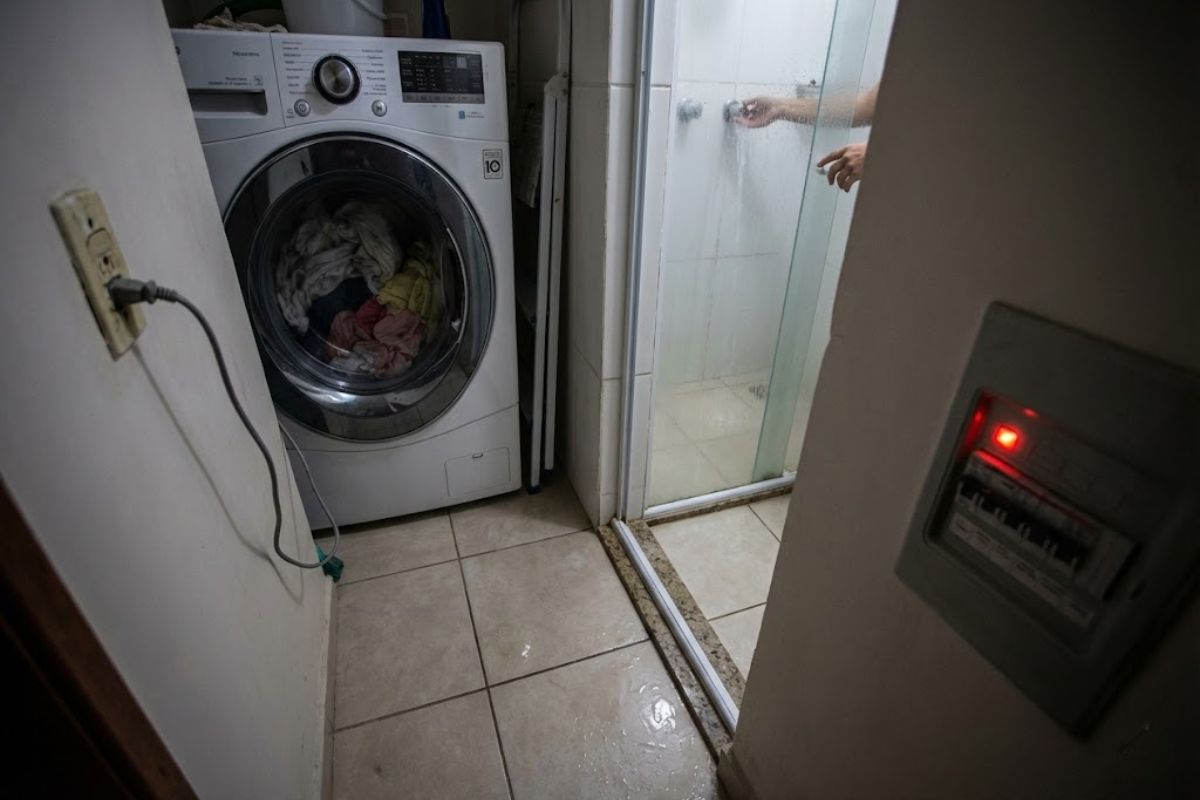
In Brazilian Homes, The Risk Increases When Shower and Washer Share The Same Environment, The Wiring Is Old or There Are Improvised Connections. A Current Leak Can Make The Metal Energized, Using Water As A Path and Causing Shock. Separated, Two Devices Together Can Heat, Short Circuit, and Cause Fire.
In brazilian homes, doing everything at once has become routine: turning on the washing machine, handling quick tasks, and stepping into the shower as if nothing could happen. The problem is that, in certain scenarios, this sequence can turn a common habit into a real electrical risk inside the bathroom.
In brazilian homes, the alert does not arise from fear, but from how electricity behaves when it encounters moisture, metal, and degrading installations. The risk increases when there is old wiring, improvised connections, lack of grounding, circuit overload, and when water and drainage become the “easiest” path for a current to escape.
When Washer and Shower Are in The Same Environment, The Risk Rises

The most critical scenario occurs when washing machine and shower share the same room and the electrical installations are not in good condition.
-
He started running at 66 years old, broke records at 82, and is now a subject of study for having a metabolic age comparable to that of a 20-year-old, in a case that is intriguing scientists and inspiring the world.

-
Oldest tree on the planet reappears after 130 years of searches: Wattieza, 385 million years old, was 10 meters tall and had no leaves or seeds; Gilboa fossils in New York solved the mystery in 2007.

-
A 48-square-meter house assembled in hours with 4,000 bricks made of recycled plastic that does not absorb moisture, has natural thermal insulation, and costs less than 90,000 reais in a complete kit.

-
Luciano Hang revealed that Havan’s air fleet has already accumulated more than 20,000 landings, 10,000 flight hours, and 6 million kilometers traveled, and he says that without the planes, the company would never have grown so quickly.


In this configuration, a possible failure is the current leak: the machine may have an electrical leak, and instead of the energy being conducted safely, the metal structure may become energized.
If there is no grounding, the electric current seeks an alternative path.
And, inside a bathroom, water and humidity become likely pathways. This can result in a silent electrical discharge, precisely because the risk does not “warn” in advance: the machine keeps working, and the environment appears normal, while the danger lies in contact with wet surfaces, a damp floor, and accumulated water.
How Water Becomes A Path For Current and Why This Can Be “Silent”

In situations of inadequate installation, the logic is simple: electric current seeks to close a circuit.
When there is no safe path, any conductive route can be used, especially in places with water.
In a bathroom, it is common to have wet floors, splashes, steam, and damp surfaces.
If the machine’s metallic structure is energized, the current can find its way through the water.
And, if the water in the environment comes into contact with a person, shock can occur.
The term “silent” fits because it does not depend on visible sparks or noise: just the combination of energized metal, moisture, and contact.
Shared Drainage and Metal Pipes Can Conduct The Risk
There is another sensitive point when the washer and shower share the drainage system. If there is an electrical leak, it can be conducted through metal pipes and reach the user. It is a type of incident described as rare but technically possible, especially when the house has old adaptations, improvised connections, and lack of adequate circuit protection.
This detail matters because many people associate danger only with the equipment and forget the surroundings. In brazilian homes, the bathroom is the place where electricity and water are closest, and any additional conductive path, like metal drainage, increases the chance of current “traveling” where it should not.
Even In Different Rooms, Two Devices Together Can Cause Short Circuit and Domestic Fire
When the washer and shower are not in the same environment, there is still a relevant risk: using two devices at the same time can cause overheating or short circuit in the electrical system, with the potential to damage equipment and, in the worst-case scenario, start a domestic fire.
The mechanism here is simultaneous load: an electric shower is already a significant power consumer, and the washing machine adds demand to the circuit. In old or overloaded installations, the combination can stress wiring and connections, increasing the risk of electrical failure.
The Invisible Side Effect In The Shower: Pressure and Temperature Can Fluctuate
In addition to electrical risks, there is a practical inconvenience reported when both devices operate at the same time: shower and washing machine often share the water supply. With this, the machine pulling water can cause sudden pressure changes and variations in temperature during the shower.
This point is not a shock, but it follows the same alert logic because it reinforces that the hydraulic and electrical infrastructure of the house is being simultaneously demanded, and the instability of pressure can be a sign that the house is not prepared for this overlapping use.
What To Do To Reduce The Risk In Brazilian Homes Without Causing Panic
In brazilian homes, the most prudent way to deal with this scenario is to avoid simultaneity when there is any doubt about the installation. It’s not about prohibiting routine, it’s about reducing exposure to risk.
Common-sense measures within what has been described include:
Avoid taking a shower with the machine running, especially if it is in the same environment as the shower.
Be suspicious of signs of old or improvised installations, such as poor outlets, splices, unusual heating, and power outages.
Seek professional assessment when there are suspicions of lack of grounding, inadequate protection, or circuit overload.
Prioritize correction of the electrical system instead of “living” with the doubt, because the central problem is the installation, not the routine.
Have you ever seen in brazilian homes someone turn on the washing machine and go straight into the shower as if it were normal, or has this combination ever left you scared at any moment?









-

-

-

3 pessoas reagiram a isso.