





 Portuguese
  English
  Spanish
  4 min of reading
  43 comments


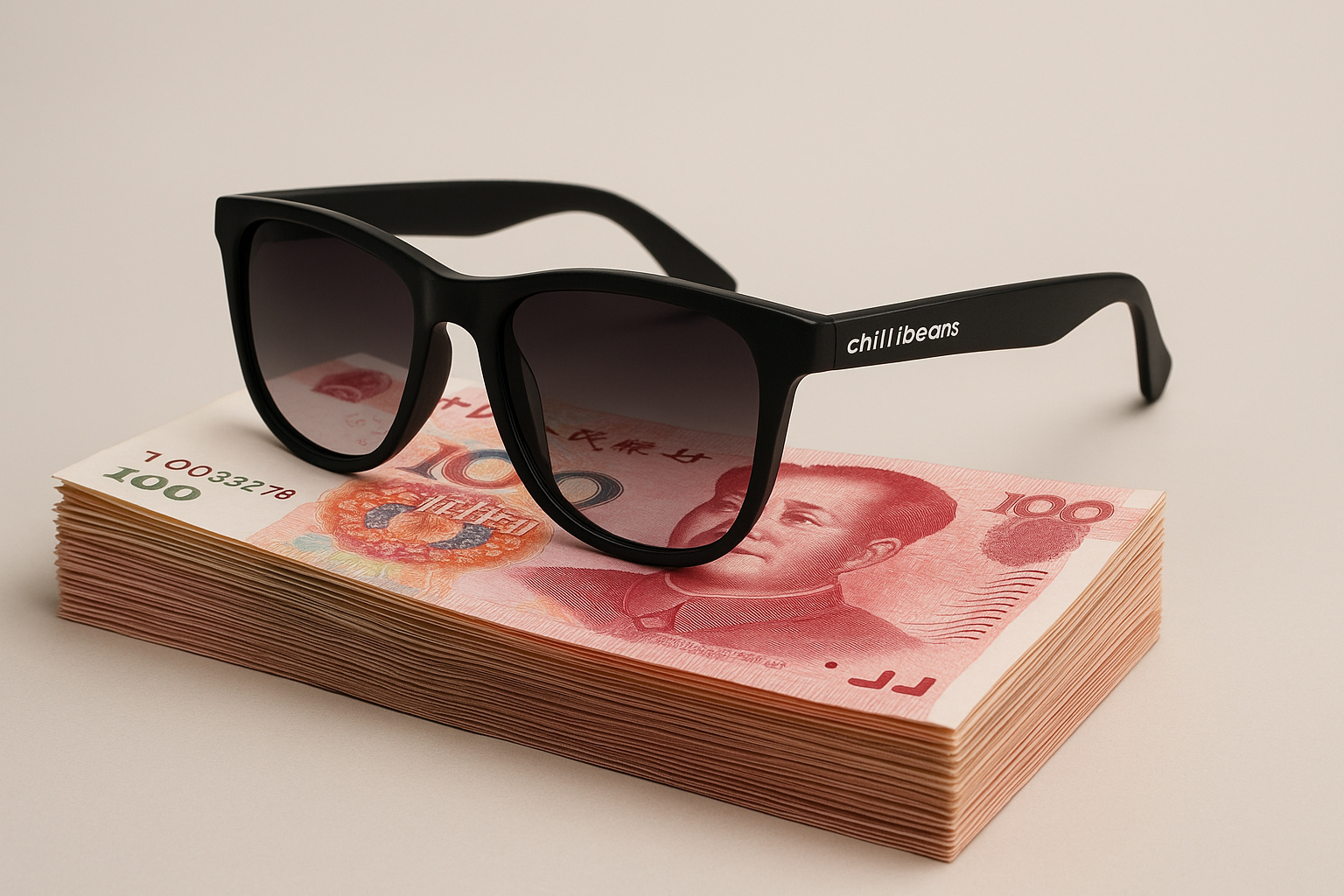


Caito Maia’s Decision, Founder of Chilli Beans, Comes Amid Impact of Trade Tariffs Imposed by the United States and Reveals Growing Trend of Chinese Currency Use in International Transactions
São Paulo – Brazilian entrepreneur Caito Maia, founder and CEO of Chilli Beans, announced that he intends to definitely abandon the use of the dollar in his import operations from China. The decision was made after tariffs were imposed by the Trump administration on imported goods, a measure that raised transaction costs and led companies to seek alternative currencies.
According to Maia, all negotiations with Chinese suppliers will now be carried out in yuan (renminbi), the official currency of China. “The idea is that the use of the dollar never returns and that we do all transactions directly with China: in terms of currency, purchasing, trade, everything,” he stated in an interview with Exame.
Strategic Change to Reduce Risks
Chilli Beans, which operates in the fast fashion eyewear and accessories sector, maintains its production lines in China, from where it imports all the merchandise sold in Brazil. Although it has already expressed the desire to manufacture in the country, Maia points out that current demand and the level of taxes make local production unfeasible. “We do not have any factory in Brazil that can meet our capacity,” he explained.
-
China alone accounts for 70% of trade within the BRICS, while Brazil establishes itself as an essential supplier of food and minerals: understand how the group, which already represents nearly 40% of the world’s GDP, is changing the game.
-
Starting in May, those who do not have registered biometrics will not be able to apply for Bolsa Família, sickness benefits, or unemployment insurance: understand the new rule that changes access to benefits for millions of Brazilians.

-
A new law being voted on in Brazil proposes a minimum fare of R$ 10 per trip and R$ 2.50 per kilometer for Uber and 99 drivers, and promises to ensure they earn as well as taxi drivers did during the golden age of taxis in the country.

-
Bauer Group collapses after failed judicial recovery: 25 years, 800 vehicles, and a network of gas stations leave a debt of R$ 50 million and 100 layoffs, exposing costs, tight margins, and expensive credit in Brazil.


The entrepreneur’s move comes in a context of transformation in international trade, where the yuan is advancing as an alternative to the dollar in transactions between emerging countries and China’s strategic partners.
Growth of the Yuan in Brazilian Reserves
According to data from the Central Bank of Brazil, the yuan officially became part of Brazil’s international reserves in 2019. In just three years, it surpassed the participation of the euro: in 2022, the yuan accounted for 5.37% of reserves, while the euro currency held 4.74%.
China has held the position of Brazil’s main trading partner since 2009, concentrating the largest share of Brazilian exports, especially commodities such as soy, iron ore, and oil. The adoption of the Chinese currency tends to consolidate this relationship, even though Beijing does not set the complete internationalization of the yuan as a goal, a measure that could limit its autonomy in monetary policy.
Alternatives to the SWIFT System
The rise of the yuan has also been favored by economic sanctions imposed by the United States on countries such as Russia and Iran, which have begun seeking ways to circumvent reliance on the dollar. In this scenario, China has been promoting the CIPS (Cross-Border Interbank Payment System), a cross-border interbank payment system created as an alternative to SWIFT, dominated by the West.
In Brazil, Banco BoCom BBM, a result of a partnership between the Bank of Communications of China (BoCom) and BBM Bank of Bahia, was the first institution in South America to join CIPS. This system could be used by Chilli Beans to conduct transactions in yuan, consolidating the strategy advocated by Caito Maia.
Global Context and Impacts in Brazil
The strengthening of the yuan is not occurring only in Brazil. Other developing countries have turned to the Chinese currency to facilitate bilateral negotiations, reduce foreign exchange costs, and minimize geopolitical risks. Experts point out that, even without seeking to replace the dollar globally, China has made advances in strategic niches of trade and energy.
The information about Maia’s decision was published by Exame and echoed in media outlets such as Brasil de Fato, which highlighted the direct relationship between the increased use of the yuan and the trade tariffs imposed by the United States.
Outlook for the Coming Years
The case of Chilli Beans exemplifies how Brazilian companies have sought more efficient alternatives to deal with exchange rate volatility and trade barriers. Although local production is still considered unfeasible, the adoption of the yuan may represent a structural change in the business model of companies that heavily rely on imports.
For the entrepreneur, the long-term strategy is clear: “Never use the dollar again” in his transactions with China.
Do you believe that other Brazilian companies will follow Chilli Beans’ path and adopt the yuan instead of the dollar for transactions with China?








Sei… está aqui no Brasil somente para obter lucro e ludibriar o povo com produto chinês.
E as outras empresas estrangeiras “ocidentais” estão aqui fazendo caridade 😉
Quer dizer que a Chilly Bean na verdade é Ching Ling. Bom saber, que não compro.
Para de onda, já não comprava antes…
Kkk não vai comprar nada então pois a maioria dos produtos são made in china.
Sistema de trabalho escravo. Assim sem responsabilidade com o empregado tem que crescer.