





 Portuguese
  English
  Spanish
  7 min of reading
  1 comment


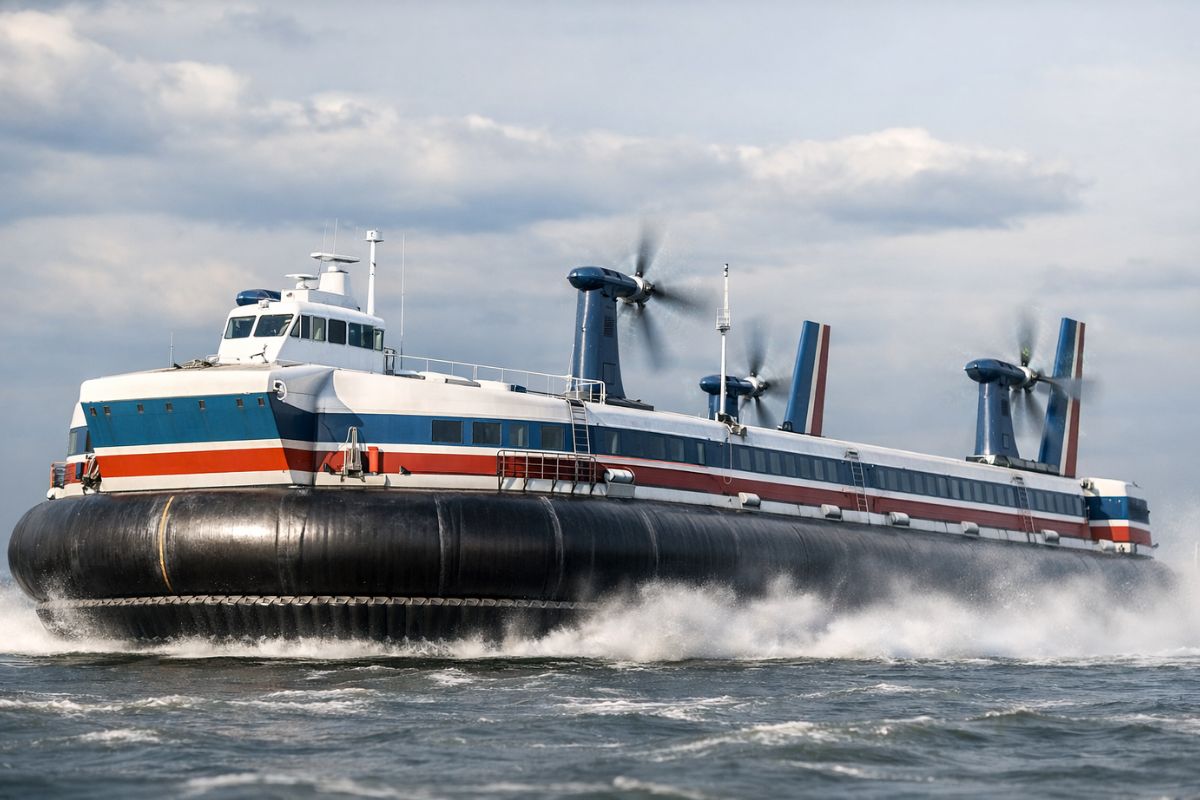


Launched In The 1960s, The British Giant Hovercraft Crossed The English Channel In Minutes As A High-Speed Hovercraft, Transported Cars And Passengers, But Ended Up Swallowed By Expensive Fuel, Rough Seas, Competitive Diesel Ferries, And The Eurotunnel, Which Offered Predictable Crossings Year Round In Any Weather Condition
In 1959, the first practical hovercraft crossed the English Channel on a cushion of air, and in 1968, the SR.N4, the giant British hovercraft designed to replace slow ferries on the route between the UK and France, entered service, shortening the standard crossing time from one and a half hours to just thirty minutes. In the 1970s, enlarged versions of this same design were capable of carrying up to 418 passengers and 60 cars in a single boarding, operating as a hybrid between a high-speed ship and a regional airplane, with a large crew and intense daily operation.
It soon became clear, however, that the giant hovercraft had feet of clay: it was faster than any ferry, but it canceled more than a third of its trips in the first three months due to rough seas, consumed about a thousand gallons of aviation fuel per hour, and required maintenance that was too costly to compete. With the skyrocketing fuel prices in the 1970s, competition from diesel ferries with large margins, and the opening of the Eurotunnel in 1994, the last SR.N4s ceased operation in 2000, marking the end of the era of large civil hovercrafts.
How The Giant Hovercraft Was Born And The Idea Of Flying Over Water

Before the giant hovercraft became a commercial reality, the hovercraft concept was closer to an aircraft than a boat.
-
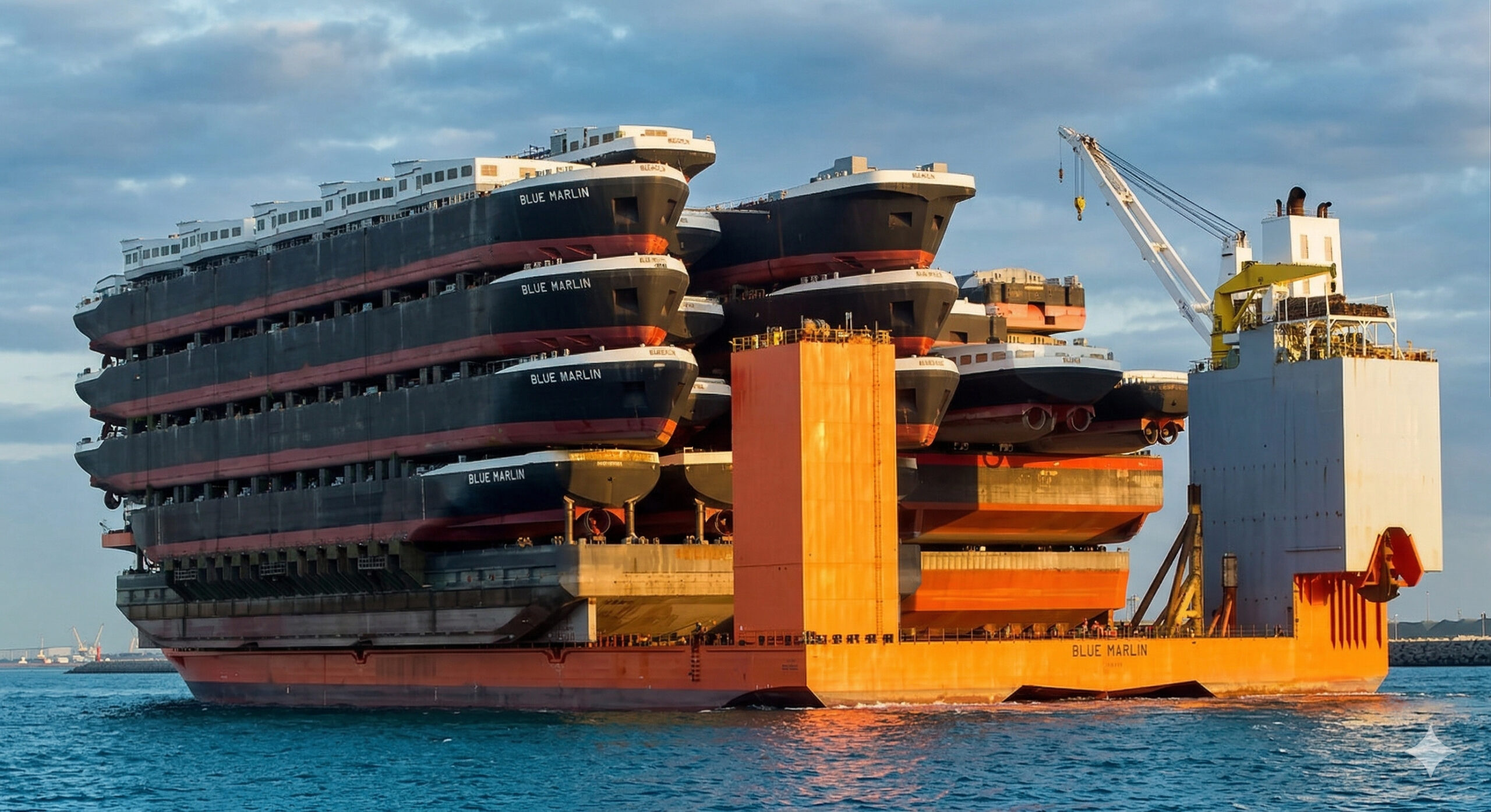
With a length of 225 meters and a capacity of 76 thousand tons, this ship “sinks” its own deck down to 28 meters deep to accommodate war destroyers, oil platforms, and giant radars floating above, and then emerges with everything intact on top like a colossal tray crossing oceans.
-
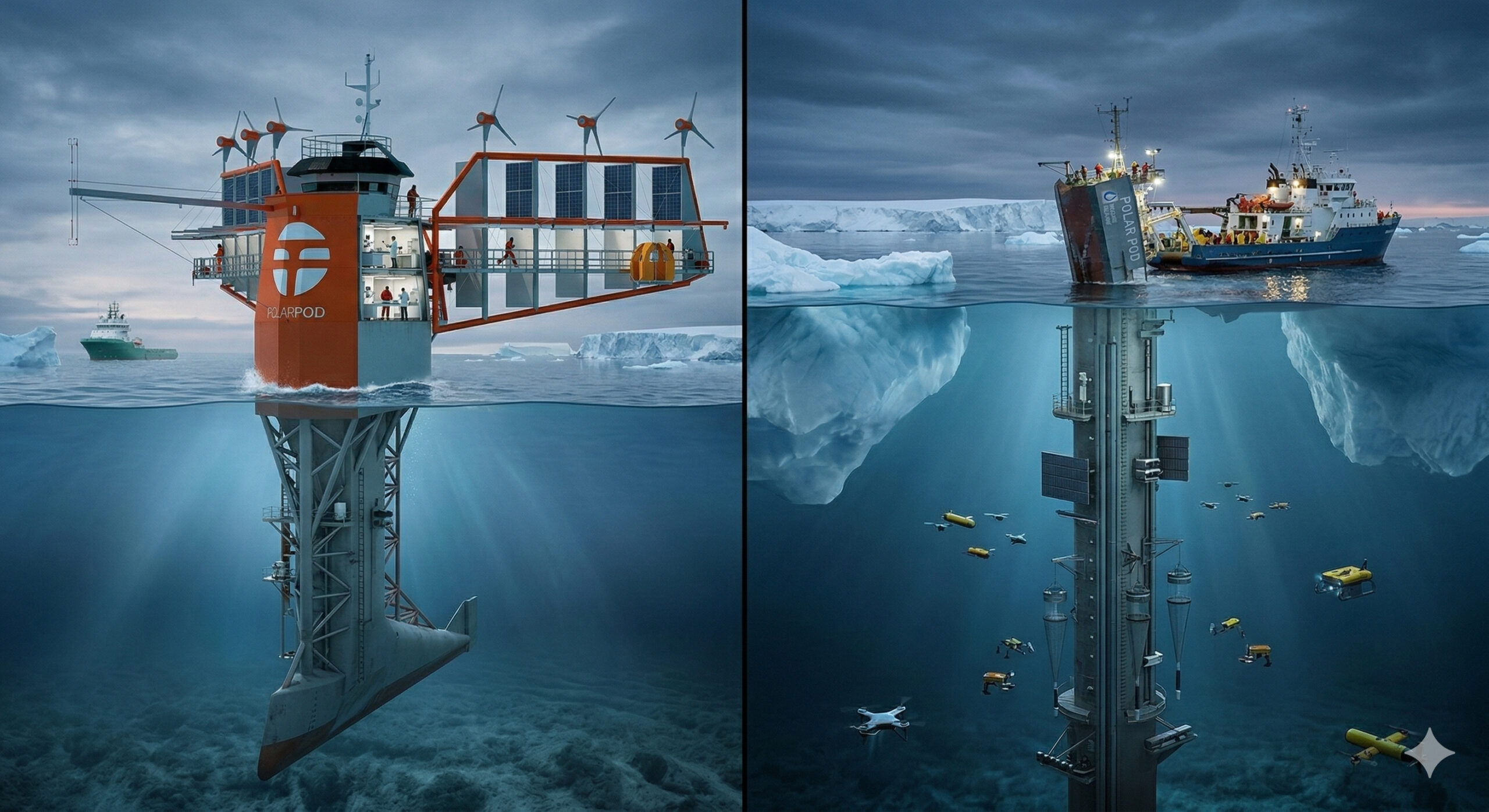
A 100-meter platform without a motor, without a keel, and operating upside down rotates 90 degrees in the ocean, sinks 75 meters, and drifts around Antarctica for two years driven by the planet’s most powerful current to study the largest carbon sink on Earth, still poorly understood by science for accurate climate modeling.
-
With a length of 108 meters and a giant spoon shape, the FLIP was the only ship in the world capable of rotating 90 degrees in the ocean and remaining vertical, with 91 meters submerged, operating for 60 years until it was retired and sent to the scrapyard in 2023.

-
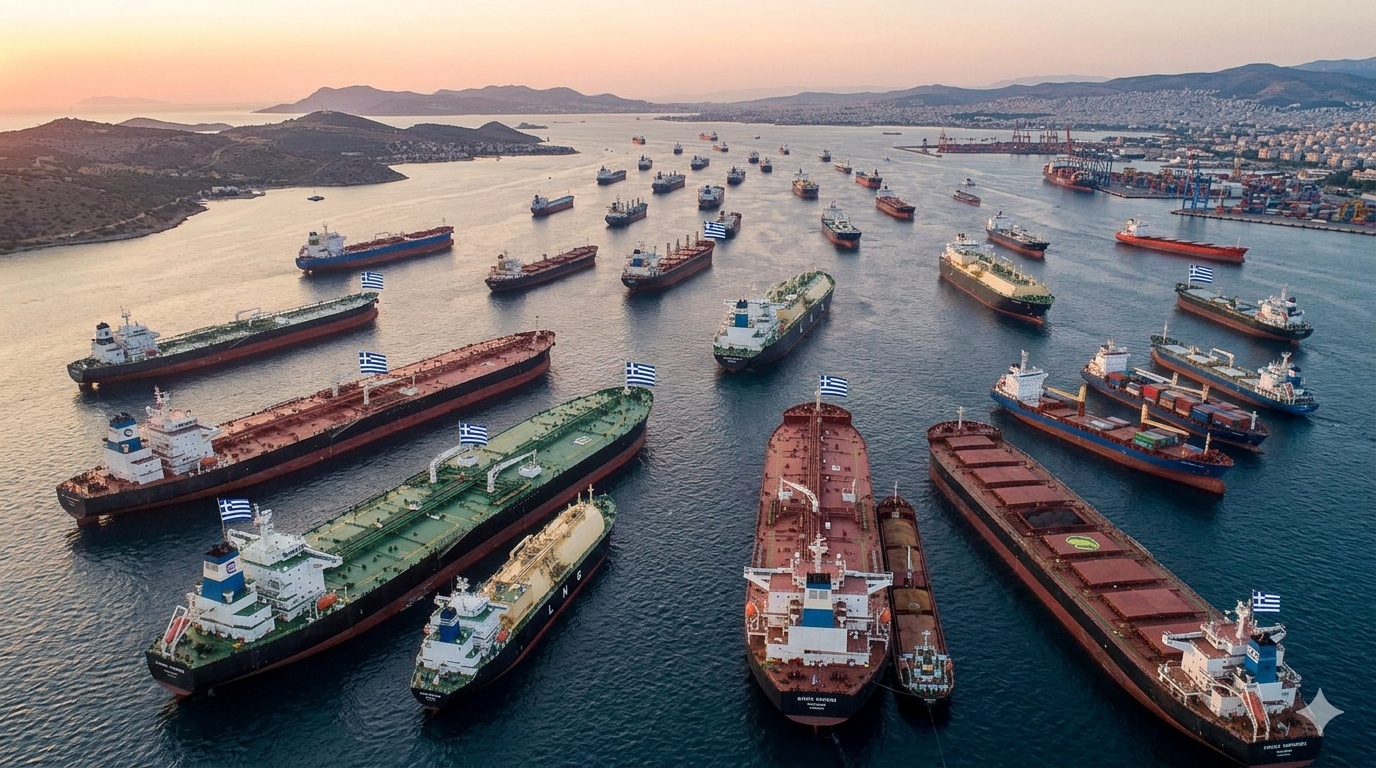
Neither the USA nor China: a small European nation has become one of the largest maritime powers on the planet, controlling one of the largest merchant fleets in the world with thousands of ships and dominating the global transportation of oil and strategic cargo.

The British engineers started from the idea that an air cushion could replace the hull in water, drastically reducing friction with the sea and allowing speeds well above those of a conventional ship.
Fans created the air layer under the hull and propellers or turbines generated thrust forward.
The first attempts at a “flying boat” simply blew air into an open hull and required immense power to lift the structure.
The turning point came with the British solution termed the “momentum curtain”: an air ring was directed to the edges of the hull, trapping the pressurized air cushion and elevating the vehicle higher above the surface, requiring much less energy.
In 1959, Christopher Cockerell’s prototype crossed the English Channel and demonstrated that the technology worked in open seas.
From Prototype To Giant Hovercraft SR.N4 In The English Channel

The next step was to transform the idea into mass transportation.
In 1961, another innovation – the flexible skirt around the hull – allowed hovercraft to float higher and better handle waves and uneven surfaces.
This triggered an industrial race in the UK, with Saunders-Roe at the forefront, developing ever-larger military and civilian models.
In 1963, the company decided to build a giant hovercraft specifically designed to rival ferries on the English Channel.
The SR.N4 emerged, four times larger than previous models, operating similarly to an airplane: captain, flight engineer, navigator, and a team of deck and cabin crew of eleven people.
In the standard configuration, it carried 30 cars and 254 passengers; in maximum adjustment, it could take over 600 passengers without vehicles, approaching the capacity of a small cruise ship.
The giant hovercraft made its debut in the summer of 1968, connecting British and French ports.
On board were distinguished guests, such as Princess Margaret and Cockerell himself, symbolizing the height of British engineering.
But, even in the first days, the sea demonstrated the physical limitations of the concept: the rubber skirt tore on contact with higher waves, accessories were torn off by the rough sea, and maintenance crews had to replace elements almost trip after trip.
Three days after its debut, a large wave rendered the vessel inoperable for nearly a week.
Extreme Speed, Rough Seas, And Design Flaws
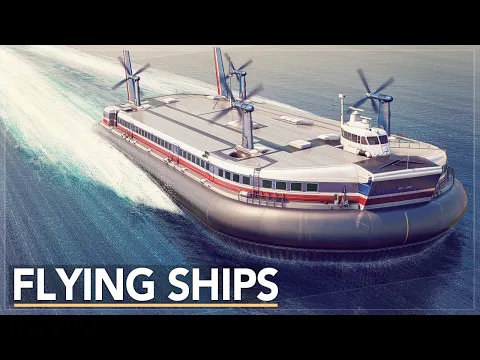

In terms of commercial promise, the giant hovercraft was unbeatable: while a typical diesel ferry took about ninety minutes to cross the English Channel, the SR.N4 could make the crossing in about thirty minutes, allowing double the daily crossings and more attractive routes for tourists and freight drivers.
In practice, the sea rarely cooperated.
The design was scaled to operate with waves up to two and a half meters, a level easily surpassed by stronger winds in the English Channel.
In the first three months, over a third of the scheduled trips of the giant hovercraft were canceled due to adverse conditions or hydraulic and gearbox failures, undermining commercial trust and leaving the operation on the edge of viability.
In October 1968, the SR.N4 needed to be withdrawn from service for deep modifications to the skirt and internal systems.
After the renovations, the most severe problems were mitigated.
The skirt was redesigned, resistance to waves improved, and by the mid-1970s, two companies operated the giant hovercraft in the English Channel with high occupancy, often selling out trips weeks in advance. Still, the operational math did not add up.
Expensive Fuel, Heavy Maintenance, And Ferries With Healthy Profits
The structural weak point of the giant hovercraft lay in its engines.
Aviation-derived turbines consumed about a thousand gallons of fuel per hour, a level unable to compete with diesel ferries that burned considerably less per transported passenger.
At the same time, maintenance of the skirt, hydraulic systems, and structure exposed to salt and sand was much more expensive than that of a traditional hull.
To try to compensate, operators widened and elongated the hulls to increase capacity.
In 1978, the largest version was able to transport up to 418 passengers and 60 cars per trip, which helped reduce the average cost per sold seat.
By the end of the 1970s, hovercrafts accounted for almost a third of all passenger traffic crossing the English Channel, a remarkable feat for such a young technology.
However, the 1970s brought explosive rising oil prices, hitting hard a system based on turbines thirsty for aviation fuel.
Conventional ferries, with more comfortable profit margins, managed to aggressively lower fares and reclaim customers.
In the 1990s, giant hovercraft would still face high-speed catamarans introduced in 1991 and ultimately the symbolic blow of the Eurotunnel, inaugurated in 1994, connecting the UK to France via tracks beneath the sea.
Why The Giant Hovercraft Never Became The Standard Of Transportation
Even if they were still in operation today, the SR.N4s would still be the fastest way to cross the English Channel, surpassing diesel ferries, fast catamarans, and even the total travel time of the train through the Eurotunnel.
The problem is that speed came at the cost of nearly everything: reliability, efficiency, ability to withstand bad weather, and comfort in rough seas.
Compared to traditional ferries, the giant hovercraft was less reliable, more expensive to operate, and accepted much more restricted wave conditions, which meant frequent cancellations, especially during bad weather.
The British hovercraft industry entered a recession as early as the late 1960s, and the enormous SR.N4s remained as the technological peak of a family of vehicles that never achieved widespread adoption in mass transportation.
By 2000, the last specimens were retired, definitively ending regular passenger service.
The Legacy Of The Giant Hovercraft In The Post-SR.N4 Era
Despite the commercial failure on the passenger route, the technology did not disappear.
No other vehicle can combine the versatility of operating in open seas, shallow waters, ice, and swamp like a hovercraft, ascending onto beaches where a ship would run aground.
For this reason, armed forces, industries, and rescue services in various countries continue to use hovercraft in scenarios where there are no suitable ports, roads, or runways.
Behind the scenes, the same logic of the giant hovercraft inspired even more ambitious projects.
At the turn of the 1970s, British engineering teams even built test tracks and a prototype “hovercraft on rails” train, designed to reach speeds around 500 kilometers per hour on a cushion of air, faster than any train in service at the time.
These experiments, however, were abandoned, overshadowed by other transportation priorities and budget cuts.
Today, the SR.N4 remains a symbol of an era when the idea of crossing seas flying over water seemed the next natural step in engineering, but ultimately was sidelined by expensive fuel, rough seas, cheap ferries, and efficient railway tunnels.
Knowing that a giant hovercraft would still be the fastest way to cross the English Channel, even in the face of the Eurotunnel, do you think it would be worth paying more for that crossing flying over water or would you prefer to continue with the predictable comfort of traditional ferries and trains?









Esse oluc e meu.