





 Português
  Inglês
  Espanhol
  3 min de leitura
  0 comentários


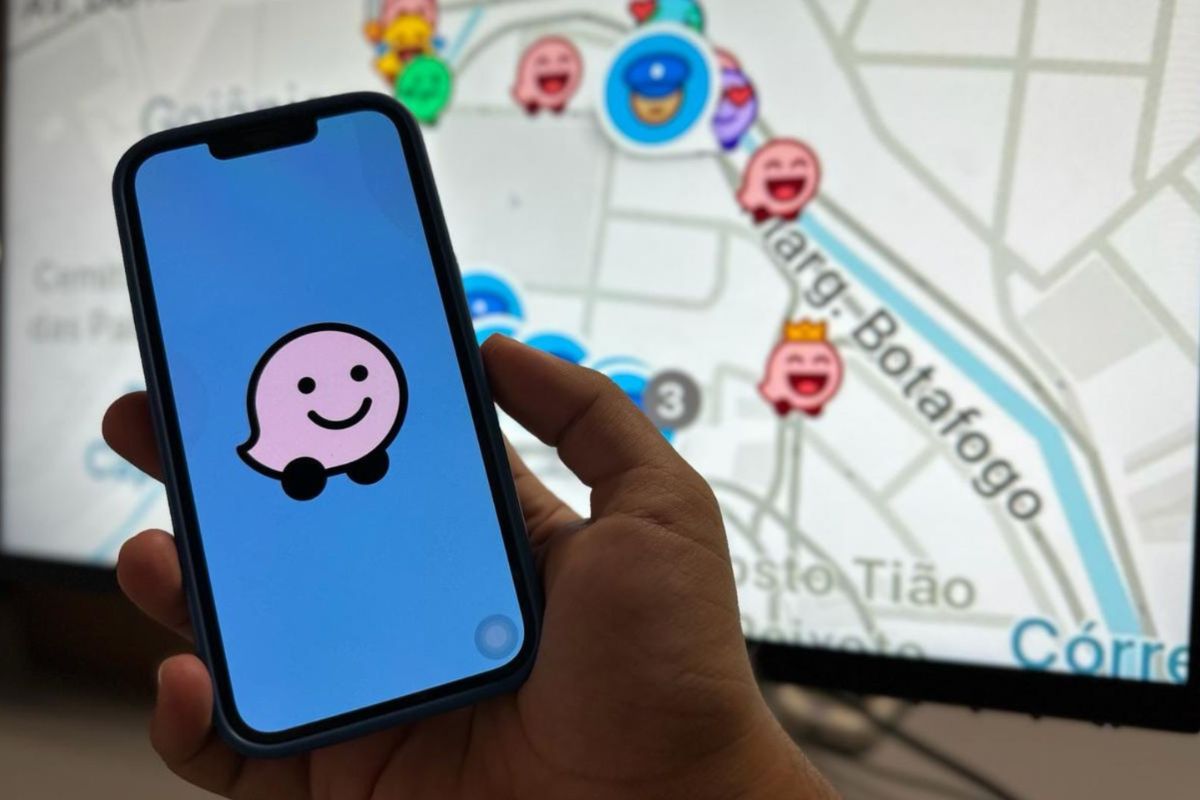
In 2013, Google Paid Nearly US$ 1 Billion for the Mapping App Waze, Not Just to Acquire Its Technology, but to Neutralize a Threat and Ensure Its Dominance in the Digital Map.
In 2013, a silent war was waged between tech giants for dominance over our smartphones. At the center was an Israeli mapping app that became one of the most coveted assets in the world: Waze. With a revolutionary idea and a passionate community, it posed a real threat to Google Maps’ reign.
The solution from Google was one of the most strategic in tech history: to buy the competitor. The acquisition of nearly US$ 1 billion was not just about absorbing a good product, but about ensuring that no one else could use it to challenge its empire. This is the story of how Google bought Waze to eliminate the competition.
The Origin in Israel: How a Community Project from 2006 Became a Global Sensation
The story of the Waze mapping app begins in 2006, with a project called “FreeMap Israel”, created by programmer Ehud Shabtai. The idea was simple and brilliant: instead of using expensive cars to map the streets, why not use the drivers themselves? By leveraging GPS from smartphones, each user would become a sensor, reporting in real-time about traffic, accidents, and speed traps.
-
With more than 635,000 doctors, Brazil sees competition increasing in large cities, and recent graduates are competing for shifts at an accelerated pace while the countryside still faces shortages.

-
The world’s first octopus farm wants to open in the Canary Islands and is already provoking an international reaction: the plan aims to produce 3,000 tons per year.

-
Drought may be creating stronger superbugs in the soil and helping antibiotic resistance reach hospitals, warns a study highlighting a problem that could grow alongside extreme weather.

-
The biggest scam in history: Napoleon’s France deceived the United States by selling them a territory that was Spanish.


What started as a community project became a company in 2008. With strong leadership and investment rounds totaling tens of millions of dollars, Waze grew exponentially. By June 2013, the app had nearly 50 million users in 190 countries.
The Purchase of US$ 966 Million by Google in 2013

The success of Waze caught the attention of tech giants, who saw in the mapping app a strategic asset. The landscape in 2013 was perfect for a showdown. Apple Maps had launched in 2012 with a disastrous series of failures, and Apple needed a solution. Facebook, on the other hand, did not have a native mapping service and saw Waze as a golden opportunity.
Both Apple and Facebook made billion-dollar offers. However, Google won the bidding war. While Facebook required the Waze team to move from Israel to California, Google agreed to keep the team and operation in Israel. This flexibility, combined with a payment of US$ 966 million in cash, sealed the deal on June 11, 2013.
How Google Maps Absorbed the Best Features of the Waze Mapping App
Google promised that Waze would continue operating independently. And, for a time, it did. However, behind the scenes, a process of “slow cannibalization” began. The best features of Waze were gradually incorporated into Google Maps.
First came real-time traffic data. Then, in 2019, Google Maps gained the ability to alert users about speed traps and accidents, Waze’s hallmark feature. Later, user-generated alerts from Waze started appearing in Google Maps. The “startup within a corporation”, as described by former Waze CEO Noam Bardin, was slowly being absorbed by the “mother ship”.
The End of Independence: The 2022 Merger and the New Structure
The definitive turning point happened in December 2022. Google announced that the 500-person Waze team would be merged with the Geo division, the same one responsible for Google Maps, Google Earth, and Street View.
The official justification was the need to “reduce costs” and eliminate “overlapping work”. In practice, it marked the end of Waze’s independence. The mapping app ceased to be an autonomous business unit to become just another product within Google’s vast structure, further accelerating the integration of its technologies.
Waze in 2025: A Loved App but with an Uncertain Future


Nonetheless, Waze survives in 2025 with an impressive and loyal user base. In February 2025, the app was classified as a “Very Large Online Platform” in the European Union, for having more than 50 million monthly active users just in the bloc.
Many drivers still prefer it for its more “aggressive” algorithm for avoiding traffic and its cleaner interface. However, its future is uncertain. Google’s strategy seems to be one of “managed decline”: keeping Waze alive to collect its valuable data, while its best features are transferred to Google Maps. The acquisition was, for Google, an absolute success. The competition was not simply eliminated; it was assimilated.








-

-

-

8 pessoas reagiram a isso.