





 Portuguese
  English
  Spanish
  2 min of reading
  0 comments


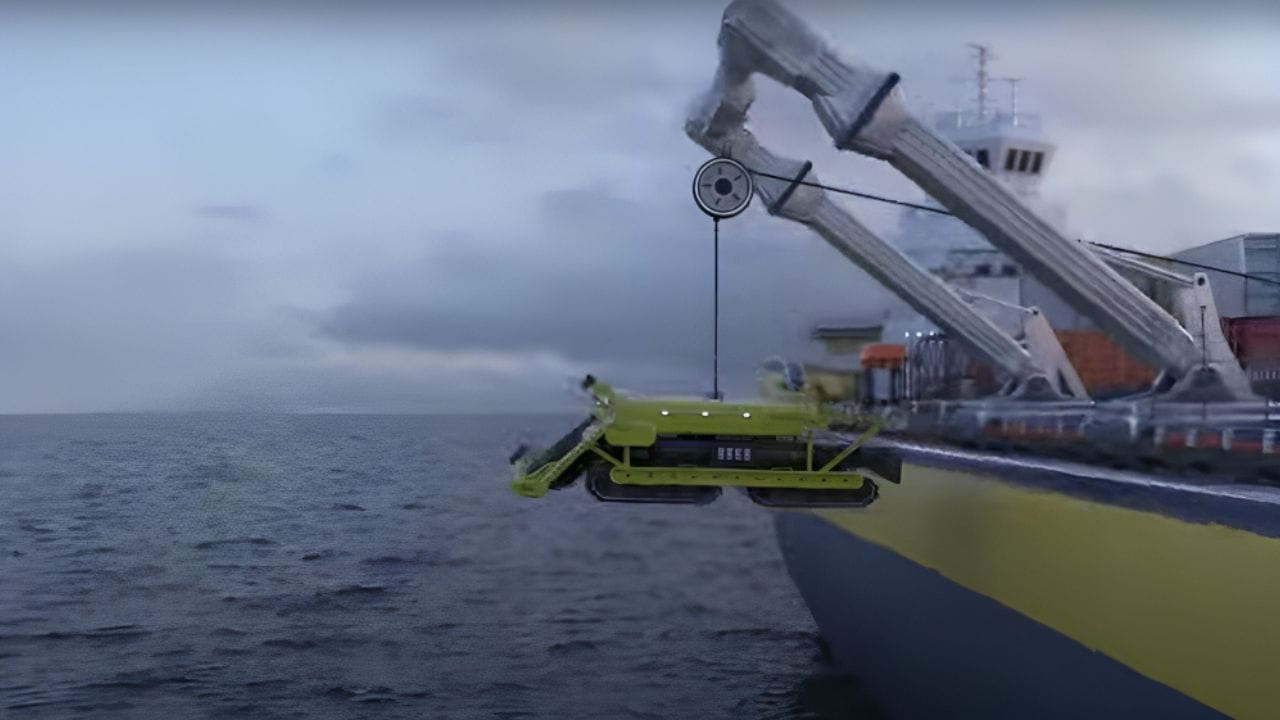
A Vessel Called “Hidden Gem” Launches into the Depths of the Sea “The Collector”, A 90-Ton Device to Collect Rocks Rich in Minerals.
Forget traditional vacuum cleaners. We introduce now the largest one you’ve ever seen, but don’t worry, it wasn’t made to clean your house. In a surprising innovation, a “vacuum” weighing 90 tons is being used to suck rocks from the ocean floor.
And why does this matter? These rocks are rich in minerals such as nickel, cobalt, copper, and manganese, which are essential components in the manufacturing of batteries for electric cars, wind turbines, and solar panels.
From Oil to Minerals
Originally built for oil drilling, the vessel “Hidden Gem” was revamped by the startup The Metals Company to serve as a floating base specialized in collecting these rocks. In its first operation, the company managed to gather more than 3,000 metric tons of material.
-
A “silent skill” is allowing Brazilians to earn up to R$ 22,000 per month without a degree and become indispensable for companies that rely on millions of data to survive.

-
Researchers at the Toyota Research Institute found that if a human uses robotic arms to flip a pancake 300 times in an afternoon, the robot learns to do it on its own the next morning, and this is currently the most promising method to solve the biggest bottleneck in modern robotics.

-
Goodbye iron: a common item in households is starting to lose space to technology that smooths clothes in minutes without an ironing board and with less energy consumption.

-
Antarctica reveals an unusual clue high in the Hudson Mountains, and what appeared to be just an isolated rock began to expose a secret hidden under the ice for ages.


The equipment is lowered from the mother vessel “Hidden Gem” to the ocean floor. Operators in a control room take over the commands and start the “cleaning.”
Equipped with four suction nozzles and sensors that adjust its position according to the irregularities of the seabed, the “vacuum” collects the rocks and sends them to a special compartment in the vessel.
An Underwater Treasure with Implications for Electric Cars
These rocks, known as polymetallic nodules, are formed by millimeter-thick layers of useful minerals and can be found in flat and smooth parts of the deep ocean, such as in the Clarion-Clipperton Zone, located between Hawaii and Mexico.
Although the company claims that this method of mining is safer for the environment compared to traditional mining, there are concerns about the impact on marine life.
The ocean is home to countless species that are yet to be discovered, and this activity may put ecosystems already weakened by the rapid advancement of climate change at risk.
The Future of Minerals and the Environmental Challenge
Given the growing demand for batteries for electric cars and other clean technologies, the potential of these oceanic rocks is immense. However, stringent care is necessary to ensure that the exploration of these resources does not result in irreversible environmental damage.
In summary, the oceanic “vacuum” represents a milestone in the extraction of minerals that are vital for the global energy transition. But as the saying goes, it is better to be safe than sorry: in-depth studies on the environmental impact of this activity are essential to ensure a more sustainable future for all of us.







Seja o primeiro a reagir!