





 Portuguese
  English
  Spanish
  4 min of reading
  0 comments


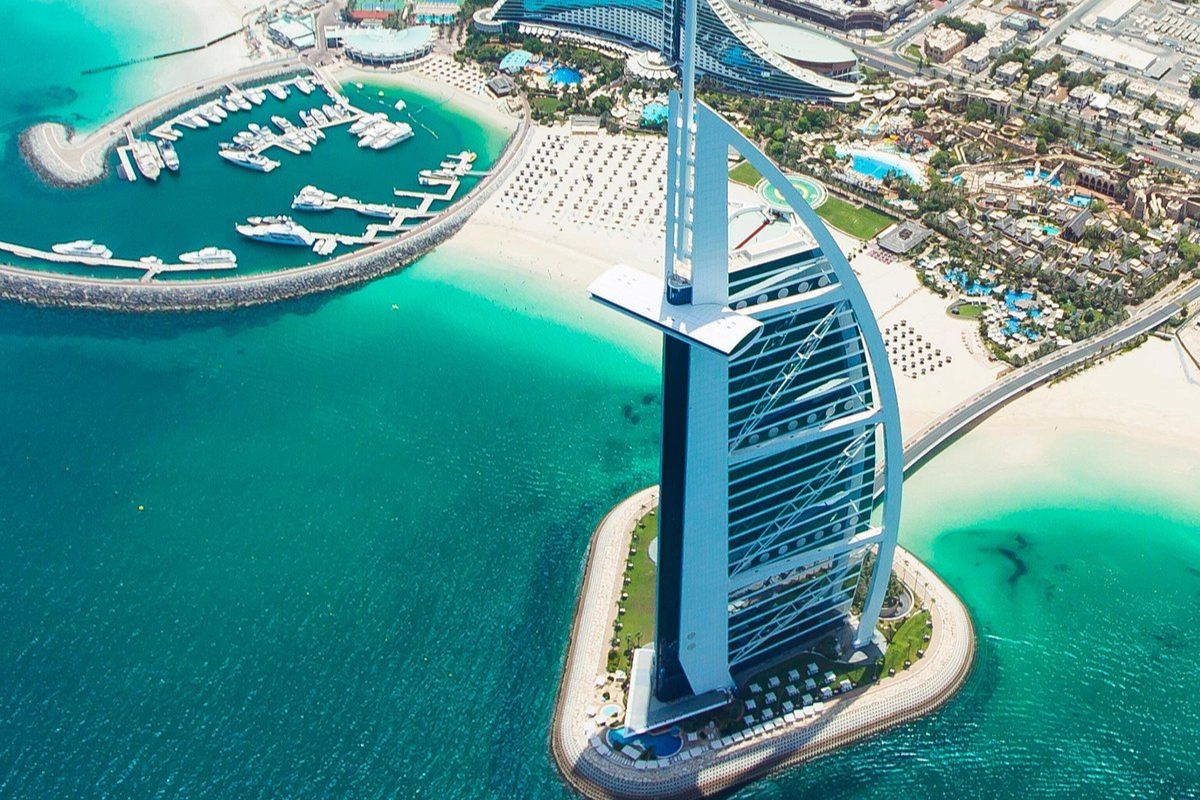
At 321 Meters Tall and Built on an Artificial Island, the Self-Proclaimed 7-Star Hotel of US$ 1 Billion Transformed Dubai’s Architecture into an Engineering Spectacle, a Symbol of Exclusivity and Innovation.
The self-proclaimed 7-star hotel Burj Al Arab is more than an architectural icon; it is a statement of identity. Designed to be the symbol of absolute luxury in the United Arab Emirates, the building was erected on an artificial island 280 meters off the coast and connected to the mainland by a private bridge.
The structure, inaugurated in 1999, cost around US$ 1 billion and was planned to represent the fusion of cutting-edge engineering, symbolic design, and architectural marketing. Since then, the Burj Al Arab has established Dubai as a global reference in high-end tourism and urban innovation.
Engineering in Open Water: The Island and the Monumental Structure
Building the self-proclaimed 7-star hotel in the sea required an unprecedented approach.
-
A forgotten cord on the floor of a basement in Vienna leads a plumber to a box containing 30 kilograms of gold with Mozart’s face, hidden before World War II. The treasure, worth 2.3 million euros, was just centimeters away from a worker who ignored the sign a day earlier.
-
A couple buys an old chalet, breaks the kitchen floor for renovation, and finds over a thousand coins of gold and silver hidden since the English Civil War over 4 centuries ago.

-
Rigid bags with their days numbered: new trend prioritizes comfort in 2026.

-
YouTuber creates an excavator equipped with a giant 4.5-meter sword to challenge his brother to a rematch, and the invention quickly goes viral on social media.


Three years were dedicated solely to the formation of the artificial island, composed of rocks and concrete blocks that stabilize the soil and reduce tidal impact. Only after this base was consolidated did the main structure begin to rise.
At 321 meters tall, the Burj Al Arab is one of the tallest hotels in the world. Its sail shape, inspired by traditional dhows, was conceived by architect Tom Wright of Atkins.
The goal was to create an unmistakable silhouette, visible from any point in Dubai and recognizable as a national brand.
The double facade, made of fiberglass coated with Teflon (PTFE), was the first in the world to apply this material vertically at scale.
This translucent layer reflects the desert heat and allows variable night lighting, creating the effect of a sail that changes color under the Arabic sky.
Interior Design: Luxury as Language
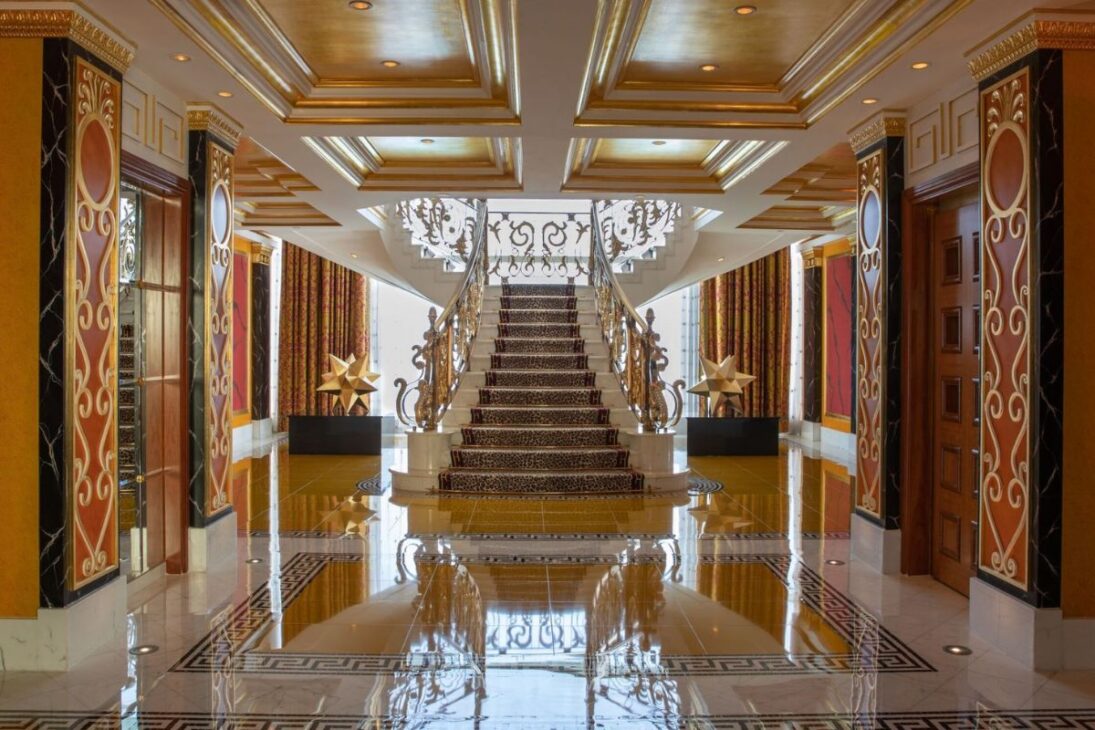
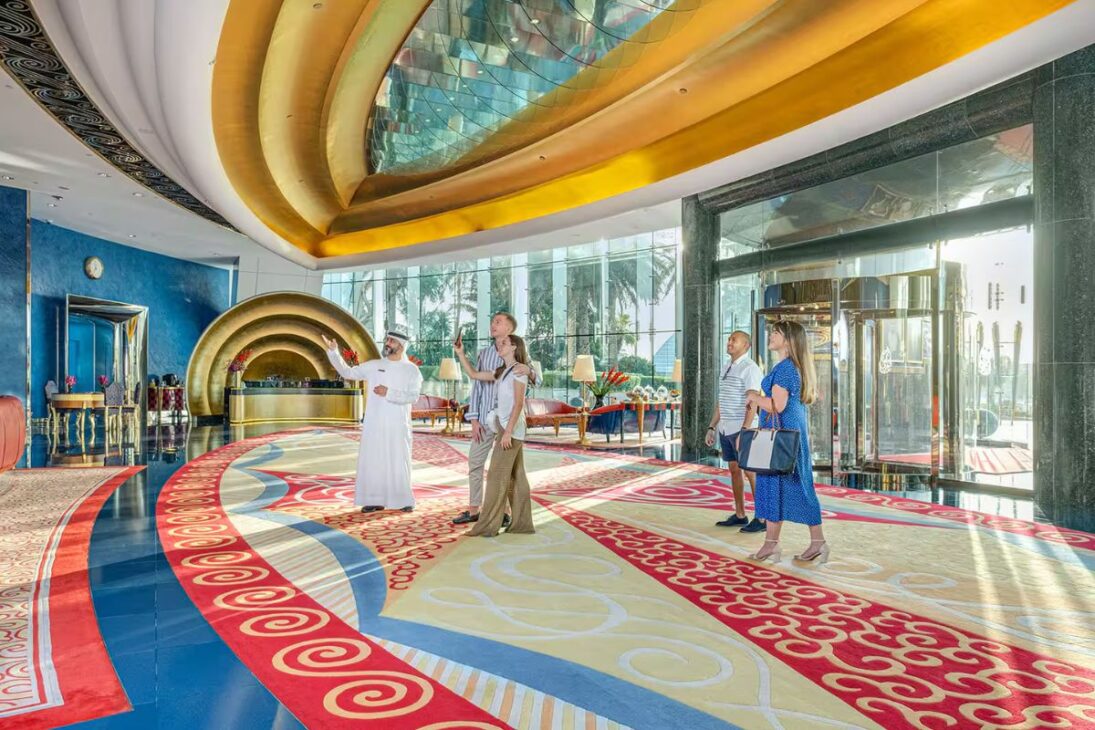
If the external structure impresses through engineering, the interior translates exuberance and theatricality. The central atrium measures 180 meters in height and is surrounded by columns clad in 22-carat gold, Italian marbles, and Arabic mosaics.
The design by Khaun Chew follows the symbolism of the four elements—earth, fire, water, and air—represented in fountains, reflecting pools, and lighting.
The Burj Al Arab has no standard rooms, only 202 duplex suites. The smallest is 169 m²; the largest is 780 m², equipped with marble staircases, Persian carpets, and panoramic views of the Persian Gulf.
The service includes 24-hour butlers, a fleet of Rolls-Royces, and even a private helicopter—all designed to reinforce the feeling of absolute exclusivity.
The Marketing of Exclusivity: Why “7 Stars”?
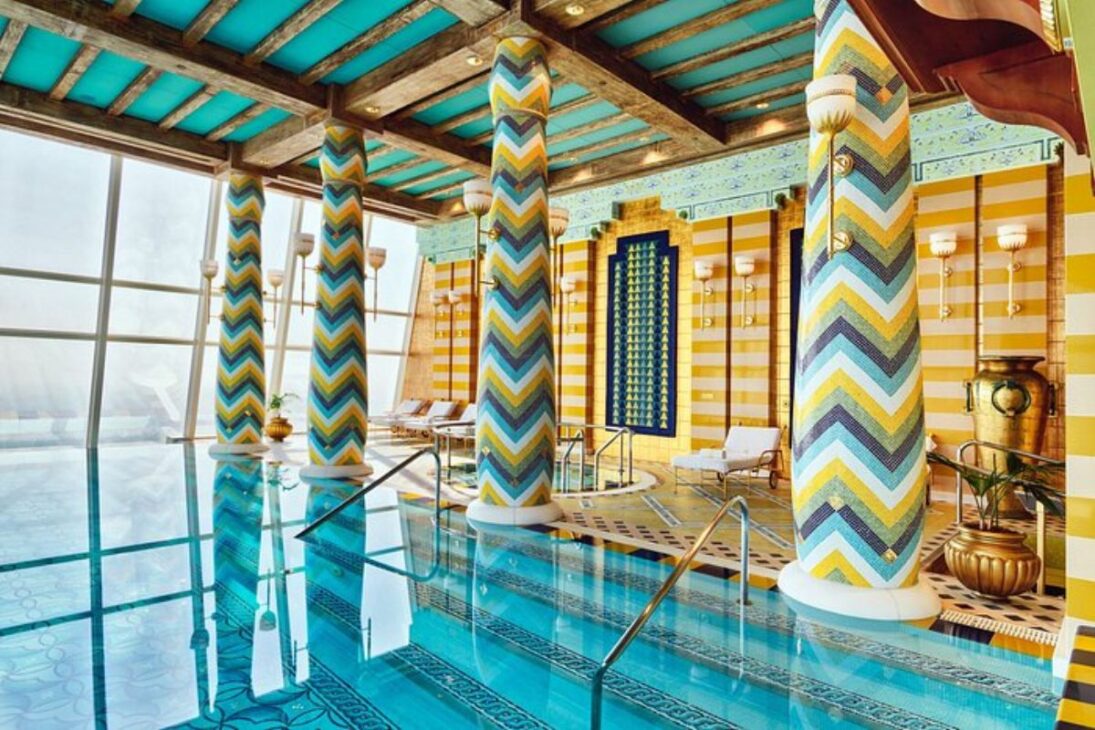
The term self-proclaimed 7-star hotel originated from an observation made by a British journalist who stayed during the inauguration and declared that the level of luxury surpassed traditional classification. The unofficial nickname was quickly incorporated into Dubai’s narrative, transforming the hotel into a global brand of ostentation and status.
More than just offering comfort, the Burj Al Arab was designed as a tool for communicating national power and prosperity.
Its isolated location, exclusive bridge, and helipad at 210 meters high are not just functional solutions but symbols of restricted access, reinforcing the idea of a space reserved for the global elite.
Technology and Sustainability in an Extreme Environment
In a desert climate, maintaining thermal comfort is an engineering challenge. Therefore, the double facade made of fiberglass acts as a smart thermal barrier, allowing ventilation between the layers and reducing heat gain.
The internal air conditioning system complements this protection, ensuring stable temperatures without compromising design.
Additionally, the structure was designed to withstand strong winds and maritime salinity.
Each element of the project combines durability, efficiency, and aesthetics, a signature of Dubai’s engineering at the end of the 20th century, when the city began to position itself as a global hub of architectural innovation.
More than a hotel, the Burj Al Arab was the turning point of Dubai’s modern identity.
It initiated the logic of “luxury as a tool for urban development,” attracting tourism, investments, and international visibility.
Its construction anticipated the era of megastructures—a trend that would repeat with the Palm Jumeirah and the Burj Khalifa.
The combination of marine engineering, iconic design, and visionary marketing transformed the building into a symbol of ambition and national self-assertion, redefining the way cities in the Gulf began to project their image in the world.
Do you believe the self-proclaimed 7-star hotel represents a symbol of legitimate innovation or simply the height of modern ostentation?








-

-

-

-

-

28 pessoas reagiram a isso.