





 Portuguese
  English
  Spanish
  3 min of reading
  0 comments


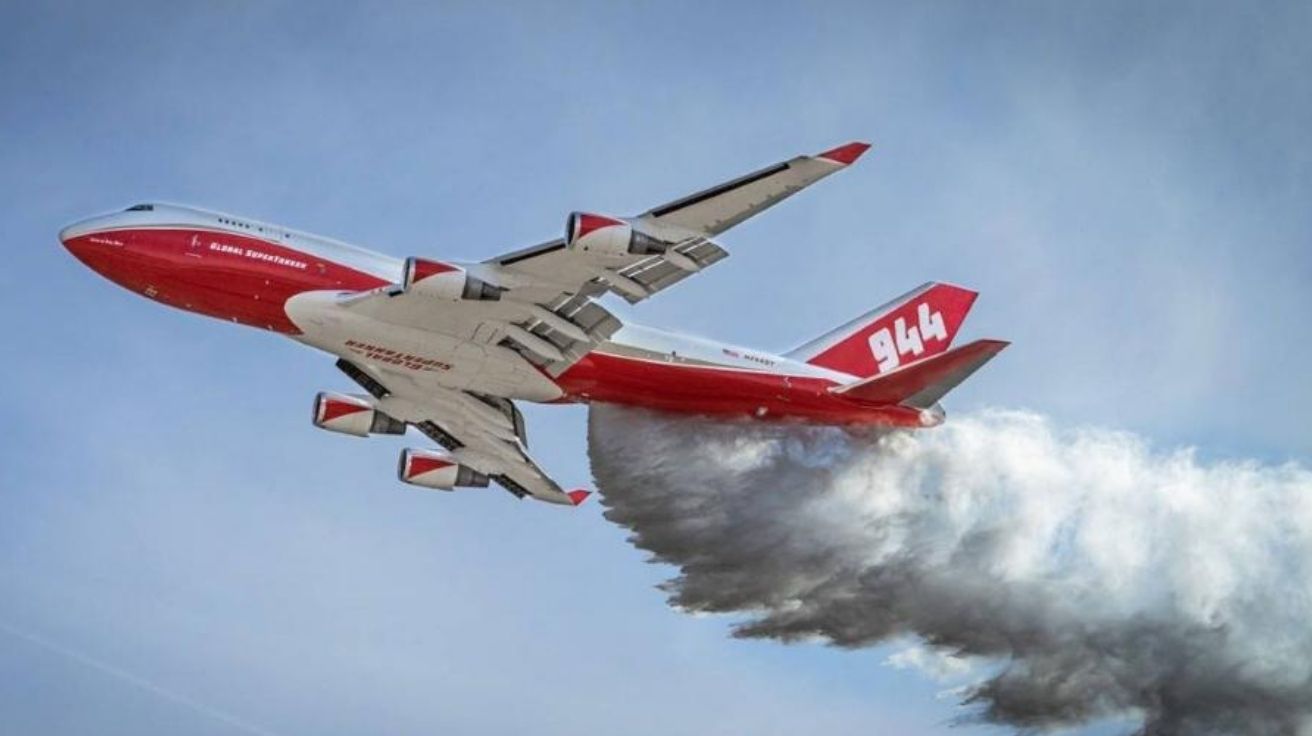
Used in Wildfire Fighting Missions, the Supertanker Is an Aerial Colossus with the Capacity to Drop Thousands of Liters of Water in Just a Few Seconds
With the capacity to transport 90,000 liters of water per flight, the Boeing 747 Supertanker stands out as the largest firefighting aircraft ever operated in the world.
Designed to drop the equivalent of 36 residential swimming pools in a single mission, the Supertanker has been adapted to tackle large-scale wildfires with precision and speed.
With a structure derived from a Boeing 747-400, a model widely used in commercial aviation, this aircraft was transformed into an aerial firefighting platform, equipped with controlled dispersion systems and high-capacity pressurized tanks.
-
Friends have been building a small “town” for 30 years to grow old together, with compact houses, a common area, nature surrounding it, and a collective life project designed for friendship, coexistence, and simplicity.

-
This small town in Germany created its own currency 24 years ago, today it circulates millions per year, is accepted in over 300 stores, and the German government allowed all of this to happen under one condition.

-
Curitiba is shrinking and is expected to lose 97,000 residents by 2050, while inland cities in Paraná such as Sarandi, Araucária, and Toledo are experiencing accelerated growth that is changing the entire state’s map.

-
Tourists were poisoned on Everest in a million-dollar fraud scheme involving helicopters that diverted over $19 million and shocked international authorities.


How the Supertanker Works in Aerial Combat Operations
The Supertanker was developed from a Boeing 747-400, the same model widely used in international commercial flights, and transformed into a firefighting aircraft with a structure adapted for emergency missions.
Its internal tank was designed to release water or chemical retardant in a controlled manner, through a pressurization system.
The drop can be made in a single discharge or divided into multiple passes, depending on the intensity and extent of the flames.
How Many Liters the Aircraft Drops and What Is the Coverage Area
The aircraft holds more than 90,000 liters of water or retardant, a substance used to contain the spread of fire.
The coverage area per mission can reach three kilometers in length and 45 meters in width, equivalent to more than eight football fields side by side.
With this range, the firefighting aircraft proves essential for protecting urban areas, dense forest regions, and inaccessible areas for ground crews.
Flight Capacity and Operational Structure of the Supertanker
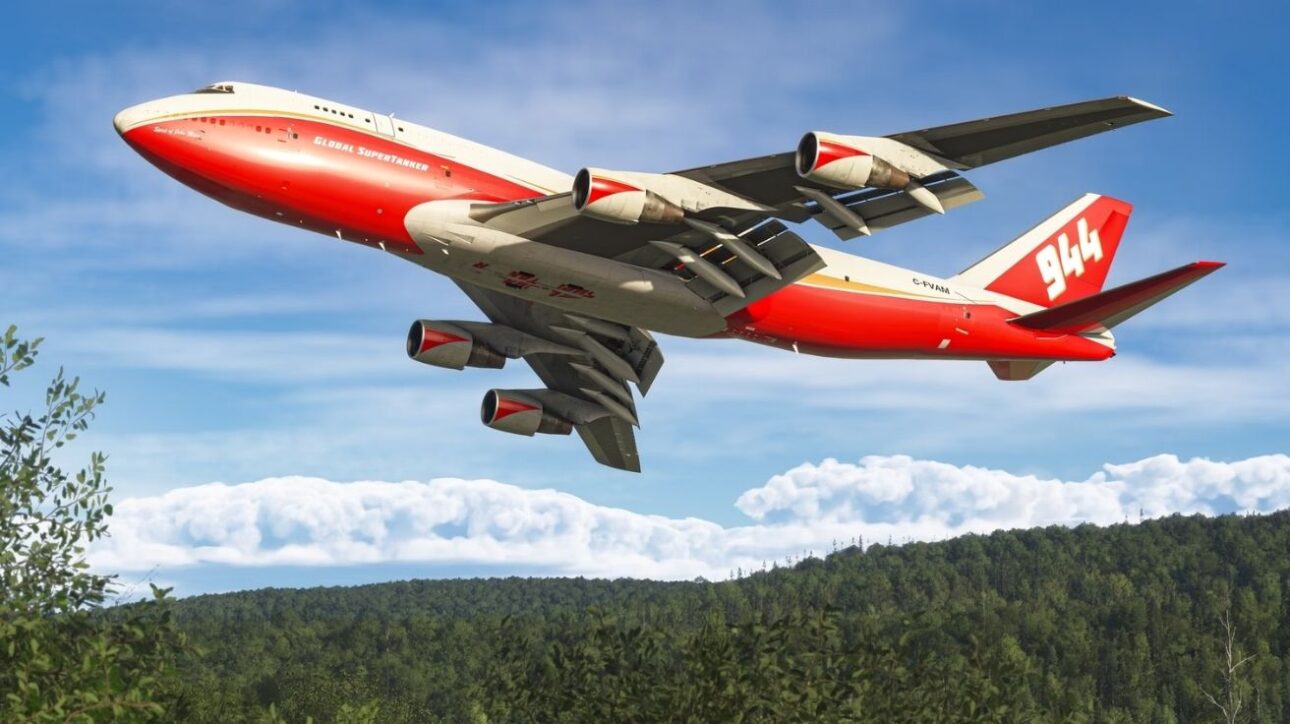
To support this volume, the operational weight exceeds 300 tons, equivalent to that of four fully loaded city buses.
Nevertheless, the Supertanker is capable of reaching speeds over 900 km/h and performing maneuvers at low altitude safely.
The cockpit has been modernized with state-of-the-art navigation and monitoring equipment, allowing aerial operations to be coordinated precisely with ground firefighters.
History of Operations in Mega Wildfires
The firefighting aircraft gained international attention when used in major environmental disasters, such as the wildfires in California (USA), Chile, and the Amazon region.
In addition to dropping water, the Supertanker acted as an aerial observation platform, identifying active hotspots and risk areas to guide the movement of rescue teams.
Operating Cost and Retirement of the Aircraft
Each hour of flight for the Supertanker could cost over US$ 15,000, a figure that required coordination between governments and private institutions to make its use feasible.
Despite the high cost, authorities considered it justifiable in light of the damage caused by uncontrolled wildfires.
The Supertanker was operated by specialized companies such as Global Supertanker Services until it was <strong.retired in 2021.
Since then, it has been a reference for the development of new tanker aircraft models, with greater efficiency and faster refueling systems.

Alternatives Around the World and the Scenario in Brazil
Today, several countries maintain fleets of firefighting aircraft, including models like the Airbus A400M, the Canadian CL-415, and adapted versions of the C-130 Hercules.
In Brazil, the focus has been on the use of adapted agricultural aircraft, especially in areas of the Cerrado and Amazônia. Additionally, there are studies on international cooperation in cases of climate emergencies.
The Role of Aircraft in Facing the Climate Emergency
The increase in the frequency and intensity of wildfires in various parts of the world highlights the need for specialized aerial technology.
The use of aircraft like the Supertanker demonstrates that aviation can be a crucial ally in the rapid response to fires, provided it is integrated with public policies, local prevention, and efficient environmental monitoring systems.
In light of this scenario, should Brazil invest in an aircraft like the Supertanker or prioritize more sustainable regional alternatives?









-

3 pessoas reagiram a isso.