





 Portuguese
  English
  Spanish
  5 min of reading
  0 comments


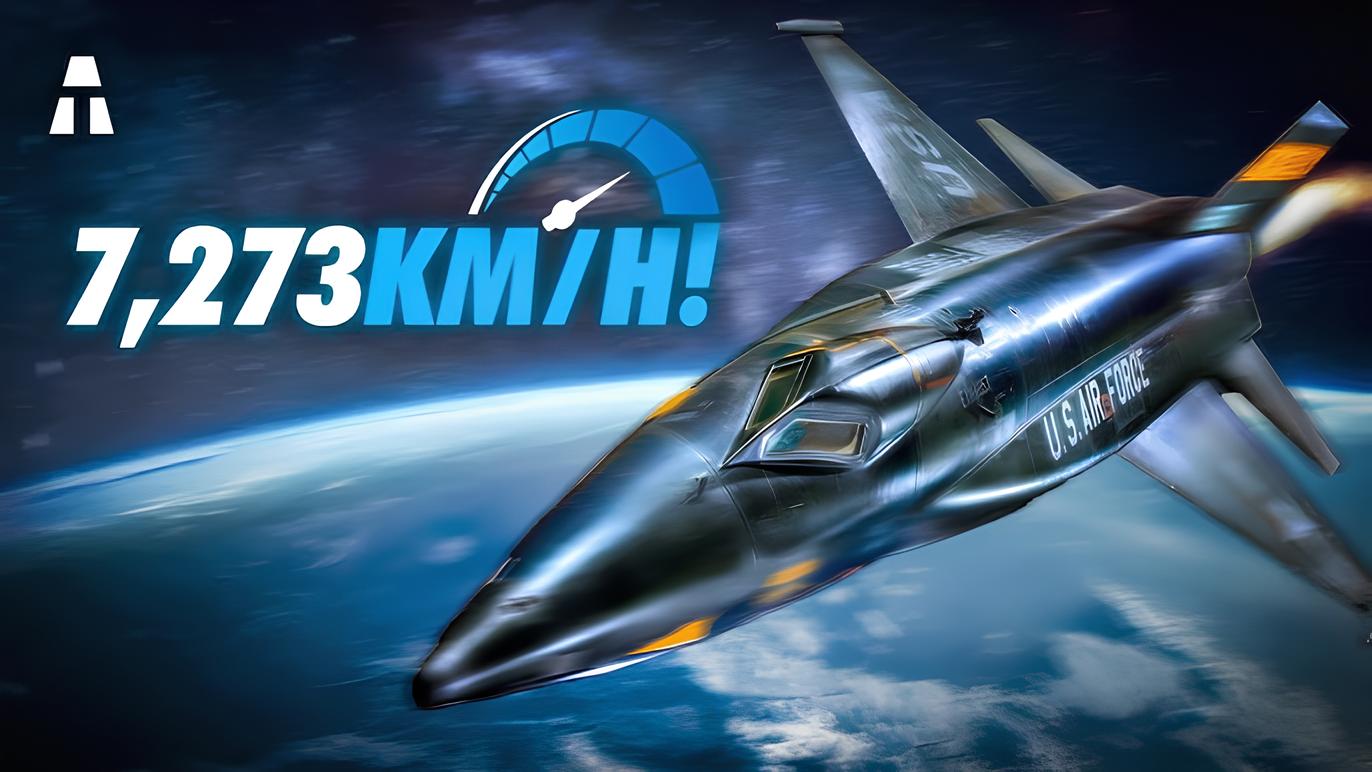
The Hypersonic X-15 Aircraft of the USA Reached Mach 6.7, Surpassed Missiles, Made History, and Was Canceled Without Explanation. Meet the Successor to the SR-71 Blackbird.
During the Cold War, the skies ceased to be just the limit and became the new battlefield between superpowers. In this context, the United States embarked on revolutionary military projects, among them two legendary aircraft: the SR-71 Blackbird, the fastest reconnaissance plane ever built, and the even faster X-15, an experimental hypersonic aircraft that reached an impressive Mach 6.7 (7,273 km/h). What few know is that despite their extraordinary feats, both were retired without clear public explanations — especially the NASA hypersonic aircraft — the X-15, which saw its end quietly sealed with the advancement of satellites.
SR-71 Blackbird: The Plane That Flew Faster Than a Missile


Designed by Lockheed’s Skunk Works division, the SR-71 Blackbird emerged as a direct response to the need for strategic surveillance by the United States over hostile territories. Flying at altitudes exceeding 26,000 meters and achieving speeds close to Mach 3.3 (approximately 3,540 km/h), it was faster than any missile at the time.
Its design was so advanced that the airframe itself would expand during flight due to the heat generated by atmospheric friction. For this reason, the Blackbird leaked fuel when on the ground — its structure was designed to “seal” completely only at high speed.
-
The Argentine government celebrates the lowest poverty rate in 7 years, but experts warn that the methodology has changed, real wages have fallen, unemployment has risen, and the number of people on the streets of Buenos Aires has increased by 57% since Milei took office.

-
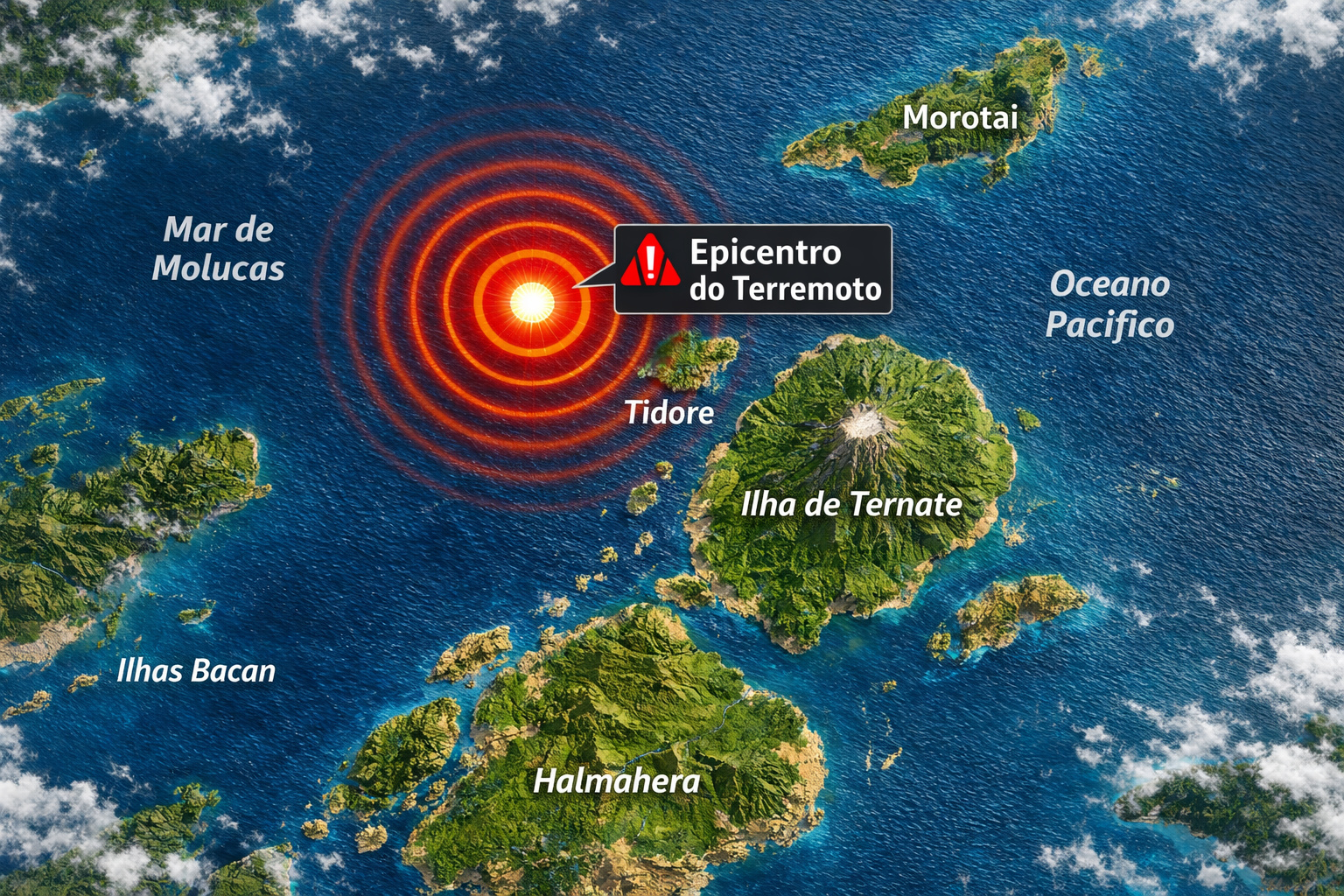
7.8 magnitude earthquake in Indonesia frightens the population, triggers tsunami alert, and hits an island with over 200,000 inhabitants this Thursday.
-
Google will finally let you change that embarrassing Gmail address you created in your teenage years without losing any accounts, logins, or old emails: the feature is already available in the United States.

-
Heading to Brazil in a Bonanza F33 single-engine aircraft: a couple departs from Florida on a visual flight, makes technical stops in the Caribbean to refuel and organize paperwork, and begins the staged crossing until they reach the country.

With its ability to evade any detected threat, the SR-71 became an icon of hypersonic aviation, operating for decades without ever being shot down in combat, even conducting missions in highly monitored territories such as the Soviet Union, North Korea, and China.
The X-15: The NASA Hypersonic Aircraft That Pushed All Boundaries
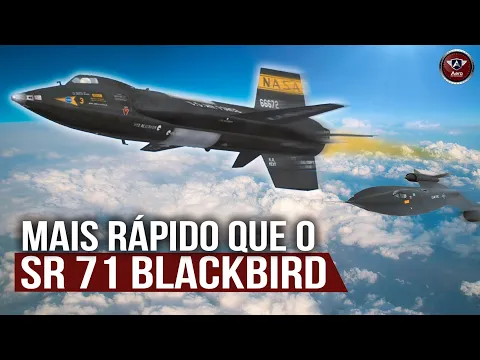
If the SR-71 seemed unattainable, the X-15 went beyond. Developed by NASA, U.S. Air Force and North American Aviation, the X-15 was an experimental rocket plane designed to test the limits of high-speed flight and high altitude.
On October 3, 1967, pilot William J. “Pete” Knight reached Mach 6.7 (7,273 km/h), setting an absolute speed record for manned aircraft with self-propulsion — a record that has yet to be officially surpassed by any conventional manned airplane.
But despite this historic feat, the program was terminated a few years later, almost without fanfare. What happened to NASA’s hypersonic aircraft?
How the X-15 Worked – NASA’s Hypersonic Aircraft
Unlike the SR-71, which took off and landed like any jet, the X-15 was carried to the stratosphere by a modified B-52 bomber and released at altitude. It would then ignite its XLR99 rocket engine, powered by anhydrous ammonia and liquid oxygen.
It was a true hypersonic capsule. Depending on the flight, the X-15 reached altitudes between 80 and 108 km, briefly entering the edge of space, which earned some pilots official astronaut accolades.
With a structure made of titanium alloy and Inconel X steel, the aircraft could withstand extremely high temperatures. However, each flight lasted an extremely short time: averaging 8 to 12 minutes, almost all on suborbital trajectories.
The Space Race and the End of the X-15
The X-15 program was years ahead of its time. But ironically, it fell victim to its own success — or rather, to the paradigm shift in the global technological race. With the advancement of spy satellites and the prioritization of projects like the space shuttle and Apollo missions, the X-15 was deemed obsolete for the strategic goals of the time.
Furthermore, the difficulty of control, the extremely high operational costs, and a fatal accident in 1967 that killed pilot Michael Adams during a mission reinforced the idea that manned flights at extreme speeds would no longer be a priority.
With no ceremony, the hypersonic aircraft of the USA that reached Mach 6.7 was retired in 1968. There was no official cancellation announcement — just a quiet shift in focus to uncrewed systems.
Comparing the Two Legends: SR-71 vs. X-15
| Characteristic | SR-71 Blackbird | X-15 |
|---|---|---|
| Maximum Speed | Mach 3.3 (~3,540 km/h) | Mach 6.7 (~7,273 km/h) |
| Maximum Altitude | 26,000 m | Up to 108,000 m |
| Propulsion | Turbojets | Rocket Engine |
| Missions | Military Reconnaissance | Space and Hypersonic Flight Research |
| Program Duration | 1966–1998 | 1959–1968 |
| Units Built | 32 | 3 |
| Combat Survival | Never Shot Down | One Fatal Accident |
Although the SR-71 Blackbird is more well-known, the X-15 still holds the records for speed and altitude for manned aircraft with self-propulsion.
The Return of Hypersonics?
Decades after the retirement of the X-15, the world is witnessing a new renaissance of hypersonic aircraft. China, Russia, and the United States are heavily investing in missiles and vehicles capable of achieving Mach 5 or more. However, all current projects are uncrewed — exactly the opposite of what the X-15 represented.
Among the new secret projects of the USA are the SR-72, an unofficial successor to the SR-71, aiming to achieve Mach 6 with mixed propulsion (turbojet and scramjet), and the X-37B, an uncrewed spaceplane that conducts secret missions in orbit.
Even so, none of them have surpassed the feat of the X-15 with a human pilot on board.
Why the X-15 Is Still Unmatched?
The achievement of the X-15 continues to be a source of reverence for engineers and pilots worldwide. Not only for its speed but for the technology involved in the 1960s, without today’s advanced computers and control software.
The X-15’s structure withstood temperatures above 650°C, without the use of modern composite materials. Its navigation system was mechanical, and flight control required a very high level of skill from the pilot.
Pete Knight’s mission at Mach 6.7 is considered one of the most challenging flights in history — to this day unreproduced in operational environments by any other manned aircraft.
The Silent Legacy of Hypersonic Engineering
The X-15 may have been quietly buried in the archives of the Cold War, but its impact echoes to this day. Much of what is known about hypersonic aerodynamics, control at extreme altitudes, and materials resistant to extremely high temperatures comes from the experimental program.
Furthermore, the X-15 project served as a foundation for the creation of NASA’s crewed space program, directly influencing the development of vehicles like the space shuttle Columbia and atmospheric reentry systems.
An Era That Disappeared Before Its Time
What makes the case of the X-15 so striking is not only its impressive performance but the fact that it was shut down without official justification, despite representing an unprecedented advancement. Instead of expanding the program, the USA left it behind, opting to focus on satellites and automated missions.
Today, in an era where the world is once again discussing hypersonic aircraft, the X-15 resurfaces as a nearly forgotten legend — and a reminder of what has already been accomplished with far less technology and resources.
Meanwhile, the SR-71 Blackbird remains venerated as an icon of the Cold War, although it too was retired before any real threat could shoot it down. Together, the two represent the pinnacle of flight engineering in the United States — and perhaps, the end of an era where speed was the greatest weapon.









-

7 pessoas reagiram a isso.