





 Português
  Inglês
  Espanhol
  6 min de leitura
  1 comentário


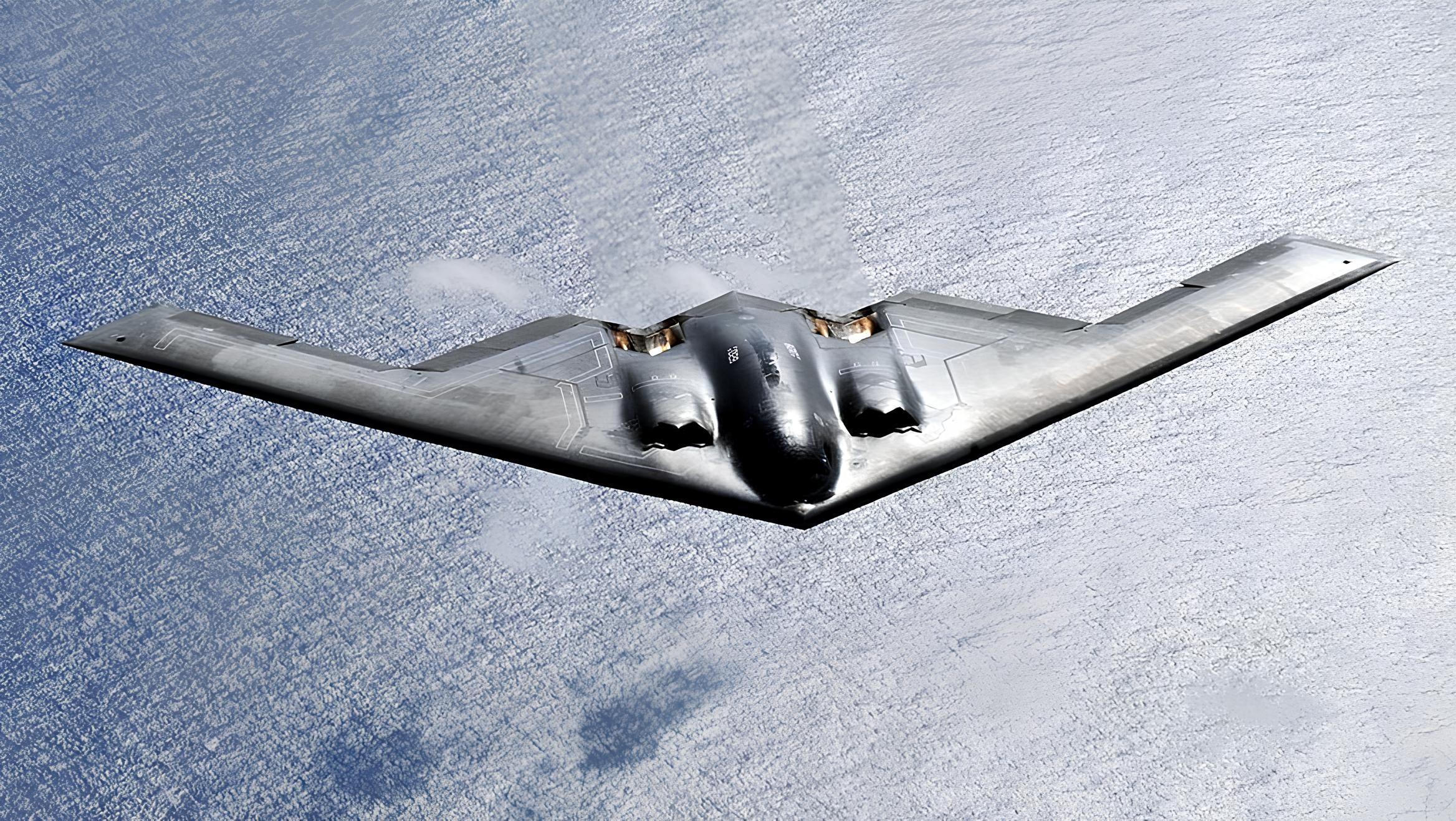


The Stealth Bomber B-2 Spirit, an Invisible Plane to Radar with Advanced Military Technology, Cost More Than US$ 2 Billion per Unit and Flew for Only a Decade. Understand What Led to Its Early Retirement.
At the height of the Cold War, the United States launched one of the most ambitious and expensive projects in military history: the development of a radar-invisible aircraft capable of penetrating the planet’s most sophisticated defenses and delivering nuclear payloads with surgical precision. The result was the world’s most expensive military aircraft — the B-2 Spirit, an aircraft that defined the course of stealth military technology and became a symbol of American air supremacy. With a unit cost exceeding US$ 2 billion, the B-2 was not just a stealth bomber — it was a technological revolution. However, to the surprise of many, the aircraft was retired from active service after only 10 years of full operation, leaving experts intrigued about the true reasons behind its short career. Also check out: the most expensive ship in history cost US$ 13 billion, has a nuclear reactor, and can launch fighters every 25 seconds — but nearly sank during tests
The Birth of the B-2 Spirit: A Secretive Billion-Dollar Project Considered the Most Expensive Military Aircraft in the World

The B-2 Spirit was conceived during the 1970s and 1980s under extreme secrecy, in a Pentagon program called “Advanced Technology Bomber” (ATB). The manufacturer Northrop Grumman was tasked with developing a stealth aircraft capable of avoiding radar detection, flying long distances without refueling, and penetrating enemy territories with high-precision nuclear armament.
The first flight took place on July 17, 1989, and its entry into active service began in 1997, by the United States Air Force (USAF). Initially, the Department of Defense planned to build 132 units of the B-2. However, after the end of the Cold War and the budget cuts of the 1990s, this number was drastically reduced to only 21 operational aircraft.
-
The world’s first octopus farm wants to open in the Canary Islands and is already provoking an international reaction: the plan aims to produce 3,000 tons per year.

-
Drought may be creating stronger superbugs in the soil and helping antibiotic resistance reach hospitals, warns a study highlighting a problem that could grow alongside extreme weather.

-
The biggest scam in history: Napoleon’s France deceived the United States by selling them a territory that was Spanish.

-
Why is the Danakil Desert so dangerous? It has unstable terrain and how extreme temperatures and toxic gases turn the region into one of the most hostile environments on Earth.


Radar-Invisible Aircraft: How the B-2, the Most Expensive Military Aircraft in the World, Deceived Defense Systems
The main innovation of the B-2 Spirit was its stealth capability, meaning it was undetectable by conventional radars. This feature came from a number of integrated technological factors:
- Flying wing shape, which reduces the frontal radar signature
- Radar-absorbent composite materials (RAM) throughout the structure
- Design with no visible vertical surfaces (no tail or fin)
- Low thermal and acoustic profile
- Active reduction of electromagnetic emissions
By eliminating or camouflaging elements that normally reflect radar waves, the B-2 could fly over highly protected areas guarded by air defense systems without being detected until it was too late. This capability was successfully tested in real scenarios in Kosovo, Iraq, Afghanistan, and Libya.
Armament Capacity and Range: A Global Strategic Bomber
Despite the focus on stealth, the most expensive military aircraft in the world is also a formidable combat machine. The aircraft can carry up to 18 tons of armaments in its internal compartment — from GPS-guided conventional bombs to multiple warhead nuclear devices.
The impressive technical specifications include:
- Range: 11,000 km without air refueling
- Speed: about 1,010 km/h (high subsonic)
- Cruising altitude: 15,200 meters
- Crew: 2 pilots
- Maximum payload: 18,000 kg
- Nuclear capability: yes (B61 and B83)
The bomber could cross continents, strike strategic targets, and return undetected — all in a single mission. It was, indeed, the definition of what US military technology sought: lethality with invisibility.
Why Was It Considered the Most Expensive Military Aircraft in the World?
The cost of the B-2 is one of the most striking factors: over US$ 2 billion per unit (adjusted values). Part of this is due to the development process itself, which took decades, costing around US$ 44 billion in total.
Stealth materials, inertial navigation systems, redundant avionics, electronic shielding, and maintenance systems require highly skilled labor and sensitive technology.
Additionally, each B-2 flight requires intense preparation. The stealth coating needs to be constantly inspected and treated, and its maintenance is carried out under strict national security protocols.
Early Retirement: Only 10 Years in Full Operation
Although it was formally introduced in 1997 and used in missions for almost two decades, the B-2 Spirit began to be gradually retired from active service in the mid-2000s, officially marked for definitive replacement with the arrival of the B-21 Raider, its direct evolution.
The USAF confirmed that it plans to retire the remaining B-2s by 2032, with several units already out of operation since 2008. The main reason cited is maintenance costs and the complexity of the logistics involved.
However, various military analysts — including retired USAF officials and defense specialists interviewed by Air Force Magazine — believe that the real reason for the B-2’s early retirement may include:
- Vulnerability to modern broadband and VHF radars, used by powers like Russia and China
- High operational cost (about US$ 150,000 per flight hour)
- Dependence on specific bases and limited infrastructure
- Rapid development of the B-21 Raider, with lower unit cost and simplified maintenance
These factors fuel the debate over whether the B-2 was retired due to tactical obsolescence or if it was simply financially unviable for the new American military doctrine.
The Successor: B-21 Raider
The new project of the United States Air Force is the B-21 Raider, also developed by Northrop Grumman, which is expected to begin operations in the 2020s. The B-21 incorporates everything learned from the B-2, but with:
- Significantly lower production cost
- Modular architecture for quick upgrades
- Integration with artificial intelligence and drones
- Less need for ground maintenance
- High interoperability with Space Force and cyber systems
According to the Congressional Budget Office (CBO), the B-21 is estimated to cost US$ 750 million per unit, with an expected production of over 100 units, making it much more scalable than the B-2.
Combat Participation and Strategic Impact
Despite the reduced number of units, the B-2 Spirit had notable participation in real operations:
- Kosovo (1999): first real missions, destroying Serbian command targets
- Afghanistan (2001-2002): attacks on Al-Qaeda underground bunkers
- Iraq (2003): high-precision bombing in Baghdad
- Libya (2011): destruction of Gaddafi’s air infrastructure
In all these missions, the B-2 demonstrated its ability to carry out surgical strikes without alerting enemy defenses — a real strategic asset in modern warfare.
The Mystery Remains: Was It a Success or Failure?
The B-2 Spirit is a paradox of military aviation. On one hand, it revolutionized the concept of air warfare with its stealth technology. On the other, it was limited in number, extremely expensive, and — in the eyes of many — had a lifespan too short to justify the investment.
For some experts, the B-2 was a victim of its own pioneering nature. “It was developed for a bipolar world but debuted in a unipolar scenario where the enemy no longer existed as conceived,” said military analyst James Hasik to Military.com.
Others point out that the B-2 served as a “learning platform” for the development of technologies that are now standard in modern aircraft.
The Legacy of the Most Expensive Stealth Bomber in History
The B-2 Spirit goes down in history as one of the most ambitious — and controversial — projects of modern military technology. It was the first truly operational stealth bomber, a symbol of American air supremacy and a precursor to a new era of stealth aircraft.
Its legacy is complex: it was efficient, revolutionary, but also prohibitive in cost and operationality. Even so, its influence extends to the present day, with derived technologies present in military drones, invisible fighters, and even in the B-21 Raider, its direct successor.
And while some of its units still operate in special missions, the B-2 has already become an icon: the radar-invisible plane that flew ahead of its time — but perhaps came too early.
Official Sources Consulted for Writing the Content:
- Air Force Magazine – Northrop B-2 Spirit
- Military.com – B-2 Spirit Overview
- United States Air Force – Fact Sheets
- Congressional Budget Office (CBO)








O B2 já nasceu morto. A tecnologia de “invisibilidade” foi cedida pela URSS pois já tinham radares que o detectavam. Dizer q penetravam as melhores defesas do mundo com facilidade sendo, Iraque, afeganistao Kosovo e líbia?