





 Portuguese
  English
  Spanish
  6 min of reading
  0 comments


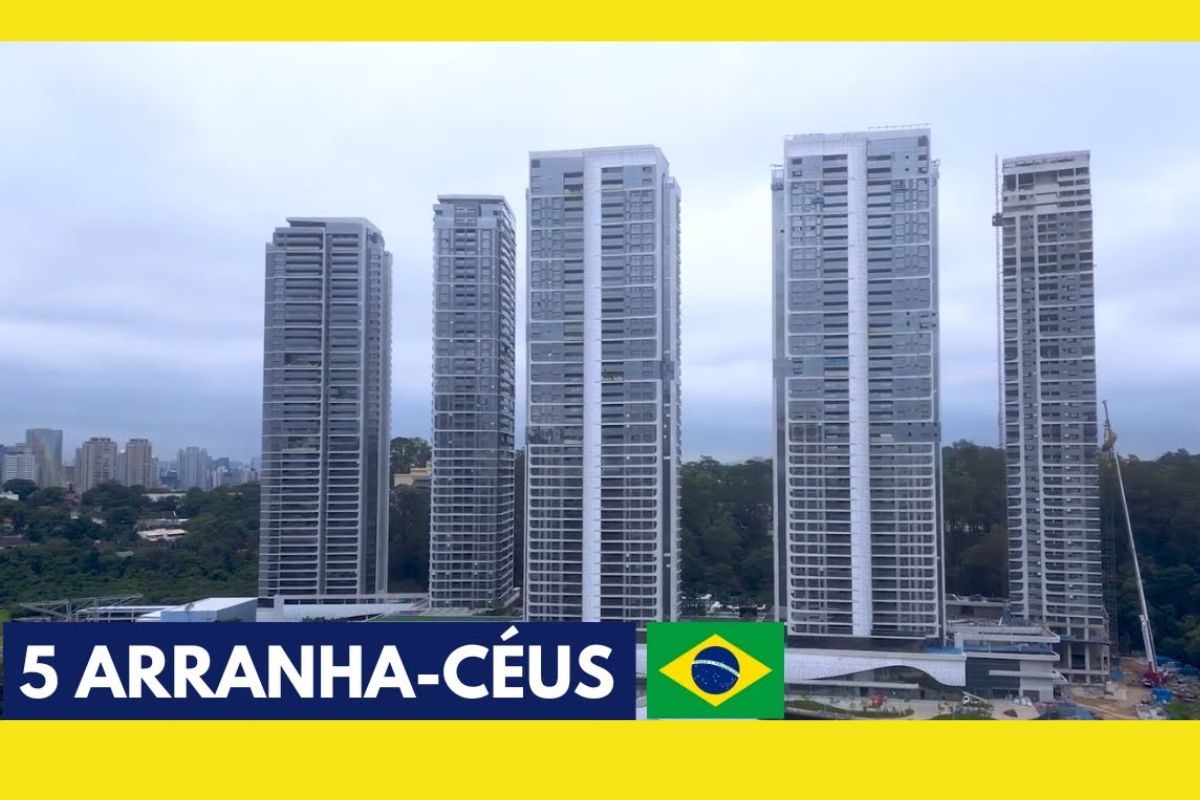
One of the Most Luxurious Real Estate Complexes in Latin America Advances on Marginal Pinheiros.
One of the most luxurious real estate complexes in Latin America is being implemented along the banks of the Pinheiros River, in São Paulo, featuring five glass towers, a reference hospital, high-standard hospitality, open-air commerce, and an internal system of green streets that brings housing, health, and services to a single high-density, high-value urban address. This is a planned development intended to transform an old floodplain vacancy into a complete neighborhood, connected to the road and rail systems of the southern zone and ready to operate with mobility, landscaping, and sustainability on a metropolitan scale.
This movement consolidates the riverbank as a new axis of qualified urbanization and confirms the region as the birthplace of one of the most luxurious real estate complexes in Latin America, not only for its architectural standard and glass facades but also for the simultaneous presence of a high-complexity hospital, luxury hotel, open-air shopping center, and elevated clubs on the podiums of the towers. It is a contemporary interpretation of densification that brings residents closer to high-demand services, reduces commutes, and updates São Paulo’s relationship with its main expressway.
Strategic Urban Insertion
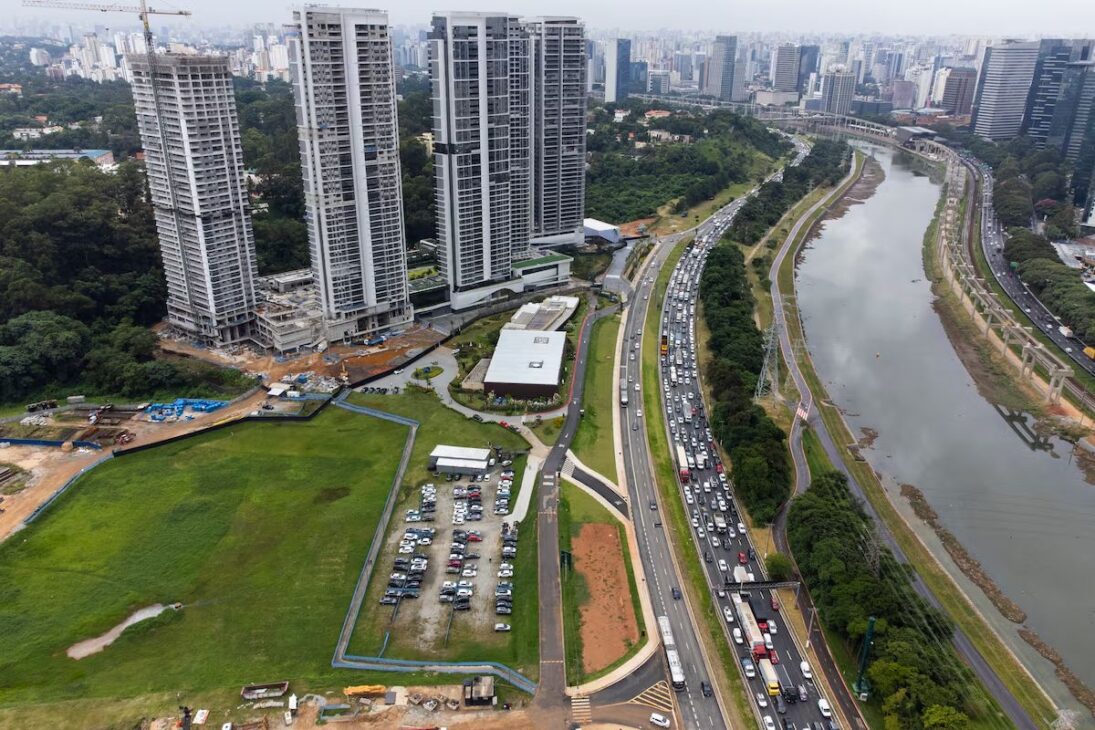
The chosen land for the enterprise is in a rare position in the southern zone. It hugs the Marginal Pinheiros, with a long frontage to the river, neighboring already established business centers and close to existing linear parks.
-
Italian researchers have detected what appears to be a second Sphinx buried under the sands of Egypt, and satellite scans reveal a gigantic underground megastructure hidden beneath the Giza Plateau for over 3,000 years.

-
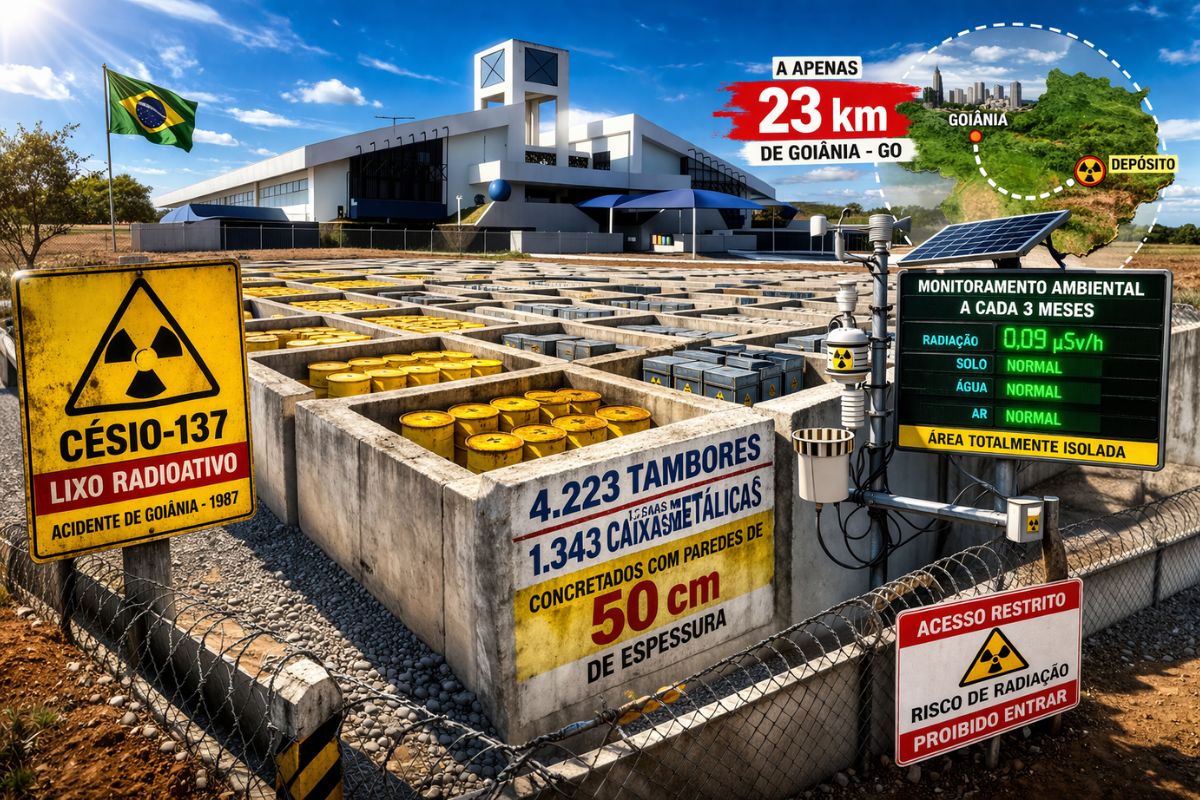
There are 4,223 drums and 1,343 metal boxes concreted with 50-centimeter walls that store the radioactive waste from Cesium-137 in the worst radiological accident in Brazil, just 23 kilometers from Goiânia, with environmental monitoring every three months.
-
Giant Roman treasure found at the bottom of Lake Neuchâtel in Switzerland reveals an advanced trade system, circulation of goods, and armed escort in the Roman Empire about two thousand years ago.

-
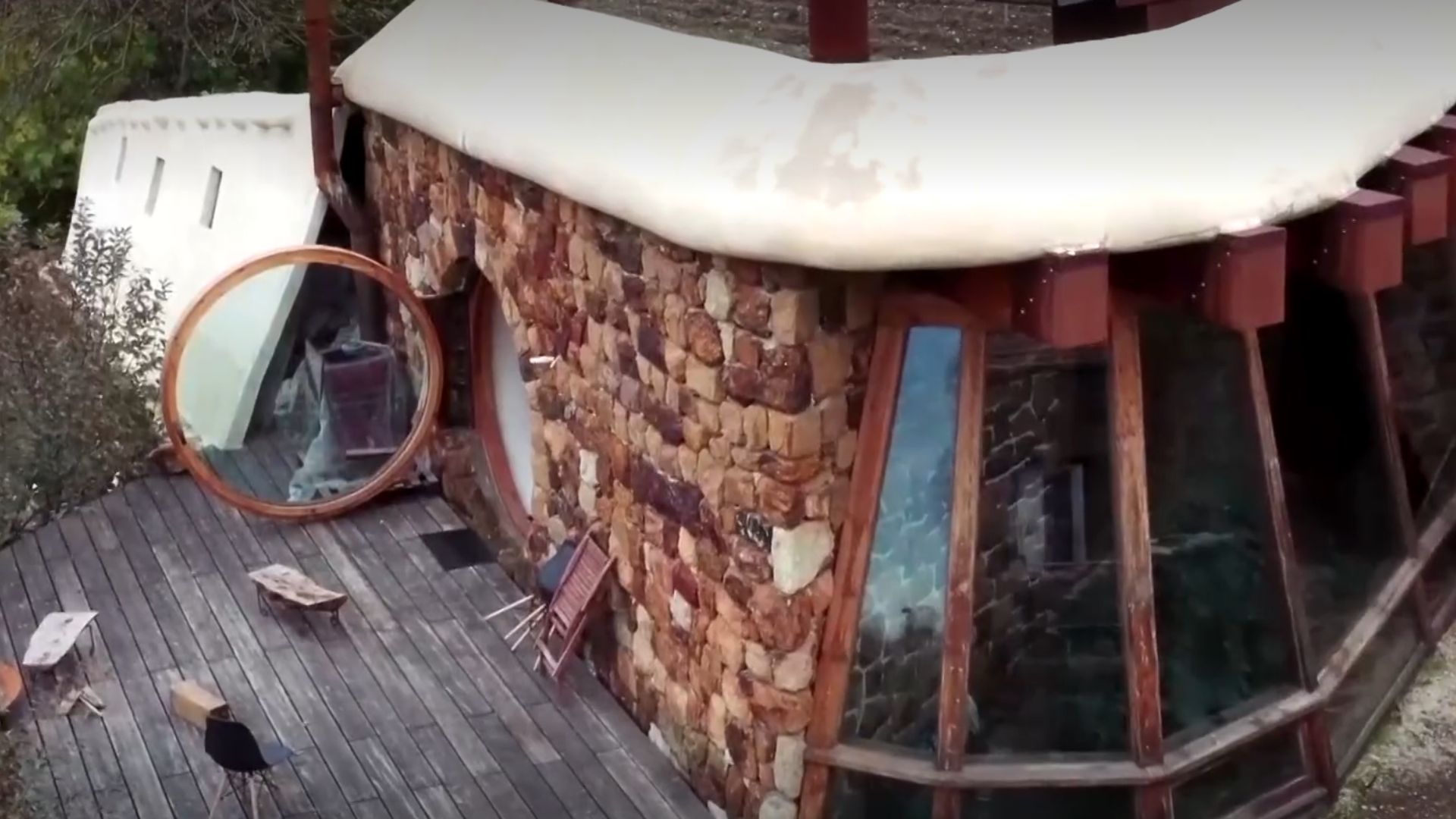
He buried 1,200 old tires in the walls to build his own self-sufficient house in the mountains with glass bottles, rainwater, and an integrated greenhouse.

For decades, this area functioned as a transition zone between the roadway corridor and the internal occupations of the neighborhood. With the advancement of the project, this vacancy now has a clear urban function and density compatible with the corporate surroundings.
São Paulo grew following the employment tracks, and when the Berrini Chucri Zaidan axis consolidated as a business hub, space opened up for residential and service occupations in adjacent areas.
What the enterprise does now is take this reasoning to a new level, creating a territory that is not only a gated community, nor only a shopping center, but one of the most luxurious real estate complexes in Latin America, with mixed use and internal infrastructure for pedestrians.
Complete Neighborhood Masterplan
The heart of the project is a masterplan that organizes the land into pedestrian axes, squares, and calm streets, surrounded by five residential towers that function as club islands.
Each tower has an active ground floor, landscaped podium, and elevated common areas, separating everyday life from the noise of the expressway. This arrangement produces an uncommon level of urban comfort for a lot adjacent to a high-speed road.
The central axis is not a closed mall, but rather an internal street of open-air commerce and dining, with awnings, tree cover, and active facades during the day and night.
Restaurants, cafes, and daily services are within reach of residents and workers in the complex, ensuring a constant flow. At the same time, the high-standard hotel adds a layer of hospitality that reinforces the metropolitan character of the enterprise, an important feature for one of the most luxurious real estate complexes in Latin America.
Reference Health Services within the Complex
One point that distinguishes this project from other large real estate operations is the inclusion of a high-level health complex, dedicated to oncology, hematology, and more complex therapies. Concentrating diagnosis, treatment, and research in the same area and near trains, bike paths, and expressways reduces travel times and brings the population closer to services that are normally isolated.
From an engineering standpoint, the hospital building requires higher standards of execution, with technical routes, medical gases, shielding, and highly controlled environments.
By housing this program within the same perimeter as the residential towers and commerce, the complex qualifies as one of the most luxurious real estate complexes in Latin America not just for its finishing but for its ability to perform critical urban functions.
Mobility, River, and Walkable City
The project is not limited to the interior of the lot. There is a review of the front of Marginal Pinheiros with the creation of a parallel local road, which organizes accesses and reduces dangerous maneuvers in the main corridor. There is also a link planned to Professor Benedito Montenegro Street, allowing for the distribution of flow without overloading a single exit point. This is a high-income densification that recognizes the need for internal microcirculation to function.
The region is already served by line 9 of the train and is on the corridor to be integrated by the monorail of line 17, which opens up connections to the subway and airport.
The bike path along the river and the bridge with a lane for pedestrians and bicycles bring the complex closer to the concept of a walkable city. Summing these layers, residents are able to live, work, study, and receive treatment within a short radius, exactly as the 15-minute city models predict, guiding new large-scale developments.
Soil Engineering and Sustainable Solutions
Implementing one of the most luxurious real estate complexes in Latin America in the floodplain of Pinheiros requires first interfering with the physical base.
The initial stages included enhanced drainage, auxiliary channels, and soil compaction to support the weight of towers of about 173 meters. Deep foundations act as artificial roots and transfer the load to firmer layers, reducing the risk of settlements.
On this foundation rise concrete podiums that elevate ground floors and common areas, keeping daily life above the water level and creating a continuous pavement for gardens and pedestrian circulation.
The landscaping features species from the Atlantic Forest, drainable lawns, and groves that ensure real shading. There is rainwater reuse for irrigation and cleaning, provisions for electric vehicles, and efficient lighting in common areas.
These are discreet but crucial solutions for the enterprise to operate at a lower cost and higher environmental performance.
Construction Progress and Pending Integrations
The current snapshot indicates a construction site in the transition phase from rough to fine work. The residential towers are progressing with facade closures, window fittings, and internal finishing. The internal streets are beginning to receive sidewalks, landscaping, and lighting infrastructure.
The health building is further along with external closures and special installations, indicating that the stage of equipping critical environments is approaching.
For the complex to operate fully, final urban stitches are still necessary, such as the completion of the local road parallel to the expressway, the complete paving of the internal link, the implementation of the bridge with bike lanes, and the execution of integration walkways with the Granja Julieta station and with the axis of the future monorail.
On the condominium side, tests for elevators, automation commissioning, safety calibration, and final delivery of the landscaped podiums are still pending. This is the stage where the enterprise appears ready on the outside but still needs to gain soul on the inside.
The combination of high-standard glass towers, reference hospital, hospitality, open-air commerce, and a complete internal mobility system places this enterprise among the most luxurious real estate complexes in Latin America.
It is not just a luxury condominium set along the river. It is an urban operation that converts a strategic vacancy into a complete neighborhood, with density, infrastructure, integration with transportation, and drainage solutions compatible with the floodplain of Pinheiros, aligning urbanism, market, and engineering.


For those following the advancement of the southern zone and the requalification of the riverbank, the question for technical and urban debate remains, which is of interest to architects, developers, and residents of the region: should the complex continue to grow with this model of mixed-use high density, or does São Paulo need to establish a density limit to preserve the flow of the Pinheiros axis?









-

-

-

-

4 pessoas reagiram a isso.