





 Portuguese
  English
  Spanish
  4 min of reading
  0 comments


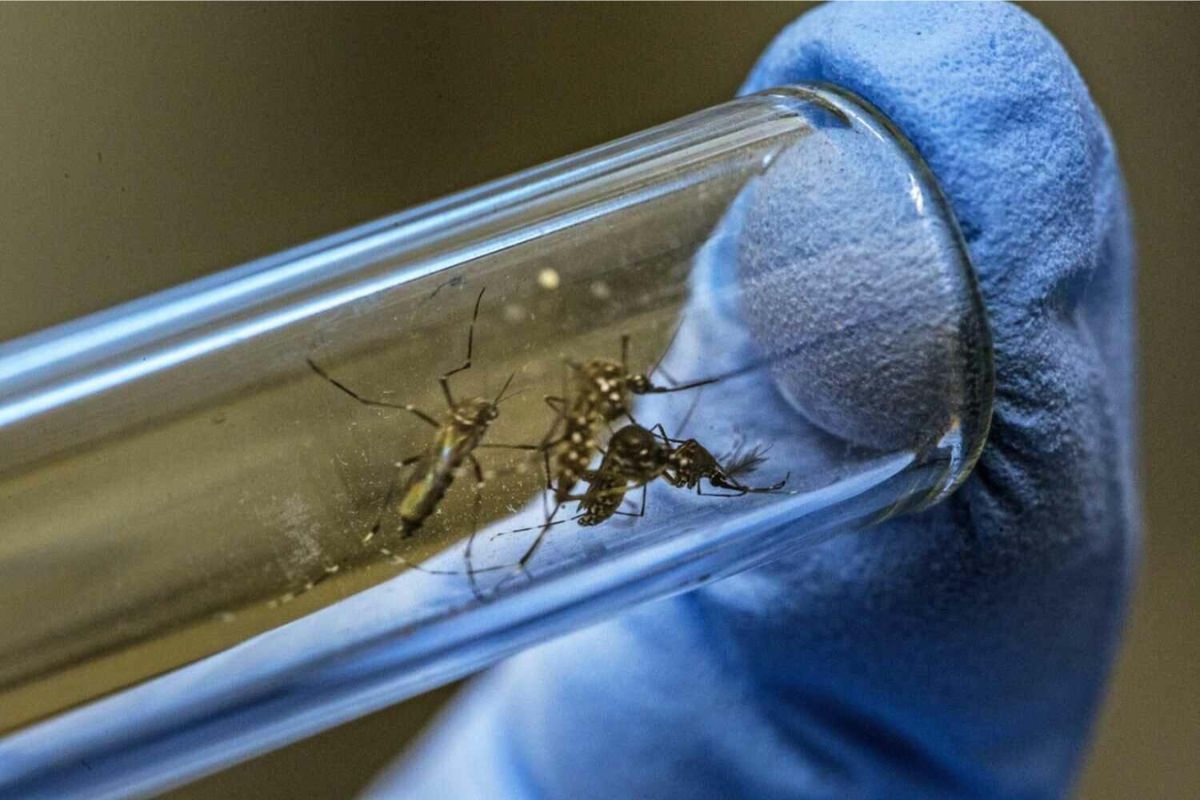
Yes, Brazil Has Released Millions of Modified Insects into the Environment, and This May Have Saved You from an Epidemic Without Your Knowledge
The fight against pests has always been a constant challenge in agriculture and public health in Brazil. And, although many people still associate pest control solely with poison or traps, the country has successfully invested in advanced biological strategies, involving sterilized or even genetically modified mosquitoes and flies. This doesn’t always make headlines, but behind the scenes, Brazilian laboratories have tested techniques worthy of science fiction, with a 100% real focus: protecting crops, animals, and human lives.
A New Chapter in Biological Control
The idea may seem strange at first glance: releasing more mosquitoes or flies to combat the proliferation of… mosquitoes and flies. But this is precisely what happens in projects that use the so-called Sterile Insect Technique (SIT) or, in more sophisticated cases, genetic modifications that prevent the reproduction of insects.
Instead of pesticides, the focus is on biotechnology. And Brazil already has an interesting track record in this field.
-
One of the most important lakes in the United States for birds, the balance of nature, and the climate has dried to historic levels, leaving boats stranded, revealing salt flats, and showing how the lack of water can transform an entire landscape.

-
It’s not Cristiano Ronaldo or Messi: the richest football player in the world is only 27 years old, has a fortune of 100 billion reais, and is the nephew of a sultan from an Asian country that few people know about.

-
At 77, the king of one of the most famous and powerful crowns on the planet is said to be under pressure to leave the throne, while behind the scenes there are already talks of a new coronation that could cost R$ 260 million.

-
Chinese researchers have created bamboo drones that fly with the same precision as conventional models and have released the flight control software for free to the entire world in a technology that could revolutionize sustainable aviation.

Transgenic Aedes aegypti: The Most Famous Case

The best-known project is undoubtedly that of the transgenic Aedes aegypti mosquitoes created by the British company Oxitec. This species is responsible for transmitting diseases such as dengue, zika, and chikungunya, and has been a nightmare for public managers across the country.
The project’s idea was simple yet revolutionary: release genetically modified males that are incapable of producing viable offspring. They mate with wild females, and the offspring die before reaching adulthood. The result: a dramatic decline in the pest population.
The first Brazilian city to participate was Juazeiro, Bahia, in 2011, with authorization from the CTNBio (National Technical Commission on Biosecurity). The tests showed reductions of over 90% in the Aedes aegypti population in monitored areas. Other municipalities such as Piracicaba (SP) also joined the initiative.
Despite the technical success, the use of transgenic mosquitoes has sparked public debates. Environmental groups called for more transparency, and some experts warned of the need for continuous monitoring of long-term ecological effects.
Transgenic Flies Against the Fruit Fly
Less discussed but equally important was the project with the Mediterranean fruit fly (Ceratitis capitata) — a feared pest in fruit growing, particularly affecting mango, guava, citrus, and grape production.
Brazil, through Embrapa and partnerships with private companies, conducted experimental studies with genetically modified flies using the RIDL (Release of Insects carrying a Dominant Lethal gene) technology, also from Oxitec.
As with the mosquitoes, the transgenic males were released into the environment, where they competed with natural males for females. Upon copulating, the offspring would not survive, reducing the next generation of the pest.
These tests occurred under strict biosecurity conditions and were never implemented on a large scale. The project, however, yielded promising results and reinforced Brazil’s position as one of the few countries with the technical and legal capacity to conduct this type of innovation.
Sterile Insect Technique (SIT): The Method Without Transgenics

Unlike genetic modifications, SIT is a technique that does not alter the DNA of insects. Instead, the males are sterilized by ionizing radiation in the laboratory and then released in large numbers. When they mate with wild females, no reproduction occurs — and the pest population gradually declines.
Brazil has already used this method in the control of the screwworm fly (Cochliomyia hominivorax), a parasite that attacks warm-blooded animals, including cattle, goats, and even humans. The larvae of this fly feed on living flesh in open wounds, which can lead to severe infections and even the death of the animal.
National programs, with support from Embrapa, UNESP, and international partnerships, implemented the technique in specific areas, especially in the North and Northeast, where the pest is more common. In some cases, Brazil also participated in joint operations with countries in Latin America to protect livestock borders, such as initiatives coordinated with Mexico, the USA, and Panama.
The Role of CTNBio and the Public Debate
All applications of genetic technology in Brazil undergo rigorous scrutiny by CTNBio, which assesses risks to health, the environment, and biodiversity. This ensures that no transgenic organism is released without environmental impact studies and post-release monitoring.
Even so, the topic still divides opinions. While many researchers advocate the use of biotechnology as a safer and more sustainable alternative to conventional pesticides, part of civil society demands more transparency, independent studies, and social participation in decisions.
And the Future?
With rising global temperatures, the international circulation of agricultural products, and the expansion of agricultural frontiers in the Cerrado and Amazon, the risk of new pests and the reintroduction of harmful species is increasingly greater. In this scenario, strategies such as genetic modification and the use of sterile insects gain strength, both to protect human health and to preserve the competitiveness of national agriculture.
Brazil has already shown that it has the technical, scientific, and regulatory capacity to innovate in this field. The next step will be to transform these solutions into a structured and sustained public policy in the long term, with adequate funding, social participation, and continuous monitoring.






-

-

-

3 pessoas reagiram a isso.