





 Português
  Inglês
  Espanhol
  4 min de leitura
  5 comentários


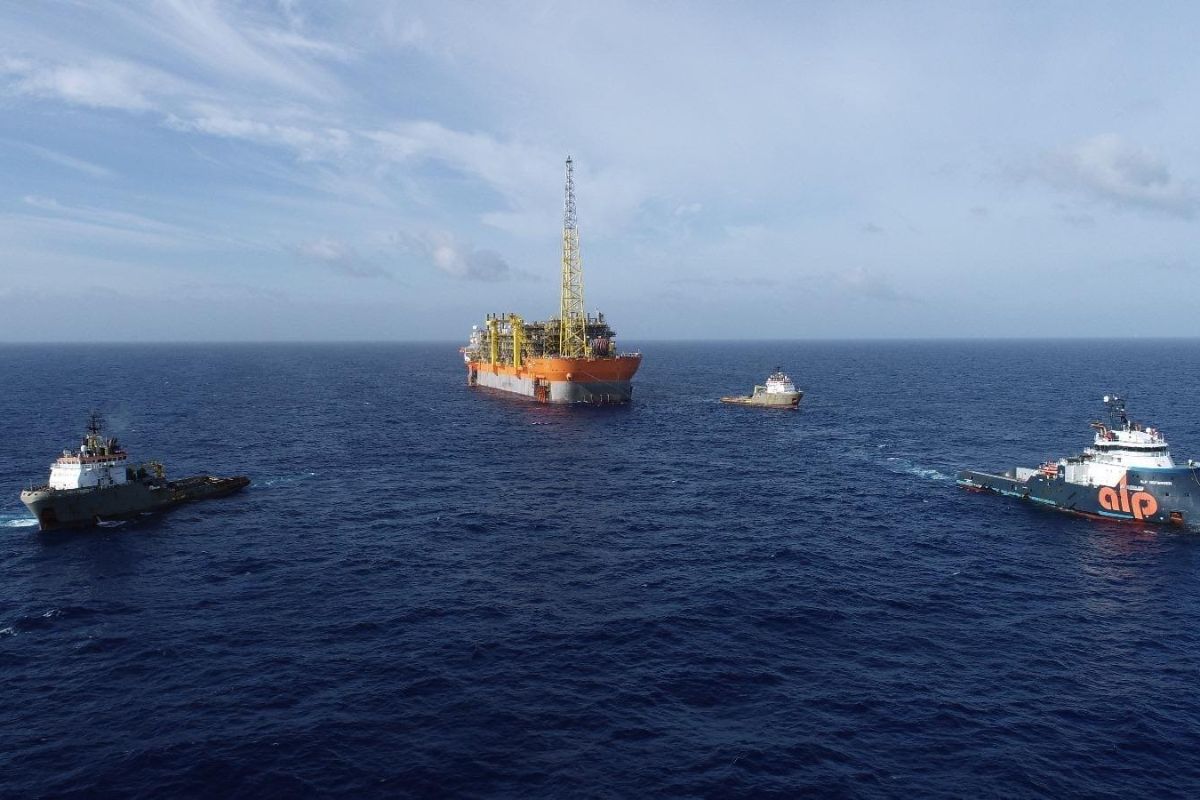


With Production Exceeding 800,000 Barrels Per Day, the “Crown Jewel” of the Pre-Salt, Operated by Petrobras, Became the Largest Deep-Water Field in the World and the Most Valuable Asset in Brazil.
In the global energy landscape, few assets have the scale and importance of the Búzios Field. Located in the ultra-deep waters of the Santos Basin, this supergiant of the Brazilian pre-salt is not just an oil field; it is a phenomenon that produces more oil than entire countries on its own. By March 2025, its daily production of 800,000 barrels had already surpassed that of Colombia.
But this is just a snapshot of the moment. While Colombian production is at a mature level, Búzios is on a steep rise, projected to more than double by 2030. This article details the combination of geology, technology, and strategy that has transformed Búzios into Brazil’s most valuable asset.
The “Crown Jewel” of the Pre-Salt: The Discovery in 2010 and the Unique Geology of the Búzios Field
Discovered on March 1, 2010, the Búzios Field is located about 200 km from the coast of Rio de Janeiro, beneath a 2,000-meter water column and another layer of salt with an additional thickness of 2,000 meters. Its total area is 852 km².
-
The world’s first octopus farm wants to open in the Canary Islands and is already provoking an international reaction: the plan aims to produce 3,000 tons per year.

-
Drought may be creating stronger superbugs in the soil and helping antibiotic resistance reach hospitals, warns a study highlighting a problem that could grow alongside extreme weather.

-
The biggest scam in history: Napoleon’s France deceived the United States by selling them a territory that was Spanish.

-
Why is the Danakil Desert so dangerous? It has unstable terrain and how extreme temperatures and toxic gases turn the region into one of the most hostile environments on Earth.


What makes Búzios a geological miracle is the nature of its reservoirs. Formed by microbial carbonates, rocks generated by microbial activity millions of years ago, its reservoirs are not ordinary sandstone, but rather a type of ‘rock sponge’ with extremely high porosity. This unique geological structure allows oil to flow with extreme ease, ensuring well productivity among the highest in the world. A single well in Búzios has already reached a peak production of 70,000 barrels of oil per day, more than many entire oil fields.
The Fleet of FPSOs and the Technologies Enabling Production
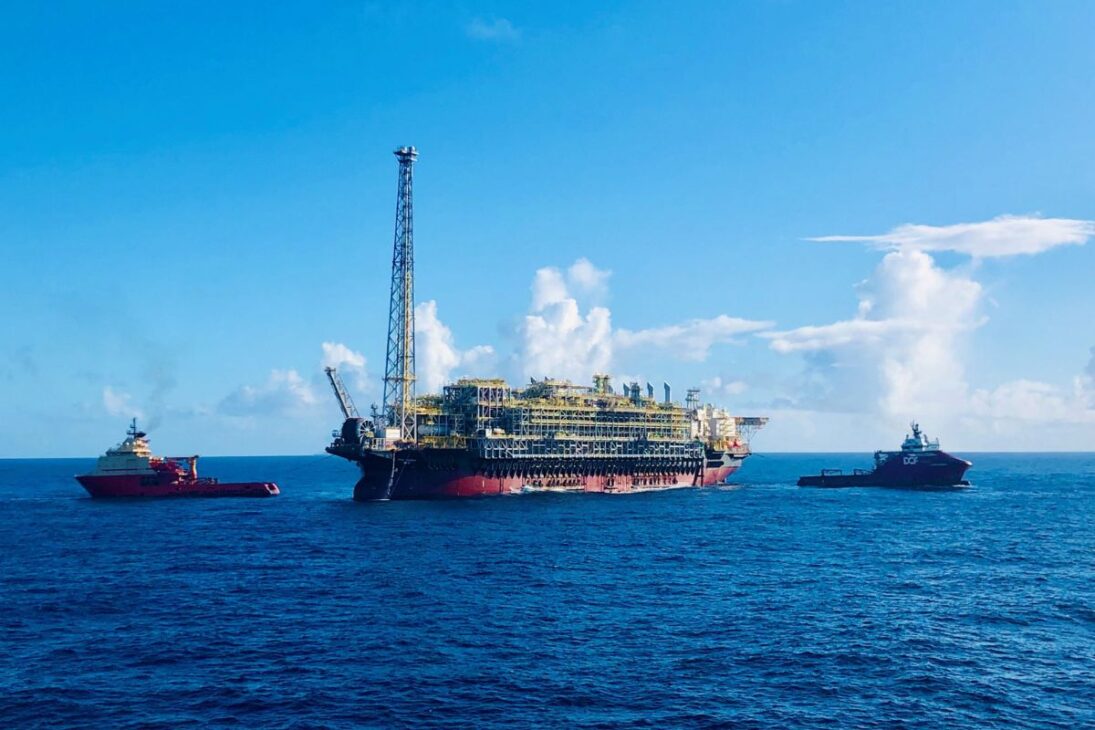
Exploring the Búzios Field requires monumental engineering. Petrobras’s strategy resembles building a city at sea, with a phased deployment of a true fleet of floating platforms known as FPSOs (Floating Production, Storage and Offloading Units).
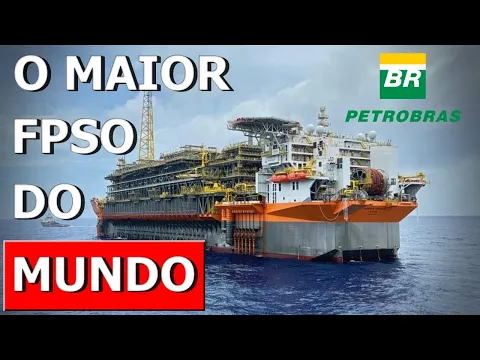
By early 2025, five of these units were already in operation (P-74, P-75, P-76, P-77, and Almirante Barroso). In February 2025, the FPSO Almirante Tamandaré, the largest production unit in Brazil, began operations, with a capacity of 225,000 barrels per day. Petrobras’s strategic plan includes the installation of six more FPSOs in Búzios by 2027, continuously increasing production capacity. The success of the operation also depends on pioneering technologies like HISEP®, a patented system by Petrobras for separating and reinjecting CO₂ on the seabed, which enhances efficiency and reduces the carbon footprint.
The Numbers That Make Búzios the Largest Deep-Water Field in the World
The growth of Búzios’s production is unprecedented. The field reached the milestone of 1 billion barrels of accumulated oil in just five years since the start of its operation, a milestone that other giant fields took almost twice as long to achieve.
With a daily production of 800,000 barrels in March 2025, the plan is to exceed 1 million barrels per day in the second half of 2025. The long-term projection, by 2030, is to surpass 2 million barrels per day, firmly establishing the Búzios Field as the most productive deep-water field on the planet.
How Búzios’s Production Impacts Petrobras and Brazil
The Búzios Field is the main financial engine of Petrobras and a pillar for the Brazilian economy. With a break-even price below $28 per barrel, the field ranks among the most competitive oil projects in the world. This high profitability is not a coincidence, but rather the direct result of the applied technology, which ensures efficient and low-cost extraction, generating the cash necessary for the company’s investments and for the payment of dividends and taxes.
In 2023 alone, Petrobras paid R$ 240 billion in taxes and government royalties. A significant part of this amount came from Búzios’s production, which generates billions in royalties for states and municipalities. Moreover, the development of the field boosts the national industry, with parts of the FPSOs being built in Brazilian shipyards, creating jobs and stimulating the supply chain. In 2024, oil became Brazil’s main export product, surpassing soybeans, a change largely driven by the Búzios Field.
The Partnership with China and the Future Challenges of Brazil’s Most Valuable Asset

The corporate structure of Búzios is complex, resulting from a onerous assignment agreement and an auction of excess volumes. Today, the field is operated by Petrobras (88.99%), in partnership with Chinese state companies CNOOC (7.34%) and CNODC (3.67%). This partnership is strategic, ensuring a billion-dollar investment and a direct connection to the world’s largest energy consumer market.
The future of the Búzios Field is one of growth but not without challenges. Managing a project of this scale requires impeccable execution to deliver new FPSOs on time. Additionally, the national debate over the fair distribution of generated royalties will continue to be a political and social challenge for Brazil. Nevertheless, Búzios stands as the most important oil development project in the world for the next decade, a financial engine that not only redefines Brazil’s position in the energy landscape but also fuels the debate on how to use oil wealth to finance the transition to a more sustainable future.








Quem está comprando espaço talvez com dinheiro publico para propagar a ideia de que a exploração de petróleo na margem equatorial é desnecessário?
Não dá pra entender como a PETROBRAS produz cerca de 3 milhões de barris de PETRÓLEO por dia, um dos produtos + valiosos do MUNDO, invlusive, sendo o produto de maior peso nas exportações, dá prejuízo, ou pouco lucro, como vem ocorrendo nos últimos trimestres, dando lucro de apenas 0,90 centavos no último trimestre. É muita incompetência para uma das maiores empresas do mundo e reconhecidamente com as nelhores tecnologias os menores custos.
Isto é reflexo do uso político tanto da esquerda quanto da direita.
Acontece que existem três tipos de Petróleo. O Nafetenico, que é árabe, o melhor, o misto, e o Parafínico, o bom pra fazer asfalto, que é o brasileiro. Então não se pode comemorar muito.
E o preço da gasolina lá em cima affff.