





 Portuguese
  English
  Spanish
  5 min of reading
  13 comments


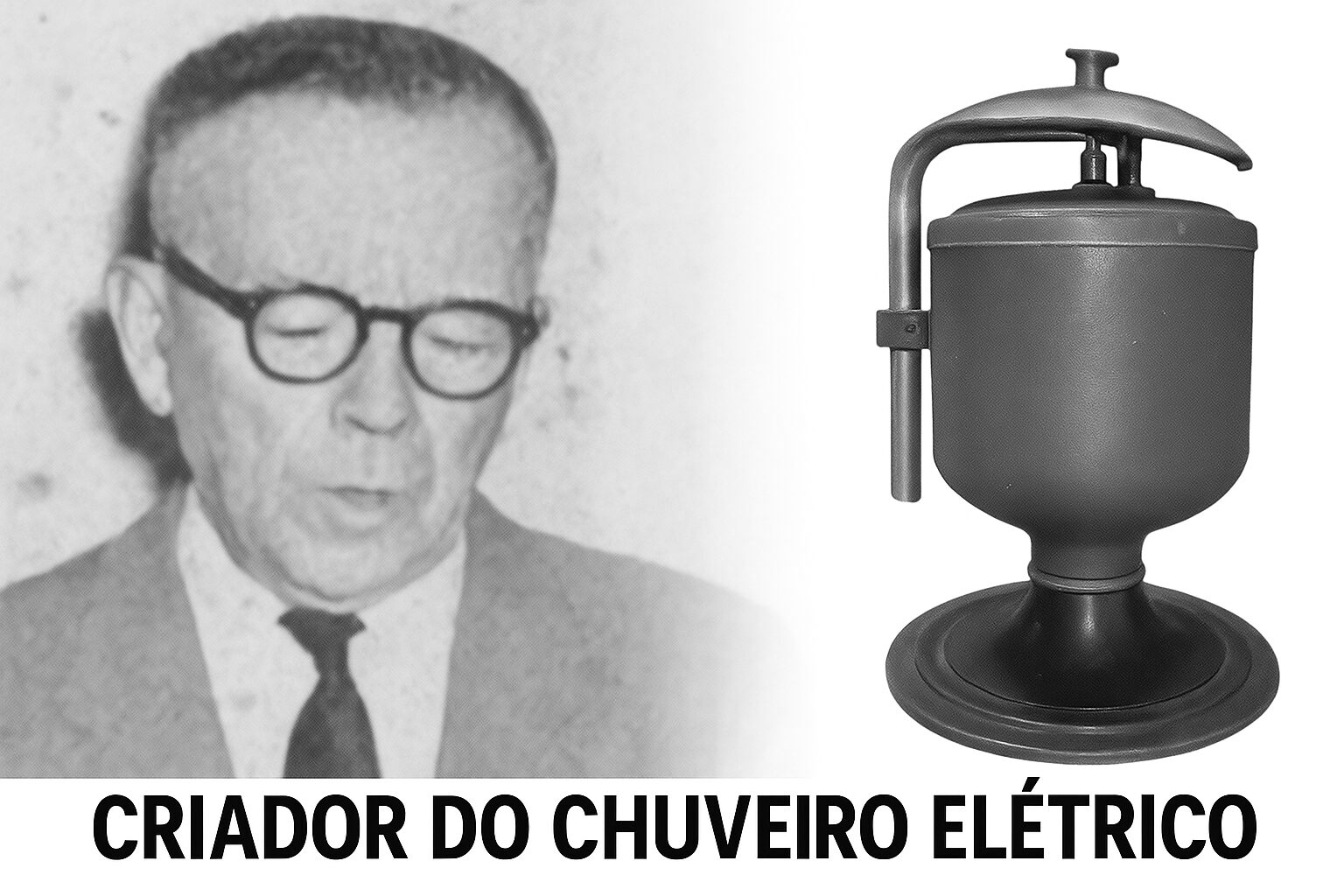


Present in more than 70% of Brazilian homes, the electric shower is a national invention that revolutionized daily bathing. What many people don’t know is that this creation is the work of a Brazilian: Francisco Canho. Discover who the man behind this simple and genius idea is — and how the electric shower became a symbol of modern life.
Before discussing Francisco Canho and the electric shower, it is important to understand that the concept of baths with heated water is ancient. Peoples from antiquity, such as the Egyptians, Greeks, and Romans, already used rudimentary ways to heat water — usually through furnaces, boilers, or containers exposed to the sun. In Europe, the use of gas heaters began in the 19th century. However, even with the popularization of these methods, the system was complex, expensive, and dangerous, requiring specific installations, pipes, valves, and space for cylinders or central supply.
It was then that a Brazilian had a simpler, cheaper, and safer idea: to use electricity to heat the bath water directly at the moment of use.
Who Invented the Electric Shower?

The person responsible for the invention of the electric shower, as we know it today, was Francisco Canho, a Brazilian engineer who designed the equipment in the early decades of the 20th century.
-
Italian researchers have detected what appears to be a second Sphinx buried under the sands of Egypt, and satellite scans reveal a gigantic underground megastructure hidden beneath the Giza Plateau for over 3,000 years.

-
There are 4,223 drums and 1,343 metal boxes concreted with 50-centimeter walls that store the radioactive waste from Cesium-137 in the worst radiological accident in Brazil, just 23 kilometers from Goiânia, with environmental monitoring every three months.
-
Giant Roman treasure found at the bottom of Lake Neuchâtel in Switzerland reveals an advanced trade system, circulation of goods, and armed escort in the Roman Empire about two thousand years ago.
-
He buried 1,200 old tires in the walls to build his own self-sufficient house in the mountains with glass bottles, rainwater, and an integrated greenhouse.

Francisco Canho realized that it was possible to heat the water from the household supply using an electric resistance installed inside the shower itself. This eliminated the need for external heating or boilers. His invention allowed for an instant hot shower, with a simple activation, directly from the faucet.
The invention not only lowered the cost of hot bathing but also made the shower safer, more accessible, and functional for millions of households. Canho’s idea revolutionized the way people bathe — first in Brazil and later in various tropical countries.
The Popularization in the 30s: Hot Showers for Everyone
The electric shower began to gain popularity in Brazil in the early 1930s, a period when the country was undergoing a rapid urbanization process. The arrival of electricity in homes allowed families to access infrastructure that was previously a privilege of the elites.
Following Francisco Canho’s invention, the first industrial models emerged, featuring a metallic structure, built-in resistance, and simple temperature adjustments.
Over time, improvements in design, safety, and durability of the device emerged. The real explosion in usage came from the 1960s, with the introduction of plastic electric showers, which were cheaper, easy to install, and resistant to corrosion.
How Does an Electric Shower Work?
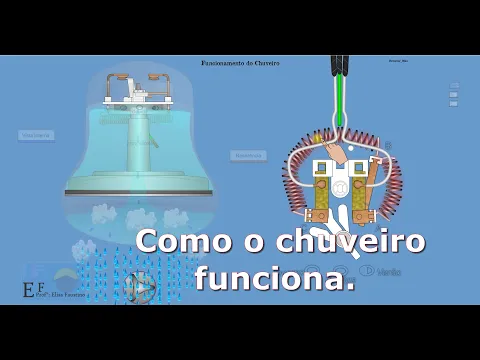
The principle of the electric shower is based on the Joule effect: when electric current passes through a high-resistance conductor wire (usually a nickel-chromium spiral resistance), it heats up. The water, when passing through this wire, absorbs the heat and comes out heated from the shower outlet.
Main features:
- Instant heating, with no need for reservoirs
- Simple temperature control (manual or electronic)
- High energy consumption during use (but for a short time)
- Low installation cost
- Absence of combustion or gas leak risks
Francisco Canho: The Brazilian Forgotten by History
Despite the importance of his invention, Francisco Canho is a name rarely mentioned in school books or compendiums of Brazilian inventors. The lack of international patent and the local focus of the product may have contributed to the lack of global recognition.
However, his legacy remains alive in almost every Brazilian household. His creation was essential for the daily lives of millions of people, allowing for hot showers at low cost and with practicality.
In addition to the shower, Canho was involved in the development of other residential electrical equipment. Still, he is remembered almost exclusively for this singular contribution to domestic life.
The Relationship Between the Electric Shower and Energy Consumption
According to data from the Ministry of Mines and Energy, the electric shower is responsible for about 23% of residential electricity consumption in Brazil. This is due to the fact that the electric resistance consumes a lot of power — averaging between 3,000 and 5,500 watts per device.
On the other hand, the average daily usage time is short, and its operating cost ends up being lower than that of gas heaters, especially for small families.
Tips to Save Energy with the Electric Shower
Engineer Fernando de Lima Caneppele, a specialist at USP Pirassununga, shares guidelines to reduce the impact of the electricity bill:
- Prefer quick baths (5 to 8 minutes)
- Use the “summer” setting whenever possible
- Turn off the shower while lathering
- Keep the resistance in good condition and replace it when necessary
- Avoid peak hours (between 6 PM and 9 PM)
Adopting electronic models with gradual temperature control also helps reduce consumption and increase comfort.
Electric Shower vs. Gas Heater: Advantages and Disadvantages
| Characteristic | Electric Shower | Gas Heater |
|---|---|---|
| Installation Cost | Low | High |
| Safety | High (no combustion) | Medium (risk of leakage) |
| Temperature | Stable | May fluctuate |
| Maintenance | Simple and cheap | More complex |
| Monthly Consumption | Electricity (high power) | Piped gas or cylinder |
| Recommended for | Small houses and apartments | Large families and high demand |
In tropical climates, such as that of Brazil, the electric shower is still the best option in cost-benefit and practicality.
From Brazil to the World
Although more common in Brazil and in Latin American countries, the electric shower created by Francisco Canho has also been adopted in tropical countries in Africa, Asia, and Central America.
In Europe and the USA, the most common system continues to be central heating or gas. However, hybrid and instant models inspired by Brazilian technology have been gaining market, especially in regions with hot climates and high gas costs.
The electric shower transformed not only the comfort of bathing but also:
- Public Health: facilitating access to hot water in poor regions
- Urbanization: adapting well to small homes and apartments
- Social Behavior: making hot baths accessible and routine
Francisco Canho, even without the recognition he deserves, created a high-impact innovation in daily life — and his story deserves to be told with pride.
The Brazilian Who Transformed Bathing Around the World
The electric shower is undoubtedly one of the most significant inventions of modern life — and the fact that it was created by a visionary Brazilian, Francisco Canho, makes his story even more extraordinary.
In a country where resources have always been limited, Canho showed that innovation can arise from simplicity. Today, his creation is found in nearly every home in Brazil — and continues to bring comfort, savings, and practicality to millions of people.










Só no Brasil que se usa em larga escala o chuveiro elétrico. Seu uso gera um pico de demanda no sistema elétrico nacional e ainda encarece a estrutura elétrica da edificação. Aquece pequeno volume de água no inverno, trazendo um banho desconfortável quando a temperatura ambiente abaixa de 15°C. No Brasil o aquecimento solar deveria ser incentivado!
Só esqueceu de falar que ele é de Jaú SP
Ah estava esquecendo , o bolidor também foi obra de José Lorenzetti , em parceria na época com a fábrica Pozzani d porcelana