





 Portuguese
  English
  Spanish
  5 min of reading
  0 comments



Scientists Study Roman Concrete That Heals Its Cracks and Withstands Sea Water for Over 2,000 Years. Understand Why Modern Engineering Has Yet to Replicate This Ancient Technology.
In a world where bridges collapse, overpasses deteriorate, and buildings require constant repairs, one question persists among engineers and archaeologists: how did Roman structures survive for more than two millennia, many of them exposed to sea water, without crumbling? The answer lies in a material that seems commonplace but hides extraordinary properties: Roman concrete. Used in works like the Pantheon in Rome and the ports of the Mediterranean Sea, this ancient compound is more durable than modern concrete and, surprisingly, has the ability to “heal” itself over time.
Today, researchers from MIT, the University of Utah, and European centers are trying to unveil the secrets of this concrete that, even after centuries submerged, maintains its integrity — something that current concrete cannot replicate.
What Is Roman Concrete?
Roman concrete, also known as opus caementicium, was extensively used from the 1st century BC by engineers of the Roman Empire. Its basic composition included:
-
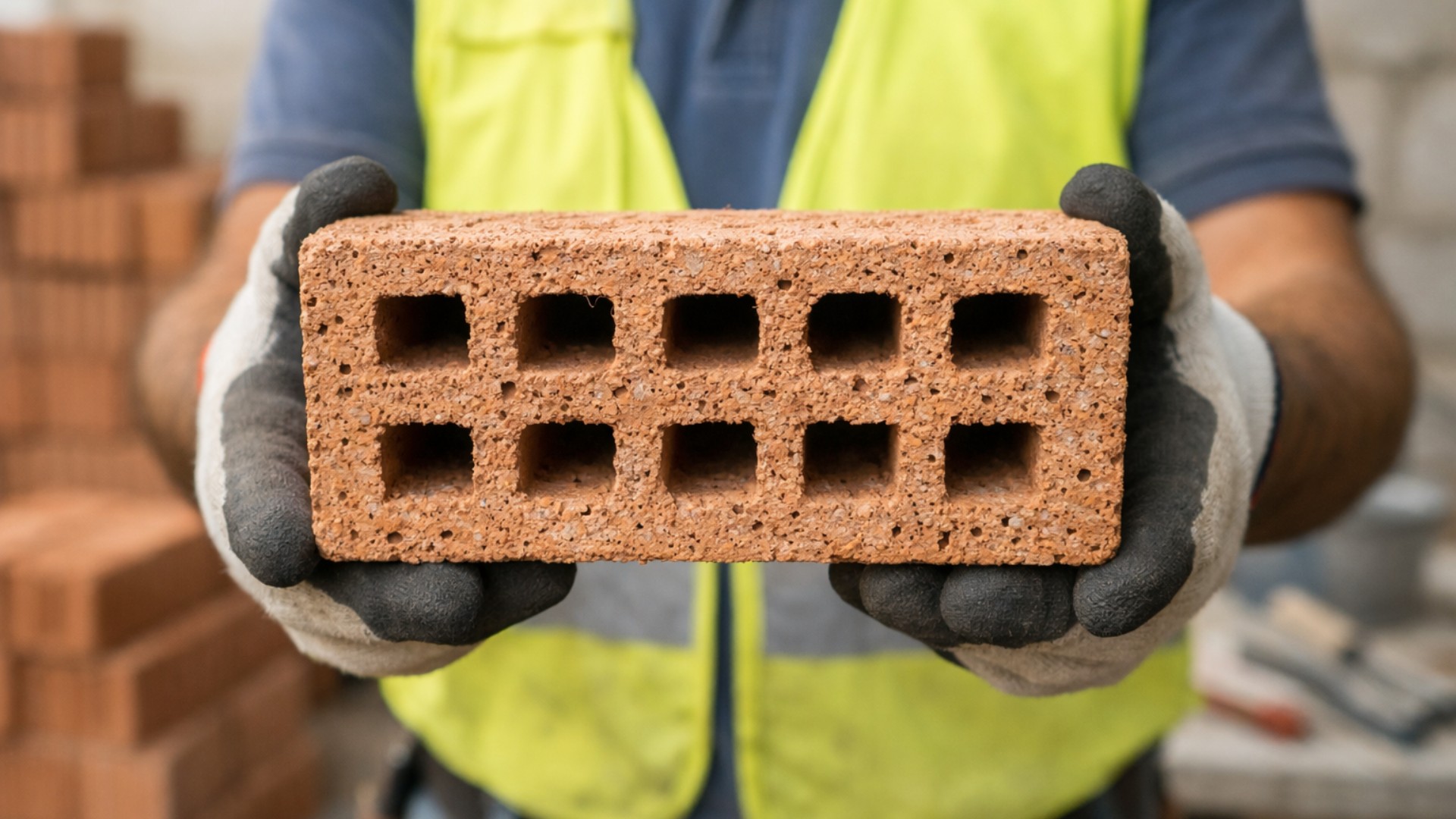
Scientists use sawdust mixed with clay to create a lighter brick, promising efficient thermal insulation and impressing by transforming waste into a solution for construction.
-
With a DNA shape, this bridge in Singapore draws attention in modern architecture and surprises tourists by transforming a simple crossing into an unforgettable visual experience in the urban heart.

-
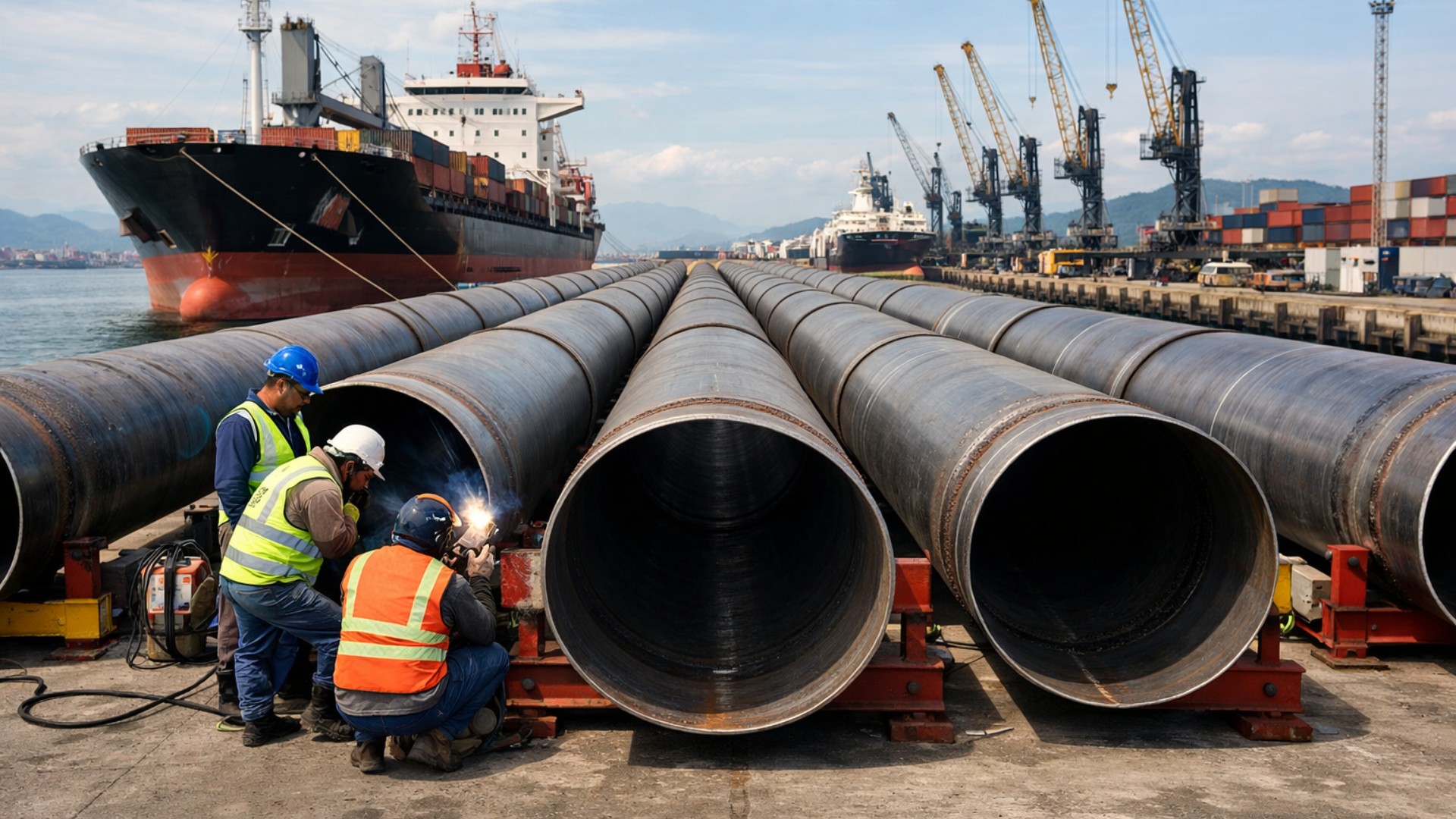
Giant underwater pipeline begins to take shape with a R$ 134.7 million project at the Port of Santos: the 1.7 km structure uses 12-meter and 700 mm pipes to supply water to 450,000 people in Guarujá.
-
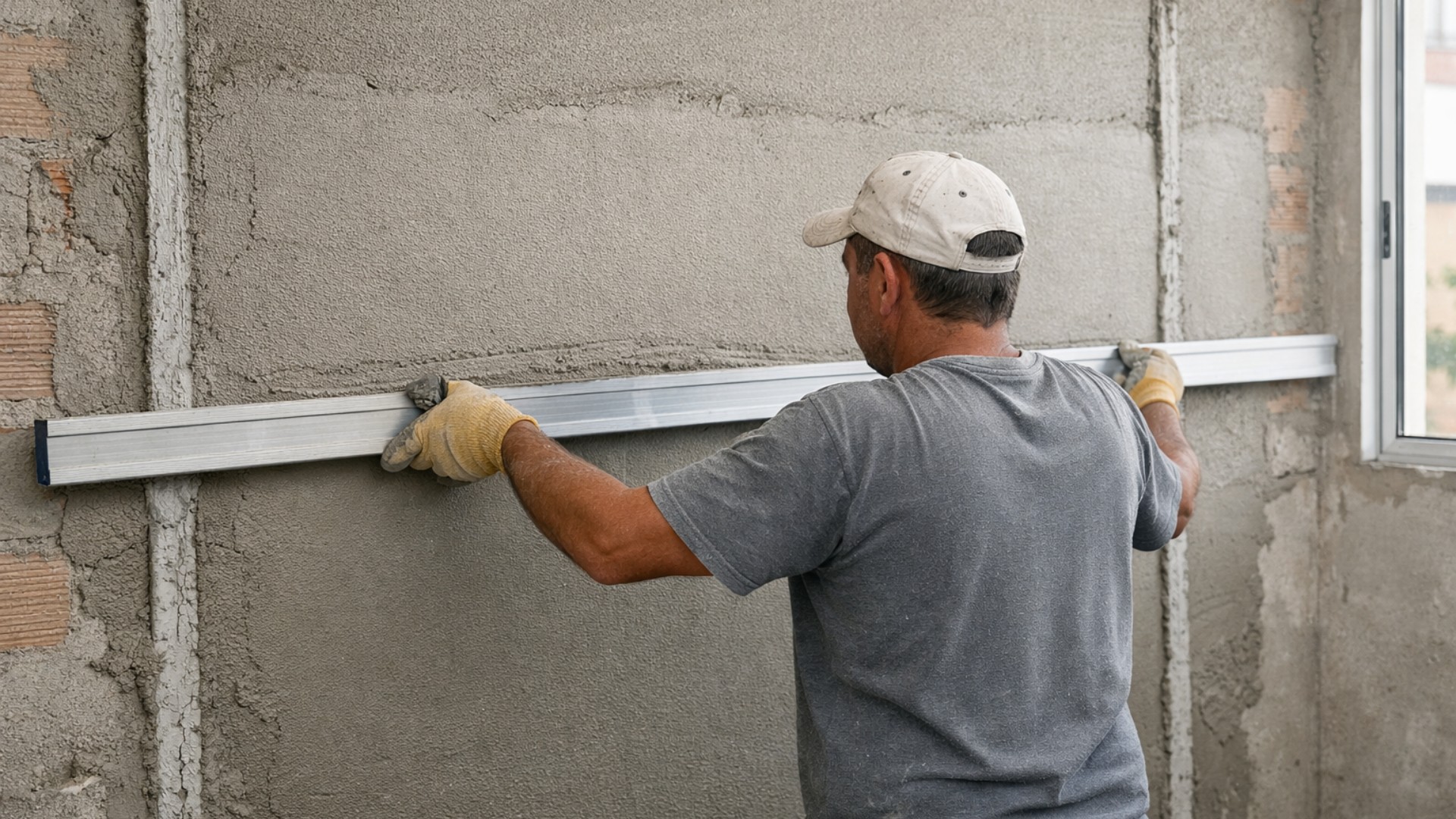
A mason reveals a professional plastering technique that uses aligned guides and a 3-meter ruler to plaster an entire wall in up to 3 hours, without visible seams, with uniform thickness, perfect plumb, and a finish ready for painting without rework.

- Pozzolana (fine volcanic ash from the Pozzuoli region near Naples);
- Quicklime (calcium oxide);
- Stone, brick, and ceramic fragments;
- And, in the case of maritime constructions, the presence of sea water in the mixing process.


The interaction between these materials, especially the chemical reaction between lime and pozzolana, formed a material that continued to strengthen over the years, unlike modern concrete, which tends to weaken after decades.
Why Is Roman Concrete More Durable?
The main difference between modern and Roman concrete lies in how the materials behave over time. While current concrete is made with Portland cement, which hardens quickly but suffers from cracks and leaks, Roman concrete matures over time — especially when in contact with water.
Recent studies have identified the formation of aluminous tobermorite and phillipsite crystals within the matrix of Roman concrete. These minerals, virtually absent in modern cement, naturally emerge over the years and fill internal cracks, acting as a mineral self-healing system.
Additionally, unlike Portland cement, Roman concrete resists corrosion in saline environments, which explains the longevity of structures like the Caesarea harbor, which have stood for two millennia submerged.
Concrete That Heals Its Cracks? Yes, The Romans Did That
The idea of a material that “heals itself” may seem modern, but it has been present in Roman concrete for centuries. In 2023, a study from MIT published in Science Advances confirmed that the presence of quicklime (and not just hydrated lime) in the Roman mix plays a fundamental role in this process.
These particles of quicklime, known as “lime fragments”, were not completely dissolved. Over time, as microcracks appeared in the concrete and water entered, these particles reacted quickly with the moisture, forming new calcium carbonate crystals that naturally sealed the cracks.
This self-healing process, without any external intervention, is one of the greatest differentiators of Roman concrete. And, to this day, no modern concrete has this ability spontaneously and lastingly.
Modern Engineering Has Tried to Copy — and Has Yet to Succeed
Since scientists began studying Roman concrete in depth, various attempts have been made to reproduce it in the laboratory. However, even with all the available technology, the exact formula and long-term behavior remain a partially solved mystery.
Some of the main challenges include:
- Reproducing the original pozzolana, which is rich in aluminum and silicon and is not available on a large scale outside of Italy;
- Controlling the ideal proportion of unhydrated quicklime, which must be inserted without compromising the initial strength of the material;
- Simulating the natural curing conditions in contact with sea water, which occur over decades.
Nevertheless, research projects funded by universities and even the U.S. Navy have been exploring adapted versions of the self-healing concrete, inspired by the Roman model.
Modern Applications: From Civil Construction to Combating Marine Corrosion
The potential for adapting modern Roman concrete goes far beyond experimental archaeology. If its formula can be successfully reproduced, it could be used in:
- Ports, offshore platforms, and breakwaters, where corrosion from saltwater is a constant problem;
- Dams and tunnels, which require long-term durability and difficult maintenance;
- Construction in seismic regions, where microcracks are inevitable but can be self-corrected;
- Critical urban infrastructure, such as bridges and overpasses, extending their lifespan and reducing repair costs.
Additionally, the reduction in CO₂ emissions associated with lime production instead of Portland cement makes this concrete more environmentally sustainable.
Structures That Defy Time: Examples of Roman Concrete in Action
Several monuments from Ancient Rome stand today thanks to Roman concrete. Among the most impressive are:
- The Pantheon of Rome, with its 43-meter diameter dome made entirely of unreinforced concrete;
- The Appian Way, with base sections built with layers of concrete over two thousand years ago;
- The Harbor of Caesarea (currently in Israel), built by Herod with Roman hydraulic concrete, still visible under the sea;
- Roman aqueducts, many of which remained functional until the 20th century.
These works prove that concrete that withstands the sea for 2,000 years is not a myth, but an archaeological and scientific reality.
Modern Concrete: Why Does It Last So Little?
Modern concrete is efficient, but it has limitations. Based on Portland cement, it is quick to build, cheap, and easy to mold. However, it has an estimated lifespan of 50 to 100 years, much shorter than Roman concrete.
Its main problems are:
- Sensitivity to water and thermal variations, which cause cracking;
- Corrosion of the metal reinforcements, especially in coastal environments;
- Inability for natural regeneration, requiring continuous maintenance;
- High carbon footprint: cement production accounts for about 8% of global CO₂ emissions.
That’s why engineers and environmentalists are searching for alternatives inspired by the Romans, merging durability with sustainability.
What Science Has Learned from the Romans So Far
Research in the last 20 years has revealed that the Romans had a remarkable empirical mastery of material chemistry — even without understanding the processes on a molecular level.
Fundamental discoveries include:
The interaction between pozzolana and quicklime, responsible for forming minerals that seal cracks;
The use of pozzolanas rich in silica and aluminum, promoting greater chemical stability;
The self-healing mineral process induced by water, which increases over time rather than decreases.
This data is now being used by startups and engineering institutes to create new types of ultra-high durability concrete, including with artificial intelligence applied to crack prediction.
Roman concrete is more than an archaeological relic: it is a timeless engineering lesson. It heals its own cracks, withstands the sea for millennia, and still challenges modern engineering, even in the 21st century.
Understanding and reapplying these principles may be essential for the future of constructions — especially in a world that demands resilient, sustainable, and long-lasting infrastructure.
After all, if the Romans managed to build monuments that spanned centuries, why are we still reliant on materials that barely last a century?
If the Romans already made concrete that lasts 2,000 years, why does ours still crack in less than 50?
Leave your opinion in the comments — does modern engineering still have a lot to learn from the past?









-

-

3 pessoas reagiram a isso.