





 Português
  Inglês
  Espanhol
  6 min de leitura
  0 comentários


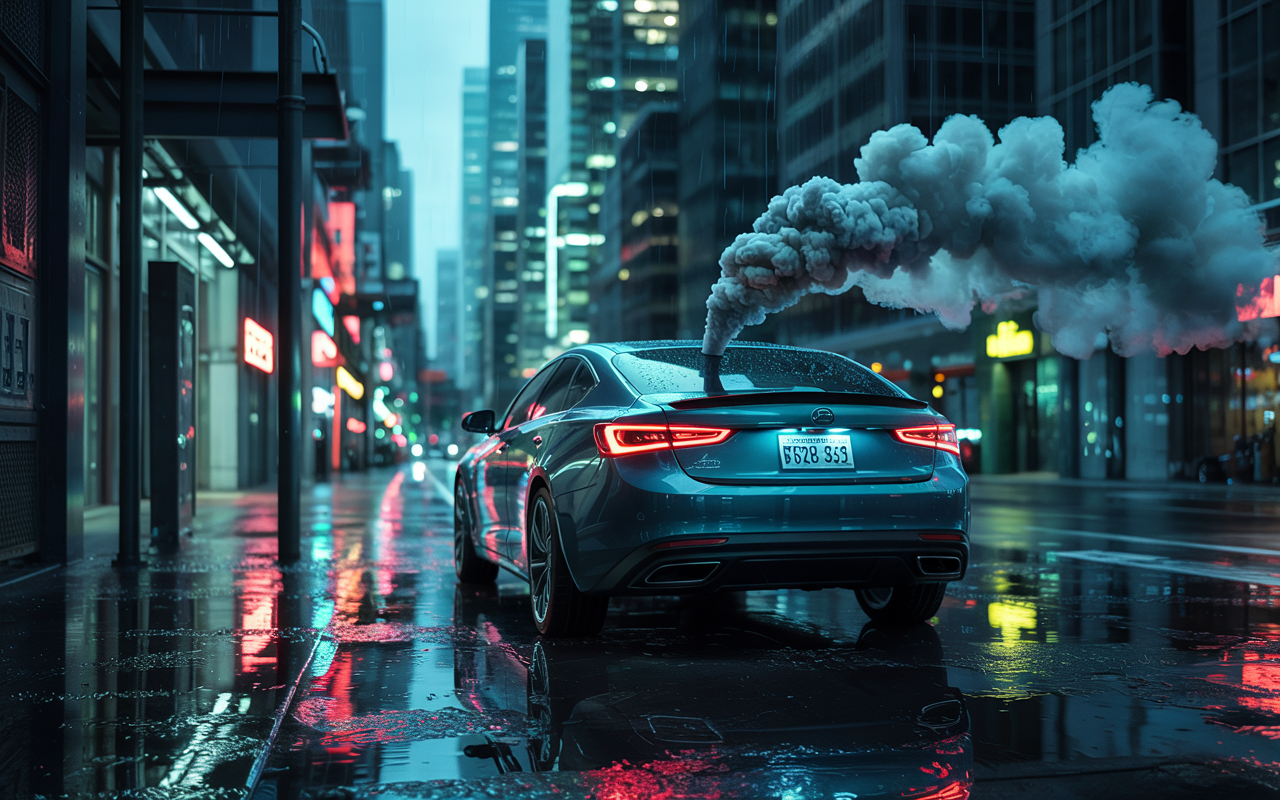
A New Study Reveals That Even With Modern Filters, Gasoline Cars Continue Releasing Highly Toxic Substances Into The Air After Combustion. Do They Pollute More Than Diesel? Science Responds.
About ten years ago, the world witnessed one of the biggest scandals in the automotive industry: the Dieselgate. The fraud involved diesel vehicles from the Volkswagen Group that manipulated emissions tests to appear less polluting than they actually were. The investigations primarily targeted nitrogen oxides (NOx), highly toxic pollutants associated with respiratory diseases, cardiovascular issues, and premature deaths.
Since then, diesel engines have been considered the main villains of vehicular pollution, leading governments to restrict or even ban their circulation in major urban centers in Europe. However, a new scientific twist is changing this perception.
New Research Shocks: Modern Gasoline Cars Are Also Toxic
According to a study published in the renowned journal Science Advances, gasoline cars — even the most modern ones equipped with particle filters — are also highly polluting. The work was conducted by an international team of scientists from the Helmholtz Munich Center and the University of Rostock in Germany.
-
The world’s first octopus farm wants to open in the Canary Islands and is already provoking an international reaction: the plan aims to produce 3,000 tons per year.

-
Drought may be creating stronger superbugs in the soil and helping antibiotic resistance reach hospitals, warns a study highlighting a problem that could grow alongside extreme weather.

-
The biggest scam in history: Napoleon’s France deceived the United States by selling them a territory that was Spanish.

-
Why is the Danakil Desert so dangerous? It has unstable terrain and how extreme temperatures and toxic gases turn the region into one of the most hostile environments on Earth.


They investigated the effects of exhaust gases from a gasoline car under the most stringent European standards (Euro 6d), which regulate the maximum levels of pollution released. The analyzed car was equipped with a particle filter, a technology aimed at capturing solid residues from fuel combustion.
What surprised the researchers was what occurs after these gases are released into the atmosphere.
Invisible Pollution: What Happens to Exhaust Gases After the Car Is Turned Off?
According to the study, the gases released by gasoline vehicles may seem safe right after exiting the exhaust, but they undergo a natural process called photochemical aging. This is a transformation induced by sunlight and atmospheric oxidants, which alters the original chemical composition of the pollutants.
This aging produces secondary substances — volatile carbonyls, for example — that significantly increase the toxicity of the pollutants, even when originating from modern engines with particle filters.
The tested gases, after this natural transformation, caused severe DNA damage and oxidative stress in human cells exposed in the laboratory. This raises serious doubts about the true safety of emissions from modern gasoline vehicles.
Euro 6d Not Enough? Study Points Out Critical Failure in Environmental Standards
The Euro 6d standards are the strictest in Europe for controlling vehicular pollution, requiring cars to present minimal pollutant levels at the exhaust outlet. However, the study reveals that this criterion may be deceptively reassuring.
The research shows that current tests do not consider the behavior of pollutants after they come into contact with the environment, where natural chemical reactions occur that make them more harmful.
According to the lead author of the study, Dr. Mathilde Delaval, “this is a critical flaw in the regulatory processes, as merely measuring gases directly at the exhaust outlet does not reflect their real impact on public health.”
Gasoline or Diesel: Which Pollutes More?
Traditionally, diesel has been considered the most polluting, especially for emitting large amounts of NOx and fine particles. However, modern diesel vehicles with Euro 6 technology already demonstrate much more controlled levels of these emissions.
On the other hand, gasoline cars, even with particle filters, can release highly toxic secondary compounds after reacting with sunlight. In other words, the pollution from modern gasoline cars has been underestimated for years.
The researchers’ conclusion is clear: it is no longer possible to say that diesel pollutes more than gasoline without considering the effects after emission.
What Is Photochemical Aging and Why Is It So Concerning?
Photochemical aging is a natural and inevitable process that occurs when atmospheric pollutants come into contact with sunlight, especially with free radicals and tropospheric ozone. This phenomenon transforms seemingly “harmless” gases into toxic compounds, such as:
- Aldehydes
- Ketones
- Organic Peroxides
- Volatile Oxygenated Byproducts (VOCs)
These compounds can penetrate deeply into the human lungs, causing chronic inflammation, genetic mutation and increased cancer risk.
Why Regulation Needs to Go Beyond the Exhaust?
The researchers’ message is urgent: assessing car pollution only at the emission source is insufficient. The real threat lies in what the pollutants become after interacting with the environment.
To achieve this, it is necessary for tests to consider:
- Simulation of atmospheric aging
- Analysis of the reactivity of volatile organic compounds (VOCs)
- Impact on human tissues after prolonged exposure
- Models that include the behavior of gases in dense urban areas
This broader approach could completely change what we consider a “clean vehicle.”
Modern Diesel Is Less of a Villain Than We Thought?
Based on the Euro 6d standards and technologies such as Select Catalytic Reduction (SCR) and AdBlue, next-generation diesel vehicles have been presenting much lower levels of NOx and particulate matter. Many models already exceed real-world test results with good outcomes.
Unlike gasoline cars, modern diesel engines do not produce as many VOCs after photochemical aging. This makes them, paradoxically, potentially less harmful to health in some urban scenarios — although there are still reservations about their widespread use.
What About Hybrid and Electric Cars?
Electrification is pointed out as the most viable solution to reduce emissions in the transportation sector. Hybrid cars, however, still use combustion engines and may be subject to the same regulatory flaws when it comes to atmospheric aging.
100% electric cars eliminate direct exhaust emissions, but still generate secondary pollution (tire particles, brake dust, recharging via dirty energy, etc.). Despite this, they represent a significant reduction in urban pollution and should be a priority in environmental public policies.
What Do Experts Say About the New Discovery?
Several scientists and environmentalists reacted with concern to the study. For Dr. Andreas Winkler, an environmental toxicology researcher in Germany, “these findings completely change the game. It’s not enough to follow the standards: we need to understand what the gases become.”
Dr. Delaval, the article’s author, emphasizes: “The cumulative impact of these aged emissions is still not adequately considered in air quality studies. This is especially serious in large cities, where millions of gasoline vehicles travel daily.”
What Could Change With This Study?
The publication of the study may pressure lawmakers and environmental agencies to reevaluate the parameters for measuring vehicular emissions. Among the proposed discussions are:
- Creation of Mandatory Atmospheric Aging Tests
- Incorporation of Secondary Toxicity Measurement
- Expansion of Limits for Volatile Oxygenated Compounds (OVOCs)
- Review of Euro Standards in Future Cycles (Euro 7, for example)
The scientific community is united around one proposal: it’s not enough to measure what comes out of the car — we need to measure what reaches the lungs.
For a long time, we believed that diesel was the biggest villain of automotive pollution — and in many cases, it was. However, with advancing technology and standards like Euro 6d, reality has changed.
The new study led by Helmholtz Munich and published in Science Advances shows that modern gasoline cars also represent a silent threat to public health, especially due to the chemical reactions that occur after gas emissions.
Therefore, the question “does gasoline or diesel pollute more?” no longer has a simple answer. Both have their impacts, and the real solution involves revising regulatory criteria, encouraging electric mobility and educating consumers about the complete cycle of atmospheric pollution.









-

-

3 pessoas reagiram a isso.