






 Portuguese
  Spanish
  3 min of reading
  1 comment


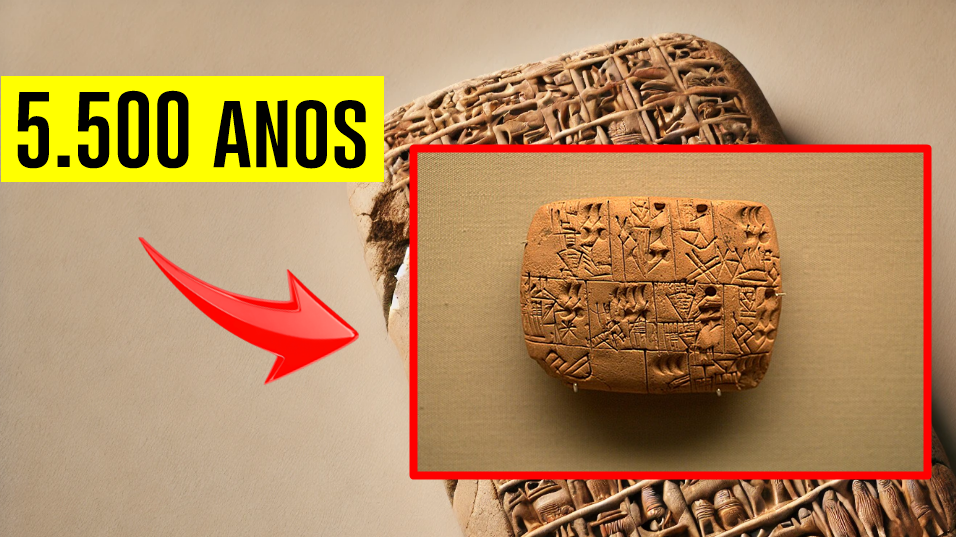


At 5,500 Years Old, The Kish Tablet Is Considered The Oldest Written Document Ever Discovered, Revealing Fascinating Details About Beer, Goats, And Grains.
Imagine living in a world without any written records, where ideas were lost over time and all discoveries faded away. About 5,500 years ago, the peoples of Mesopotamia changed this scenario by creating what would be the starting point of writing: the Kish Tablet, considered the oldest written document ever found.
What Is The Kish Tablet – The Oldest Document In The World
The Kish Tablet is a small clay tablet that carries protocuneiform symbols (the first writing systems recorded in human history), the precursor to the famous cuneiform writing system.
These symbols in the ‘document’ do not form texts like those of today, but are representations of objects, activities, and basic concepts. The tablet is an administrative tool used to record economic and agricultural operations.
-
Sailor sails alone from Panama to Cuba carrying just over US$ 7,000 in food, medicine, and baby formula, spends hours at Santiago de Cuba customs, and delivers everything to Cáritas, linked to the Catholic Church, to distribute to the population.

-
In the middle of a forest in the USA, a couple transforms over 1,500 recycled tires, bottles, cans, and clay into an ecological mansion, builds 90% of the house with their own hands, and puts the nearly 7-acre self-sustaining refuge up for sale for $1.3 million.

-
Cutting board created in the Netherlands uses material made by microorganisms, measures 30 x 20 cm, and aims to eliminate microplastics that can end up in food during daily preparation.

-
New Zealand aligns nearly 7,000 X-shaped concrete blocks like puzzle pieces to protect railway, highway, and cycle path against waves, erosion, and earthquakes on one of Wellington’s most sensitive coasts.





Among the most studied symbols are those referring to beer production, an essential item for the Sumerians.
There are also records of grains, goats, sheep, and other goods that were part of daily life in the civilization.
These records were essential for controlling production, distribution, and quality, especially at a time when cities began to grow and economies became more complex.
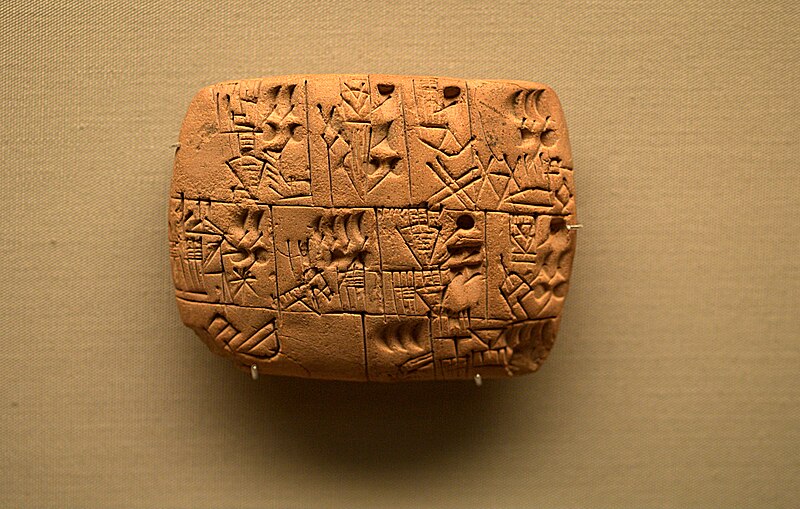
Jim Kuhn/Wikimedia Commons.
Why Is The Kish Tablet So Important?
The Kish Tablet marks the beginning of writing as an organized system of information. Before it, civilizations relied exclusively on memory and artistic representations, such as cave paintings, to convey ideas. Unlike paintings, which illustrate general scenes, the protocuneiform tablet presents detailed information about economic activities.
A practical example is the record of barley use for food and beverage production. This highlights the importance of writing for managing resources essential to society. The material used, clay, was a strategic choice. After being shaped, the tablets were baked, ensuring their preservation for thousands of years.

Metropolitan Museum of Art, donated to
Wikimedia Commons.
Cave Paintings vs. Protocuneiform Writing
Although older, cave paintings, such as those from 50,000 years ago depicting humans and animals, cannot be considered written records. They are representative images, while the symbols on the Kish Tablet form a functional system of transmitting information.
In practice, the symbols from Kish provide insight into Sumerian daily life. They show the organization necessary to sustain a growing society, such as the use of cattle for transportation or agricultural production.
This difference is crucial to understand why the protocuneiform tablet is considered the starting point of structured writing.
The Evolution Of Writing
The protocuneiform symbols were the first steps toward the development of cuneiform, which emerged about 500 years later, around 3000 B.C. This system allowed for more elaborate records, such as laws, stories, rituals, and religious texts.
The Kish Tablet was, therefore, a key piece in the advancement of written records, establishing the foundation for complex systems of governance and culture.
Unresolved Mysteries
Despite its historical importance, the Kish Tablet still holds secrets. Part of its protocuneiform writing has not been fully deciphered. Archaeologists believe it to be part of a larger set of administrative records from Mesopotamia, but the complete meaning of some symbols remains unknown.
Research on the tablet continues, and each breakthrough offers a new perspective on humanity’s first steps in recording information. It remains a testament to human ingenuity and the effort to organize knowledge.
This seemingly simple piece of clay is much more than an ancient artifact. It represents the beginning of a transformation that forever changed the course of history.





Fantastic!!!!