





 Português
  Inglês
  Espanhol
  4 min de leitura
  0 comentários


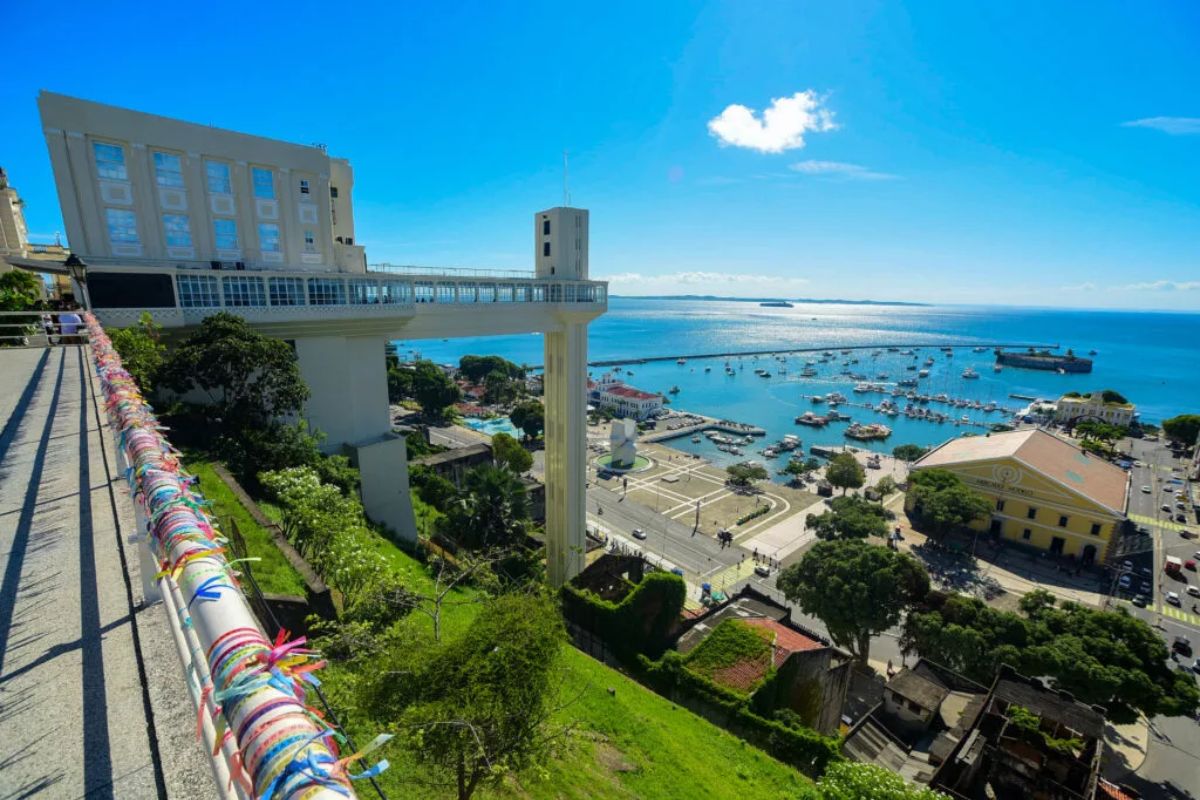
After a Million-Dollar Renovation in 2025, the Salvador Icon and First Public Elevator in the World Continues to Be the Vertical Heart of the City, Transporting Thousands of People per Day Between Lower Town and Upper Town.
Few structures define a city as well as the Lacerda Elevator in Salvador. More than one of Brazil’s most famous postcards, it is a vital artery, a monument in motion that, for over 150 years, has fulfilled the mission of connecting two worlds separated by a 72-meter stone wall.
Its history is a fascinating blend of innovation, controversy, and resilience. In 2025, after its most complete renovation, the Lacerda Elevator in Salvador is not just a museum piece; it continues in full operation as an essential public transport, uniting the past and future of Brazil’s first capital.
How the Geography of Salvador Gave Rise to the Elevator
In the 19th century, Salvador was a divided city. The lower town housed the port and trade, while the upper town was home to the government and the elite’s houses. Conquering the steep slope that separated the two levels was an exhausting task. It was to solve this problem that businessman Antônio de Lacerda envisioned the construction of an elevator.
-
The world’s first octopus farm wants to open in the Canary Islands and is already provoking an international reaction: the plan aims to produce 3,000 tons per year.

-
Drought may be creating stronger superbugs in the soil and helping antibiotic resistance reach hospitals, warns a study highlighting a problem that could grow alongside extreme weather.

-
The biggest scam in history: Napoleon’s France deceived the United States by selling them a territory that was Spanish.

-
Why is the Danakil Desert so dangerous? It has unstable terrain and how extreme temperatures and toxic gases turn the region into one of the most hostile environments on Earth.

The project, an engineering feat for its time, began in 1869 and was inaugurated on December 8, 1873. Initially, it was called the Hydraulic Elevator of Conceição da Praia. The funding came from Antônio’s father, a wealthy merchant whose capital, according to historical records from the time, also had origins in the trade of enslaved people, a paradox that marks the complex history of the monument.
The Face of Salvador: The Great Renovation of 1930 That Gave the Elevator Its Art Deco Style
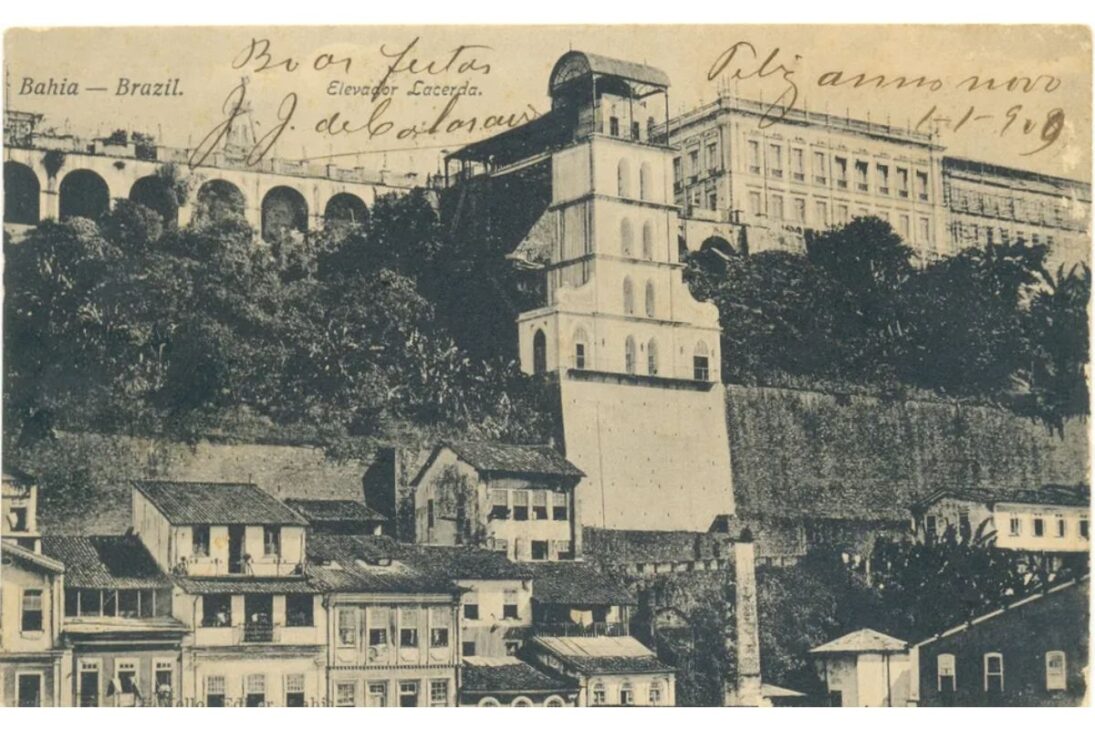
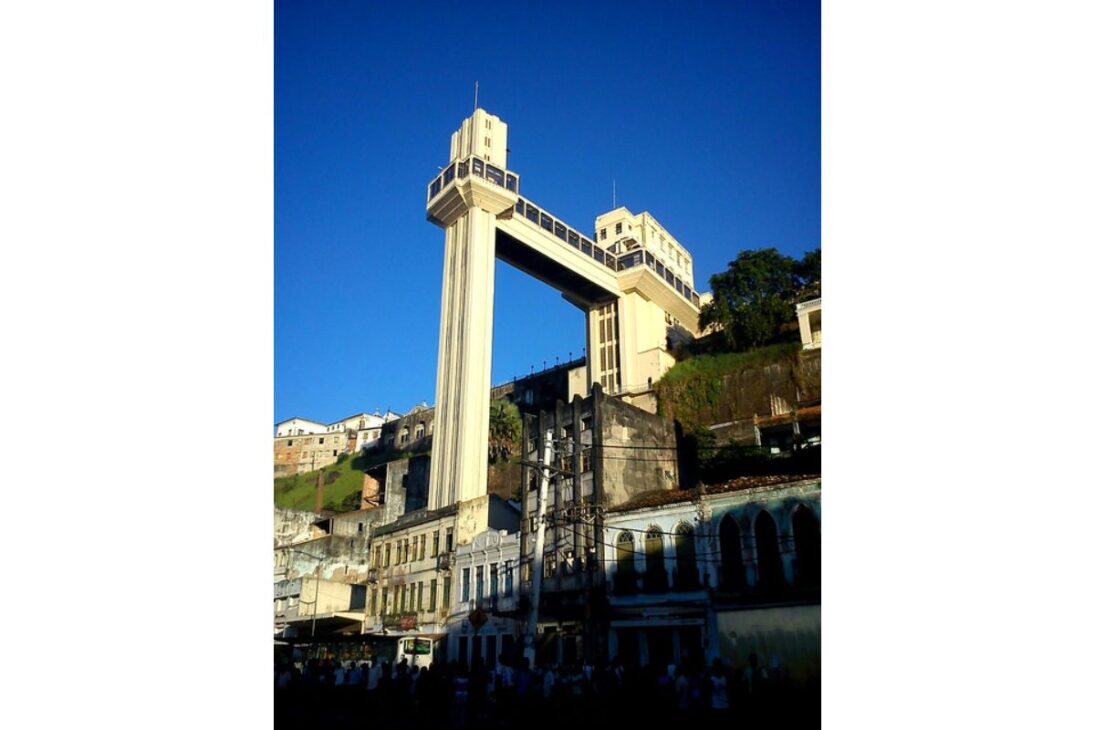
The iconic image we know today was born from a major transformation in 1930. The original iron structure was accompanied by a second concrete tower, and its height was raised to the current 72 meters. The number of cabins doubled from two to four, and the entire structure was covered with the modern and elegant aesthetics of Art Deco.
This renovation was not just technical; it was an act that consolidated the Lacerda Elevator in Salvador as a symbol of progress. The choice of Art Deco, the avant-garde style of the time, transformed the elevator into one of the most recognized postcards in Brazil and the world.
The Great Renovation That Modernized the Elevator in 2025
To ensure its relevance in the 21st century, the elevator underwent its most complete requalification. After ten months closed, it was reopened on February 25, 2025. With an investment of around R$ 15 million, the project brought the monument into the modern age.
The four cabins were replaced with new models, air-conditioned with a more sophisticated finish. A new rescue motor was installed, increasing safety, and all electrical and hydraulic systems were renewed. The façade was completely restored, recovering the appearance from the 1930 renovation, and the side balconies were reopened to the public, restoring the panoramic view of the Baía de Todos-os-Santos.
Transport for Thousands and the New Tariff of 2025
Although it is a tourist spot, the main function of the Lacerda Elevator in Salvador has always been public transport. It manages to transport about 28,000 people per day, being an essential mode of transport for thousands of workers.
With the 2025 renovation, the fee model changed to become fairer and more sustainable. The old fare of R$ 0.15 was abolished. Now, access is free for all residents who use the SalvadorCard, the city’s public transport card. For tourists and occasional users, a new fare of R$ 1.00 was instituted, ensuring that the monument can generate revenue for its own maintenance without burdening the local citizen.
The Listing by IPHAN and World Pioneering
The historical value of the elevator was officially recognized on December 7, 2006, when it was listed by IPHAN. The agency highlighted not only its importance as a landmark of engineering, but also its artistic value and its role in Salvador’s social and economic life.
Its pioneering nature is also unquestionable. To give an idea, the famous Santa Justa Elevator in Lisbon was only inaugurated in 1902. The Lacerda Elevator in Salvador precedes it by almost 29 years, which firmly establishes it as the first urban public service elevator in the world.








-

Uma pessoa reagiu a isso.