





 Portuguese
  English
  Spanish
  5 min of reading
  2 comments


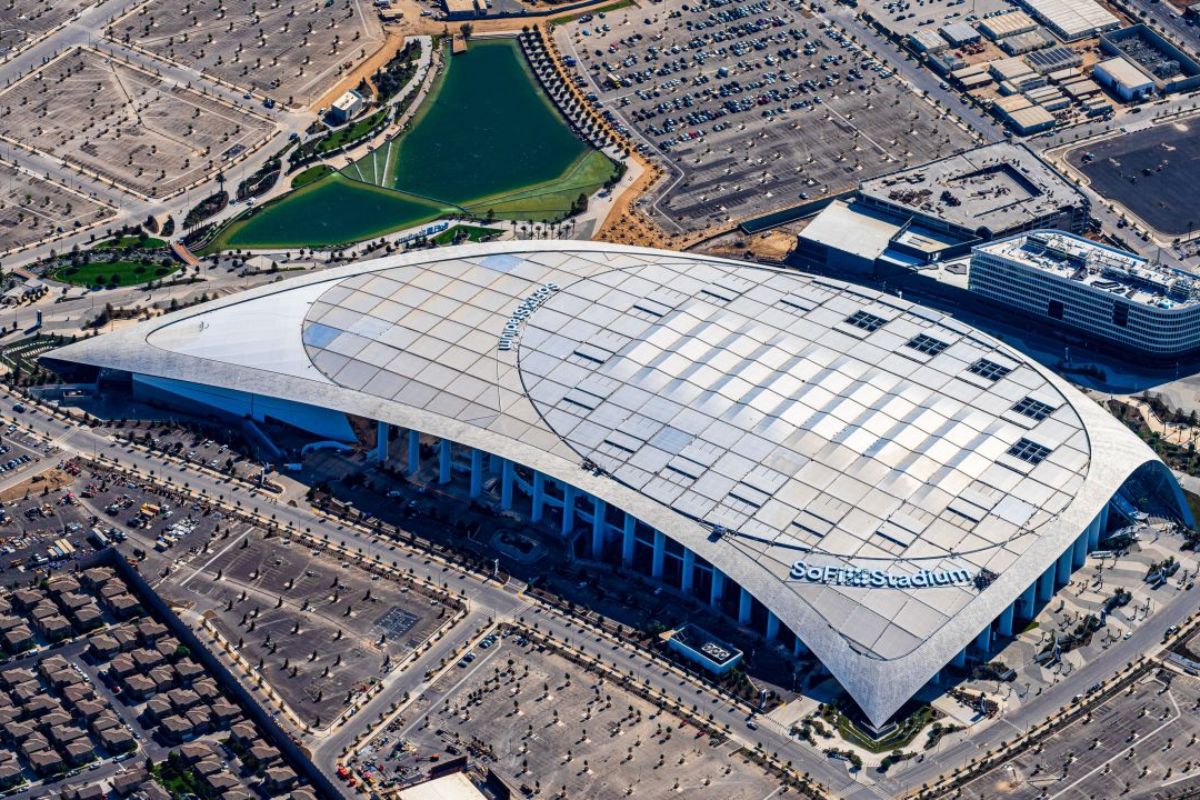


The Most Expensive Stadium In The World, SoFi Stadium In Los Angeles, Combines Glass Roof, 360-Degree Big Screen, And Cutting-Edge Structure To Host World Cup 2026 Games
Opened in 2020, SoFi Stadium in Inglewood is now the most expensive stadium in the world and embodies a new generation of sports complexes that function simultaneously as arenas, entertainment hubs, and showcases of technology. With an investment of over US$ 5.5 billion (approximately R$ 29.37 billion), the facility was built below ground level to comply with height restrictions near Los Angeles International Airport and is purposefully designed to host matches for the 2026 World Cup.
More than just a venue for games, the most expensive stadium in the world operates as a laboratory for engineering solutions, sustainability, and audience experience, featuring a translucent ETFE roof, a suspended 360-degree big screen, high-capacity digital infrastructure, and an expansive urban complex around it. The result is a model of a multifunctional arena that influences future projects and solidifies Inglewood as a new hub for major international events.
How The Most Expensive Stadium In The World Was Designed In Engineering
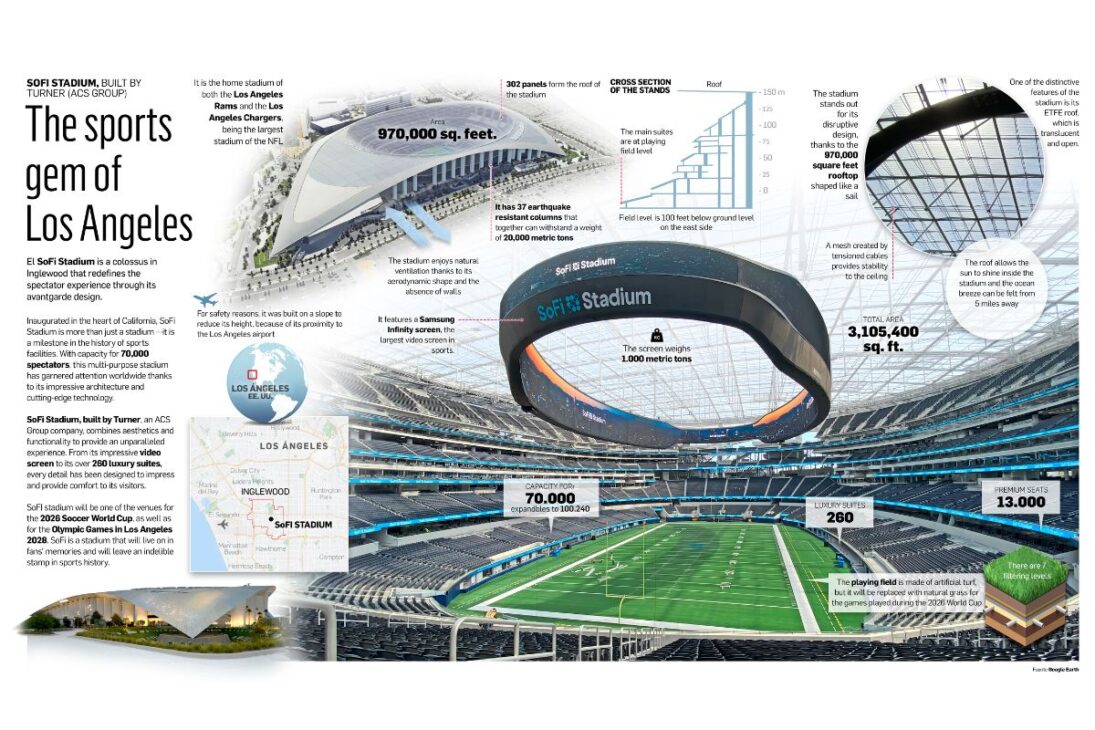
One of the most unique aspects of the most expensive stadium in the world is its underground construction.
-
Italian researchers have detected what appears to be a second Sphinx buried under the sands of Egypt, and satellite scans reveal a gigantic underground megastructure hidden beneath the Giza Plateau for over 3,000 years.

-
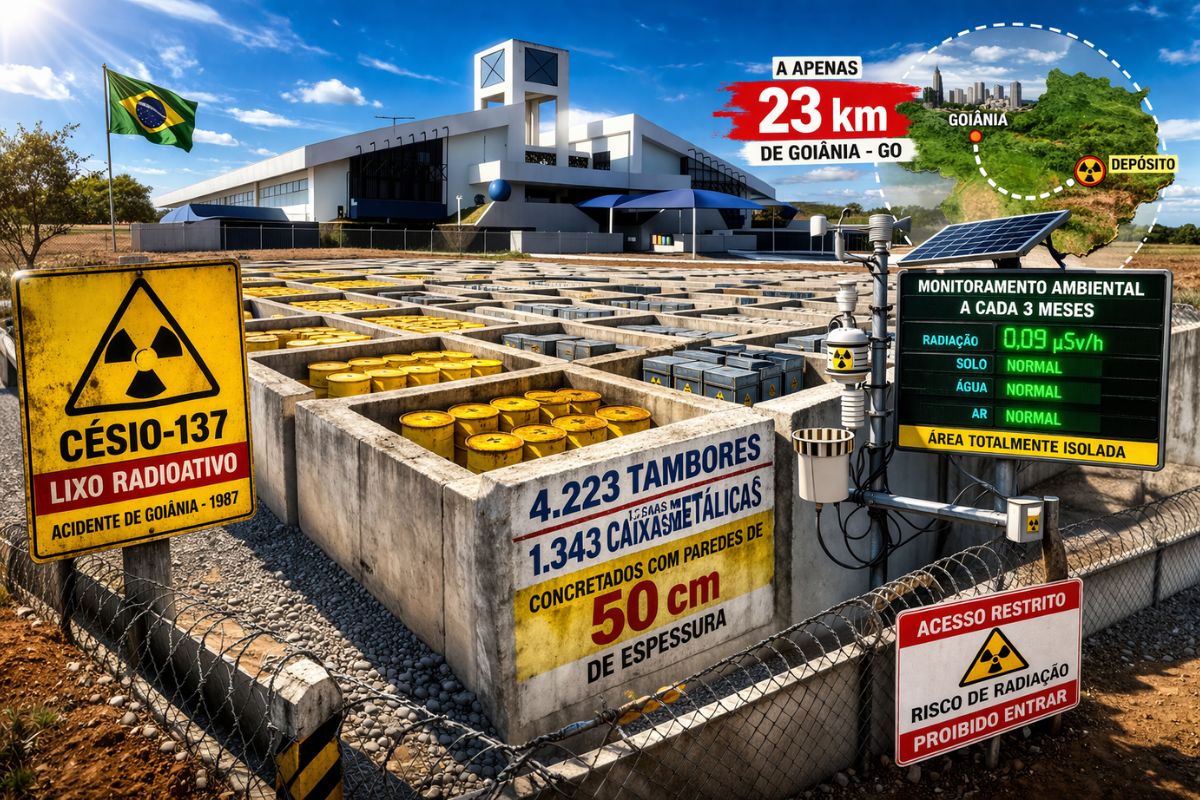
There are 4,223 drums and 1,343 metal boxes concreted with 50-centimeter walls that store the radioactive waste from Cesium-137 in the worst radiological accident in Brazil, just 23 kilometers from Goiânia, with environmental monitoring every three months.
-
Giant Roman treasure found at the bottom of Lake Neuchâtel in Switzerland reveals an advanced trade system, circulation of goods, and armed escort in the Roman Empire about two thousand years ago.

-
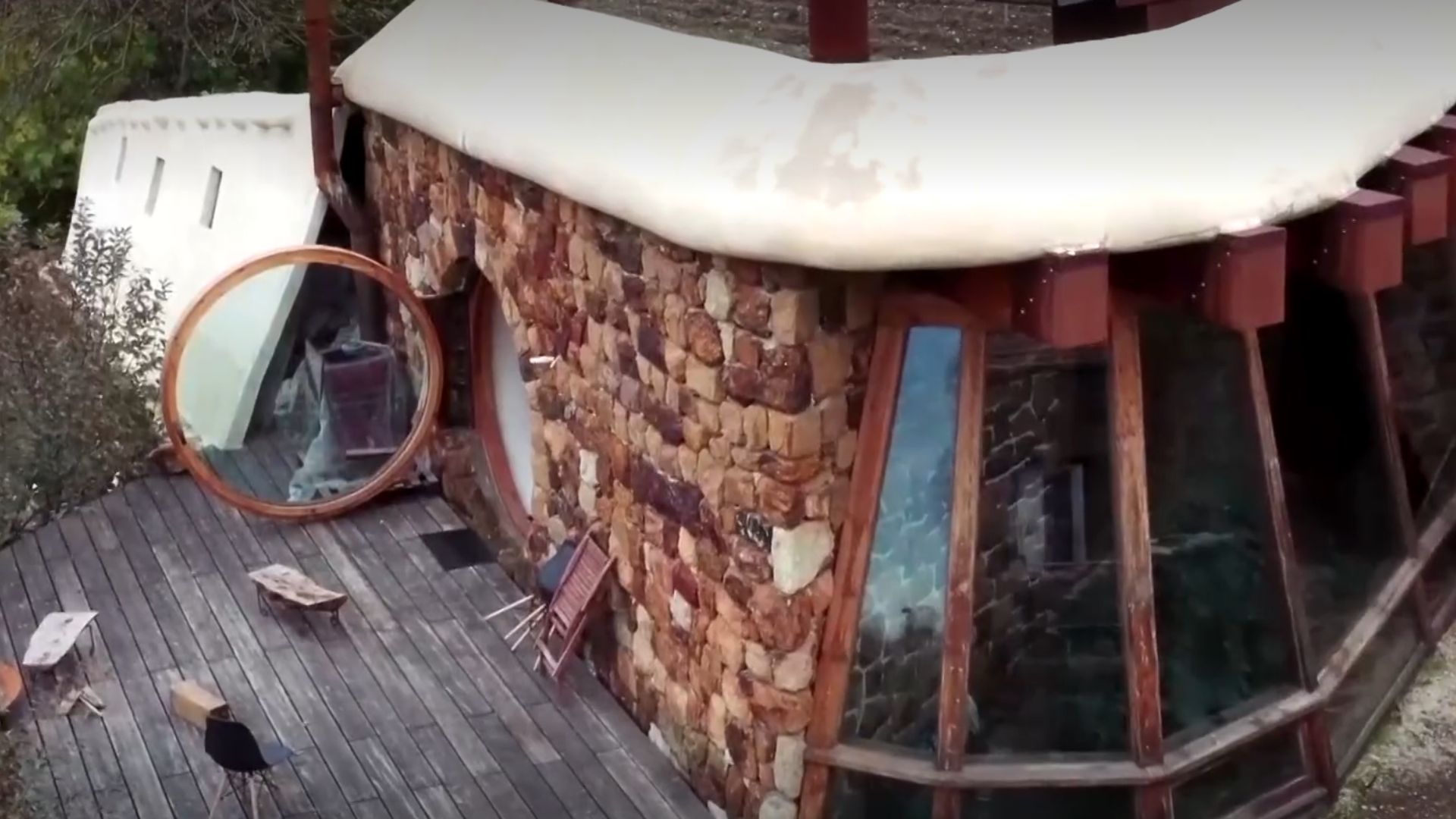
He buried 1,200 old tires in the walls to build his own self-sufficient house in the mountains with glass bottles, rainwater, and an integrated greenhouse.

To comply with aviation regulations, millions of cubic meters of earth had to be excavated, positioning a significant portion of the seating below the natural ground level.
This solution reduces the visual impact of the structure, improves acoustic performance, and creates an additional challenge regarding foundations, drainage, and soil retention.
Deep excavation required long-term planning, continuous monitoring of the terrain, and precise coordination between structural designers and field teams.
The large-scale earth movement, combined with the proximity to the airport and the need to ensure safety at all stages, turned the project into an international reference in terms of underground engineering applied to large stadiums.
Translucent Roof And Indoor-Outdoor Concept On A Large Scale
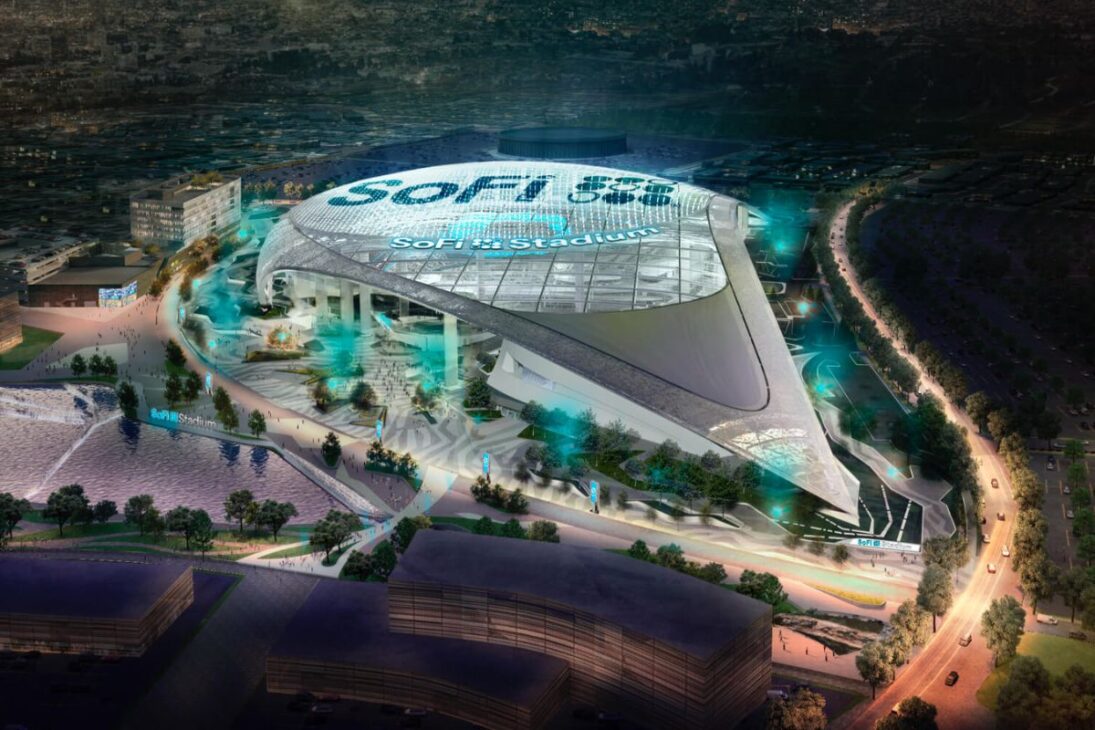
The roof of SoFi Stadium relies on the indoor-outdoor concept, combining climate protection with an open space feeling.
The covering is made of ETFE panels, a lightweight, translucent, and self-cleaning material already used in arenas such as Allianz Arena and the Beijing Olympic Stadium.
This contemporary “glass roof” allows natural light in, reduces the need for artificial lighting, and helps control the interior temperature.
The roof design integrates with neighboring structures such as American Airlines Plaza and YouTube Theater, forming a kind of continuous urban dome.
Beyond its structural function, the roof houses around 27,000 external LEDs capable of displaying images visible even to those flying over Los Angeles.
This transforms the most expensive stadium in the world envelope into a large-scale media surface, directly connected to the logic of major global events like the 2026 World Cup.
360-Degree Big Screen And Digital Infrastructure At The Heart Of The Arena
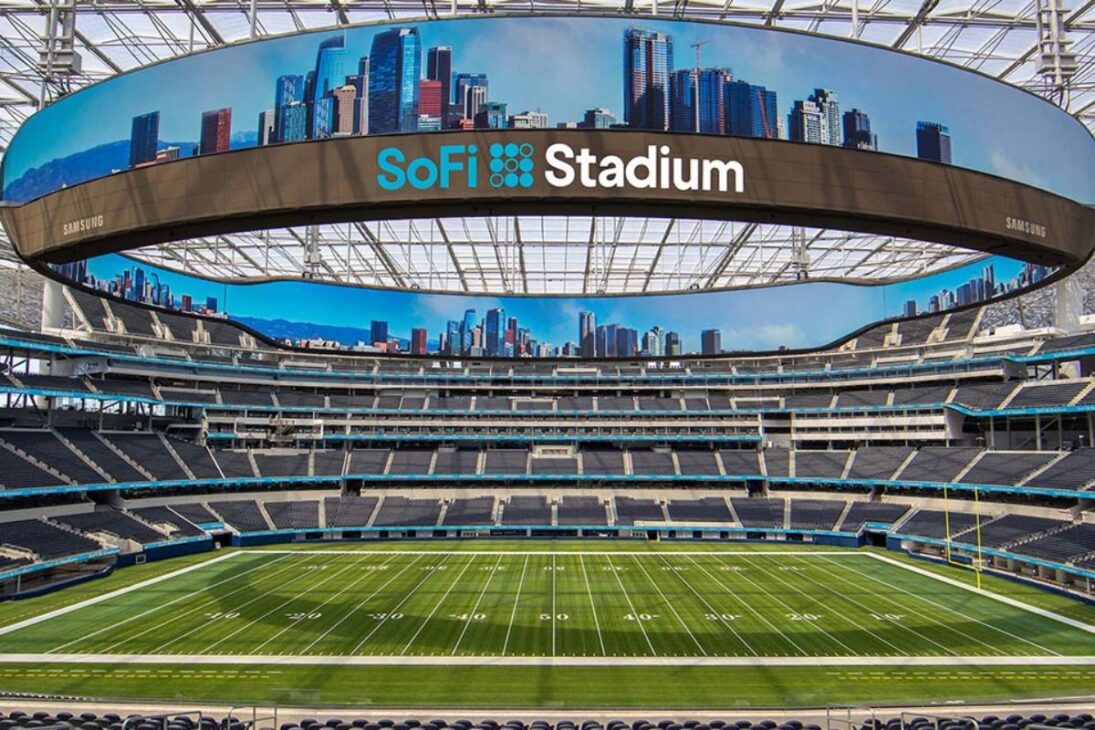
Inside, SoFi Stadium is marked by the Infinity Screen by Samsung, a suspended 360-degree big screen that occupies the central band above the field.
With 4K HDR resolution and about 80 million pixels, the digital ring redefines the relationship between field, stands, and real-time information, offering replays, advanced statistics, and multimedia content in all directions.
The sound system, integrated with the big screen, incorporates hundreds of speakers distributed to ensure intelligibility at different levels of the stands.
The connectivity infrastructure includes 5G network and thousands of Wi-Fi access points, allowing the audience to capture, share, and consume high-demand content during events.
In a World Cup context, this digital capacity is crucial to support broadcasts, second-screen applications, and the stadium’s own operational services.
Construction Logistics And Cost Of The Most Expensive Stadium In The World
Reaching the status of the most expensive stadium in the world is not only the result of aesthetic solutions but of an extremely complex construction logistics.
The construction of SoFi Stadium involved large-scale architecture firms, structural engineering, and project management, as well as mobilizing over 17,000 workers throughout the implementation.
Estimates suggest over 10 million accumulated hours of work by the time of delivery.
During construction, the team faced strong winds, height restrictions, deep excavation, and tight schedules to enable the inauguration and preparation for high-visibility events.
Tools such as 3D modeling, drone usage, schedule simulations, and climate monitoring were incorporated into the process to reduce risks, adjust work sequences, and ensure that the structure of the most expensive stadium in the world was executed within required performance standards.
Sustainability And Urban Impact In Inglewood
SoFi Stadium integrates into a broader urban project, Hollywood Park, which spans hundreds of acres dedicated to residential, commercial, and hospitality uses.
The presence of the most expensive stadium in the world acts as an anchor for investments, job generation, and service attraction, repositioning Inglewood on the economic map of the Los Angeles area.
In parallel, the complex adopts sustainable solutions such as LED lighting, rainwater harvesting, solar panels, natural ventilation, and materials with lower environmental impact.
The combination of ETFE roofing, a design that favors air flow, and energy-efficient technologies aims to position the stadium within high environmental certification standards, aligning the billion-dollar investment with sustainable performance goals.
What The Most Expensive Stadium In The World Indicates About The Future Of Arenas
The preparation of SoFi Stadium to host the 2026 World Cup confirms a trend: arenas designed as permanent entertainment platforms, not just stadiums for a few games a year.
The most expensive stadium in the world embodies this model by combining underground engineering, translucent roofing, a 360-degree big screen, high connectivity, and urban integration in a single complex.
In this context, the discussion that opens for future projects is clear: the standard of expectations from fans, organizers of major events, and host cities is likely to follow the reference set by structures such as SoFi Stadium, especially in global tournaments.
In light of this scenario, do you think that investments of this magnitude in stadiums make sense as engines of urban and technological development, or does the cost of the most expensive stadium in the world weigh too heavily against other priorities for cities and countries?










O texto e mais sobre a tecnologia, não fala muito de sua utilização para o futebol, não cita a capacidade, a acessibilidade. Enquanto futuro tudo bem pensado para próximas obras, investidores não falaram, pois pode render muito mais que bilheterias de jogos. Servirá de modelo a ser seguido.
Um texto looongo e fiquei sem saber quem investiu. Pelo menos corri o texto sem ler grande coisa esperando saber quem financiou não vi.