





 Portuguese
  English
  Spanish
  4 min of reading
  0 comments



An Intern at Deutsche Bank Transfers Fortune of US$ 6 Billion by Mistake to a Hedge Fund, in an Episode That Raised Alerts About Human Failures and Gaps in the Control Systems of One of Europe’s Largest Financial Institutions
Deutsche Bank experienced one of the most embarrassing episodes in its recent history. An intern, during a routine operation in the investment sector, transferred a fortune of US$ 6 billion by mistake to a U.S. hedge fund. The erroneous transaction occurred in London and was only discovered the next day, after the bank initiated an emergency liquidity review.
The error, although reversed in less than 24 hours, exposed the fragilities of internal supervision and revealed how human failures can bypass even the automated mechanisms of risk control. The case occurred at a delicate time for the institution, which was already facing international investigations and a deep restructuring in its compliance area.
How the Intern Transferred US$ 6 Billion by Mistake
The incident happened during the vacation of the employee’s direct supervisor.
-
Italian researchers have detected what appears to be a second Sphinx buried under the sands of Egypt, and satellite scans reveal a gigantic underground megastructure hidden beneath the Giza Plateau for over 3,000 years.

-
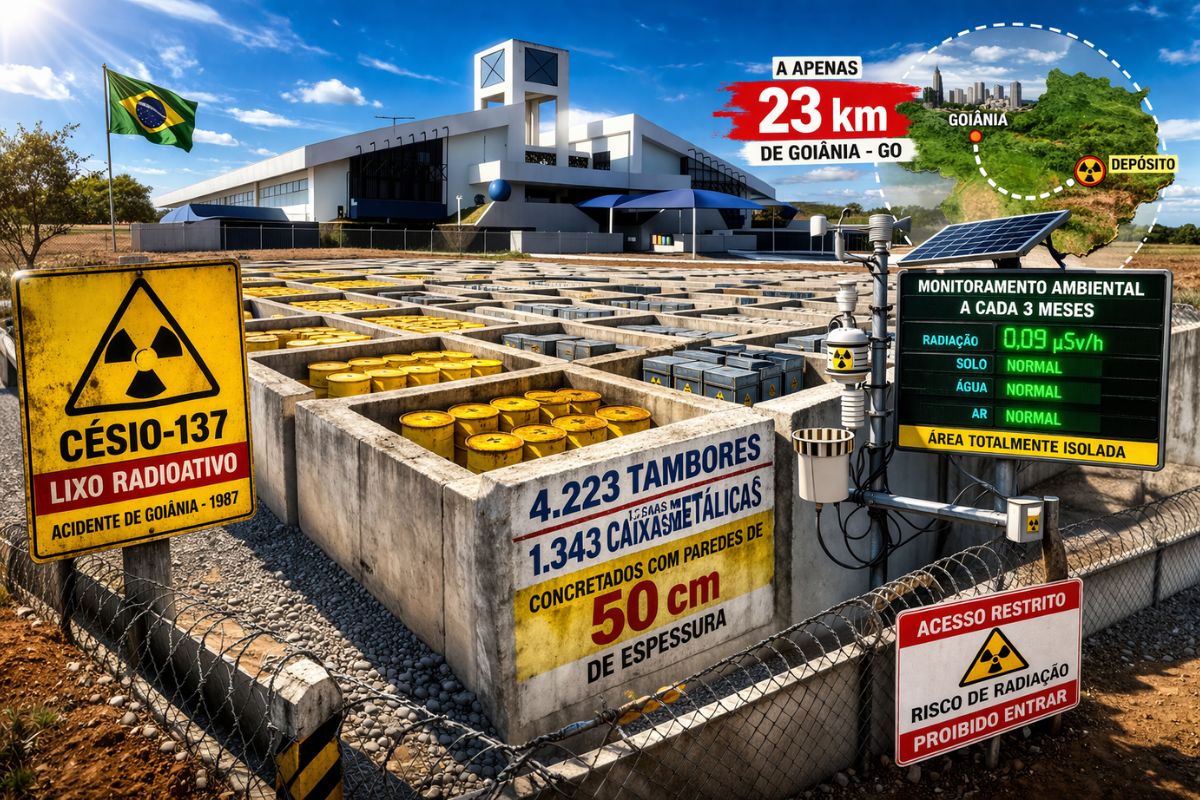
There are 4,223 drums and 1,343 metal boxes concreted with 50-centimeter walls that store the radioactive waste from Cesium-137 in the worst radiological accident in Brazil, just 23 kilometers from Goiânia, with environmental monitoring every three months.
-
Giant Roman treasure found at the bottom of Lake Neuchâtel in Switzerland reveals an advanced trade system, circulation of goods, and armed escort in the Roman Empire about two thousand years ago.

-
He buried 1,200 old tires in the walls to build his own self-sufficient house in the mountains with glass bottles, rainwater, and an integrated greenhouse.


The young analyst, newly arrived in the operations area, was supposed to make a routine transaction related to a U.S. investment fund.
However, instead of entering the net result of daily operations, the intern ended up using the total sum of the transactions, multiplying the final amount by thousands of times.
The billion-dollar transaction passed through the internal approval systems without automatic alerts, as the control platforms were not programmed to detect discrepancies in large volume internal transfers.
The money temporarily ended up in the hedge fund’s account, which even recorded the amount as available credit until the complete reversal of the operation the next day.
What the Case Revealed About the Global Banking System
The episode demonstrated how human supervision still plays a crucial role in the banking environment, even with the advancement of digital auditing and monitoring systems.
Experts classified the case as a “critical operational error” which, under different circumstances, could have caused severe reputational and financial damage.
Sources close to Deutsche Bank indicated that the bank needed to trigger an emergency recovery operation, involving direct communication with the beneficiary fund and with U.S. authorities. Within 24 hours, the transfer was fully reversed.
No amount was lost, but the failure triggered a comprehensive review of internal protocols and the system of dual verification of orders.
Human Failures and Risk Culture
The intern’s mistake was not isolated.
Subsequent internal reports indicated that the incident occurred in a context of operational overload, exacerbated by staff cuts and manual processes in critical areas.
The absence of the responsible manager on the day of the operation contributed to the lack of direct supervision.
Financial analysts claim that cases like this highlight the challenge faced by global banks in balancing automation, efficiency, and security.
The more complex the transaction structure, the greater the risk of human errors that are invisible to algorithms.
Therefore, Deutsche Bank adopted new layers of automated checks and mandated that any transaction above a certain limit undergo mandatory manual auditing before being executed.
Internal Impacts and Regulatory Reaction
After the incident, Deutsche Bank notified the financial authorities in the UK and the United States and submitted a detailed report of what had occurred.
The case increased pressure from regulatory bodies for the bank to strengthen its controls and operational governance.
The institution was also facing, at the time, investigations for other reasons, including suspicions of currency manipulation and irregular dealings with Iran.
The US$ 6 billion error, even though without financial loss, accentuated the perception of administrative vulnerability within the institution, leading to the replacement of managers and the creation of new risk control departments.
What This Episode Teaches About Trust and Technology
The Deutsche Bank case serves as an example of how simple errors can have billion-dollar consequences in a highly digitalized financial environment.
Although the money was quickly recovered, the episode made it clear that market trust depends not only on technological speed but also on human responsibility.
In a global scenario where automation is growing, risk control needs to be both technological and cultural, based on training, supervision, and operational ethics.
A wrong click can cost billions, but the reputational cost of an error of this magnitude can be even greater.










-

-

-

5 pessoas reagiram a isso.