





 Portuguese
  English
  Spanish
  3 min of reading
  0 comments


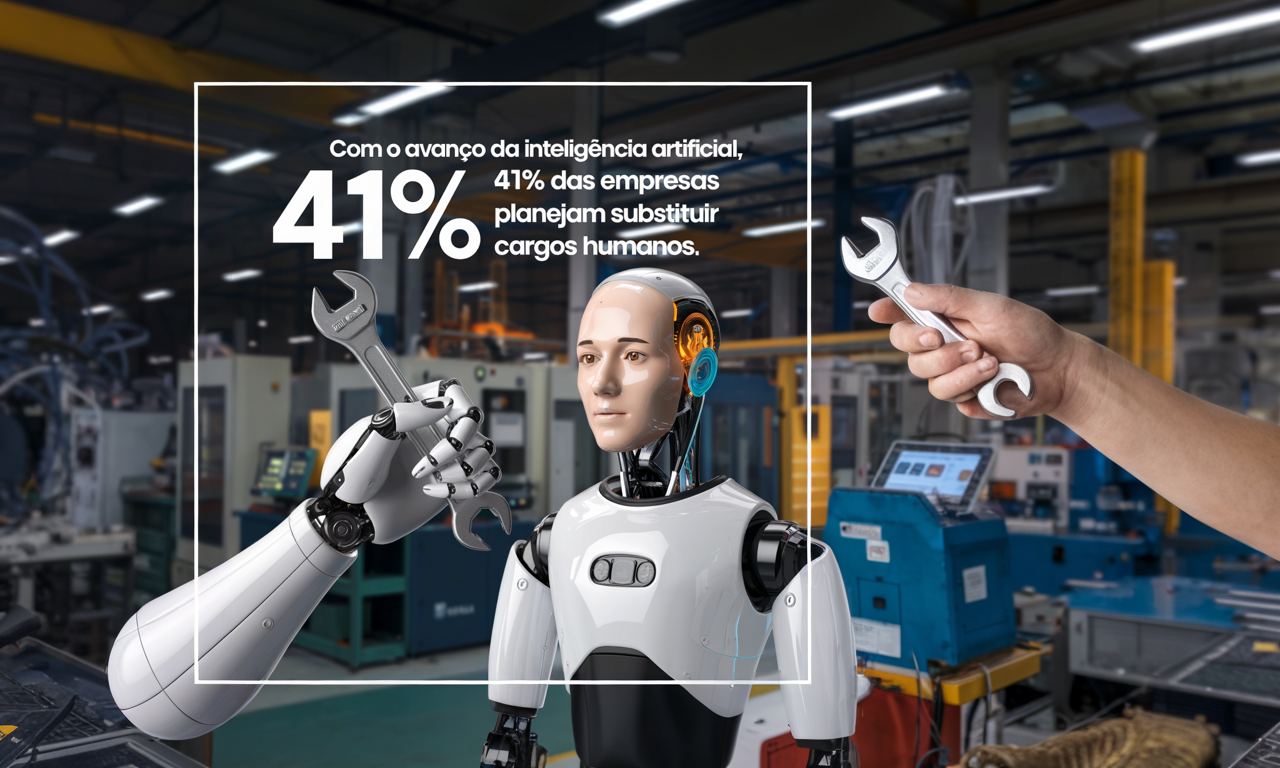
Studies Show If The End Of Traditional Labor With The Replacement Of Jobs With AI Is Near. Check Below What Experts Say About The Replacement Of Traditional Labor By Artificial Intelligence.
The advancement of Artificial Intelligence is rapidly transforming the labor market, leading many companies to automate tasks and restructure their workforce. According to the Future Of Work Report 2023, published by the World Economic Forum, about 41% of global companies expect a reduction or replacement of part of the workforce due to the adoption of AI and automation in the coming years. In the United States, this percentage could reach 48%, reflecting the increasing digitalization and the search for greater operational efficiency.
Experts Allay Concerns About The End Of Traditional Labor
Despite the concerns raised by the advancement of Artificial Intelligence, experts assure that there is no imminent collapse of global employment.
According to one of the study’s authors and head of Work, Wages, and Job Creation at the World Economic Forum, Till Leopold, the biggest challenge is not in replacing jobs with AI, but rather in transforming existing roles.
-
The government requests the Federal Revenue Service for a new system to automate the income tax declaration, reducing errors, time, and bureaucracy for millions of Brazilians.

-
Pix in installments, international Pix, and contactless payment without internet: the Central Bank revealed the new features coming to the tool that is already used by almost every adult in Brazil.

-
Mercado Livre has just started selling medications with delivery in up to three hours to your door, and this move could completely change the way Brazilians buy medicines on a daily basis.

-
In Dubai, rising tensions from the war in the Middle East are causing super-rich individuals to leave the Gulf and direct their fortunes to a new financial refuge in Asia.


According to Leopold to CNBC Make It, we are not facing the famous job apocalypse scenario. The report shows that 77% of companies plan to invest in training their employees to work alongside AI, while 47% are considering transferring their employees from declining areas to other positions within the organization, thereby avoiding the replacement of traditional labor.
The impact of Artificial Intelligence will be most felt in analytical and administrative roles that rely on data entry, such as office work, paralegal functions, and accounting. Furthermore, areas like graphic design are also expected to undergo changes, as generative AI tools have proven to be promising in these fields, bringing an end to traditional labor.
United States Has Highest Tendency To Replace Jobs With AI
For Leopold, the market will not completely replace traditional labor but will transform it.
Jobs as we know them today will not exist in the same way in five years. This transformation is already underway, and a study by Duke University showed that 37% of financial directors already use Artificial Intelligence for tasks previously performed by humans, and 54% aim to expand this use over the next year.
Among large companies, the rate is even higher at 76%. Even so, the immediate impact of replacing jobs with AI may be subtler than one might imagine. According to John Graham, a finance professor at Duke, in the short term, Artificial Intelligence will be used to fill gaps and avoid new hires rather than causing mass layoffs and the end of traditional labor.
Financial Sector May Feel Impact From Replacement Of Traditional Labor
On the other hand, the financial sector may feel a more severe impact from the replacement of jobs with AI. A study conducted by Bloomberg Intelligence predicts that banks may cut up to 200,000 jobs over the next five years due to artificial intelligence, with nearly 25% of respondents expecting a reduction of 5 to 10% of the workforce.
Still, experts agree that automation will not bring about the end of traditional labor but will transform the way professionals work. The key differentiator for future workers will be the development of human skills, such as resilience, creativity, collaboration, and adaptability.
These soft skills will be even more essential as AI integrates into the daily work environment. AI will not only change how companies operate but also demands that professionals reinvent themselves.
Source: Exame









-

-

-

3 pessoas reagiram a isso.