





 Portuguese
  English
  Spanish
  5 min of reading
  1 comment


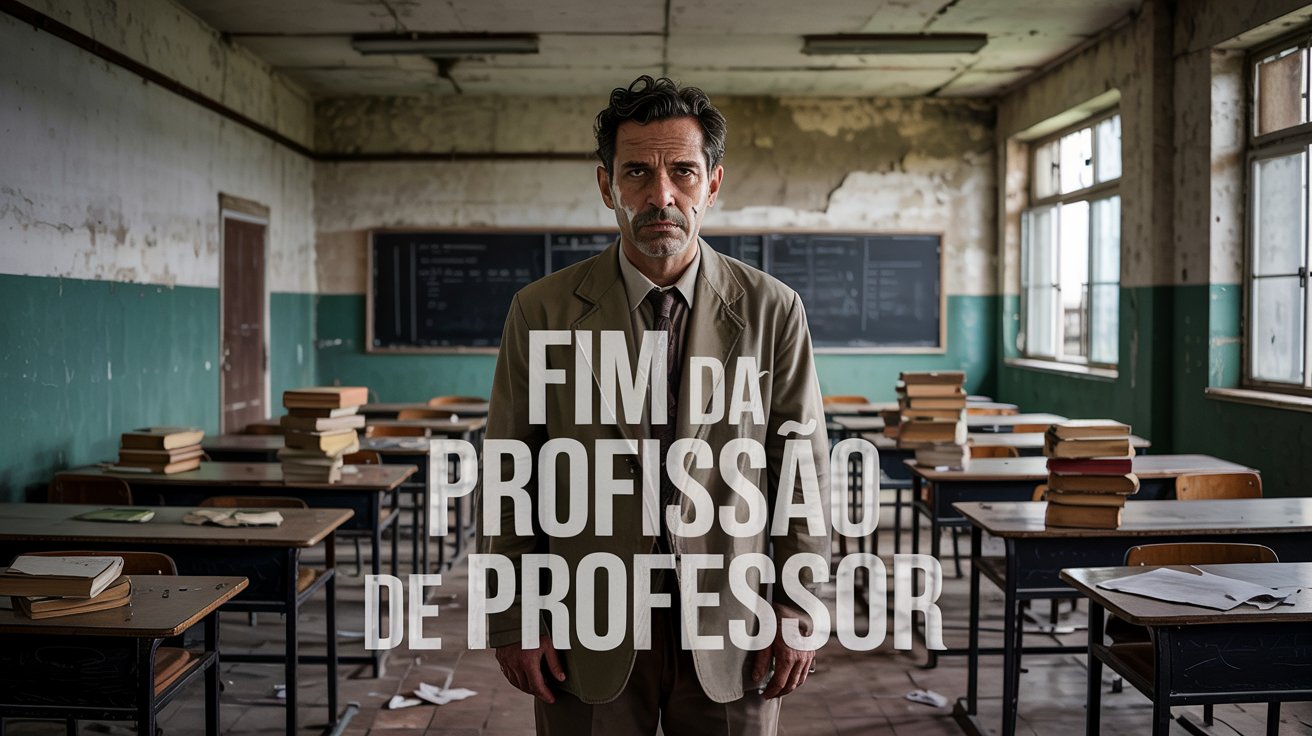


Amid Low Salaries, Overload, and Disrespect, the Reality of Brazilian Teachers Exposes a Deep Crisis.
But Is There Still a Way Out to Avoid the Collapse of Public Education in the Country?
The Teaching Profession in Brazil May Be on the Brink of Bankruptcy. What was once considered one of the pillars of citizen education and the construction of a fairer country has now become synonymous with neglect, overload, and institutional disregard.
With low salaries, unsafe environments, a lack of structure, and a constant feeling of devaluation, thousands of educators consider abandoning the profession daily.
According to a survey by Instituto Semesp, released in 2025, more than 79% of teachers have thought about leaving the classroom.
-
The Argentine government celebrates the lowest poverty rate in 7 years, but experts warn that the methodology has changed, real wages have fallen, unemployment has risen, and the number of people on the streets of Buenos Aires has increased by 57% since Milei took office.

-
7.8 magnitude earthquake in Indonesia frightens the population, triggers tsunami alert, and hits an island with over 200,000 inhabitants this Thursday.

-
Google will finally let you change that embarrassing Gmail address you created in your teenage years without losing any accounts, logins, or old emails: the feature is already available in the United States.

-
The institute that trained the greatest aerospace engineers in Brazil has just opened its first campus outside São Paulo after 75 years: ITA Ceará will have R$ 445 million, new courses in energy and systems, and classes are expected to start in 2027.

The crisis, however, is not just financial: it is a social, emotional, political, and structural crisis.
The Brazilian public school has become a battlefield where the teacher is both the main character in the educational process and a victim of precarious conditions.
This reality has been analyzed by specialists from various fields.
Professor and Historian Valter Mattos, who holds a PhD in Economic History from USP and a master’s degree in Social History from UFF, states that the devaluation of teaching in Brazil is the result of a systematic project to dismantle public education.
In an article published on the ICL Notícias portal, he notes that “the bankruptcy of the teaching profession reflects the exhaustion of an educational model that no longer serves either citizen education or the democratization of knowledge”.
The Weight of Precariousness
Low salaries are just the tip of the iceberg. Although the Constitution guarantees the appreciation of education professionals, what is seen in practice is the opposite.
In many municipal and state networks, teachers earn less than R$ 3,000 a month, even with higher education, postgraduate degrees, and exclusive dedication.
This does not account for the accumulation of classes, the correction of exams outside working hours, endless reports, and the bureaucratization of teaching practice.
For Valter Mattos, the precariousness of teaching work has its roots in neoliberal reforms that, since the 1990s, have been dismantling public services.
He highlights that “the logic of results and targets management dehumanizes educational practice and turns the teacher into a mere task executor.”
Furthermore, the school environment has become increasingly hostile. A survey by CNTE (National Confederation of Education Workers) revealed that more than 50% of teachers have suffered verbal aggression or threats within the school.
Violence, which should be combated with public policies and investment, is often ignored or minimized by educational authorities.
The Invisible Illness of Educators
The mental health of Brazilian teachers is in collapse. Excessive work, devaluation, and lack of psychological support have led many educators to burnout.
The numbers of absences due to anxiety, depression, and burnout syndrome increase every year.
“We are facing a sick category with no real prospects for improvement,” Mattos asserts. For him, the discourse that glorifies the teacher’s “vocation” only serves to mask state negligence. “Recognition that does not appear on the paycheck is propaganda,” points out the historian.
Additionally, there is a kind of silent blame placed on teachers for everything that does not work in the school.
If learning rates do not improve, if there is school dropout, or if external assessments indicate low performance, the educator becomes the scapegoat.
“It is a model that punishes those on the front lines but protects those who make decisions behind a desk,” analyzes Mattos.
The Absence of the Teacher in the Education Debate
Interestingly, the teacher — who should be the main agent in formulating educational policies — is almost never heard.
In recent years, the debate space has been taken over by corporate foundations, NGOs, and groups linked to the financial market. “Those who decide the future of public education rarely set foot in a peripheral classroom,” warns Mattos.
This deliberate exclusion of grassroots professionals shows how the ongoing educational project is more concerned with technical efficiency than with social justice.
The standardization of curricula, the adoption of mass assessments, and the logic of meritocracy conceal a deep inequality of conditions among schools, regions, and students.
“What we have is not a project of appreciation, but of control,” argues the professor.
He criticizes programs that reward teachers with bonuses conditioned to student performance, without considering the multiple realities that interfere in the learning process.
The Risk of Educational Collapse
The bankruptcy of the teaching profession is a symptom of something even greater: the imminent collapse of public education.
Without qualified, motivated, and respected professionals, there is no way to guarantee quality education.
The consequences of this crisis are already visible: increased turnover of teachers, a decline in the demand for teaching degree programs, and widespread disinterest among young people in the teaching career.
Valter Mattos concludes that the solution necessarily involves real investment, active listening to teachers, and concrete appreciation of the career.
“It is not just about adjusting salaries, but about rebuilding the dignity of the profession, ensuring material, emotional, and pedagogical conditions for the full exercise of teaching.”
An Appeal to Society
The emptying of the teaching profession is not just a tragedy for education professionals, but for society as a whole.
The school is the space where citizens are formed, democratic values are consolidated, and the future of a country is built. Abandoning teachers is, in the end, abandoning that future.
In the meantime, thousands of educators continue to resist in classrooms, often without fans, without teaching materials, without security, but with an ethical commitment that insists on surviving.
Perhaps this is the last bastion of hope: the persistence of those who, even in the face of chaos, still believe in the transformative power of education.
And you, do you think society truly values those who dedicate their lives to education? What could be done to save the teaching profession in Brazil?








Professor, infelizmente, hoje só para os que não tem oportunidade! Agradeçam o Sr. milico Gov. Tarcísio.