





 Portuguese
  English
  Spanish
  3 min of reading
  0 comments


Cosan Faces Intense Financial Pressures and May Trigger a Turnaround in the Bioenergy Market by Considering the Sale of Strategic Assets and Dilution of Raízen, Amid Rising Interest Rates and an Increasingly Challenging Economic Scenario.
The bioenergy market in Brazil may undergo significant changes in the coming months, according to a report from the Globo Rural.
One of the largest groups in the sector, Cosan, is reconsidering its strategy and may make decisions that will directly affect Raízen, a joint venture formed with Shell.
The need for financial adjustments amid rising interest rates and pressure to reduce debt has led the company to admit that it is open to diluting its stake and selling assets.
-
A new Brazilian shopping center worth R$ 400 million will be built in an area equivalent to more than 4 football fields, featuring 90 stores, 5 cinemas, a supermarket, a college, and parking for 1,700 cars, potentially generating 3,000 jobs.

-
Larger than entire cities in Brazil: BYD is building a 4.6 km² complex in Bahia with a capacity for 600,000 vehicles per year, but the discovery of 163 workers in conditions analogous to slavery has shaken the entire project.

-
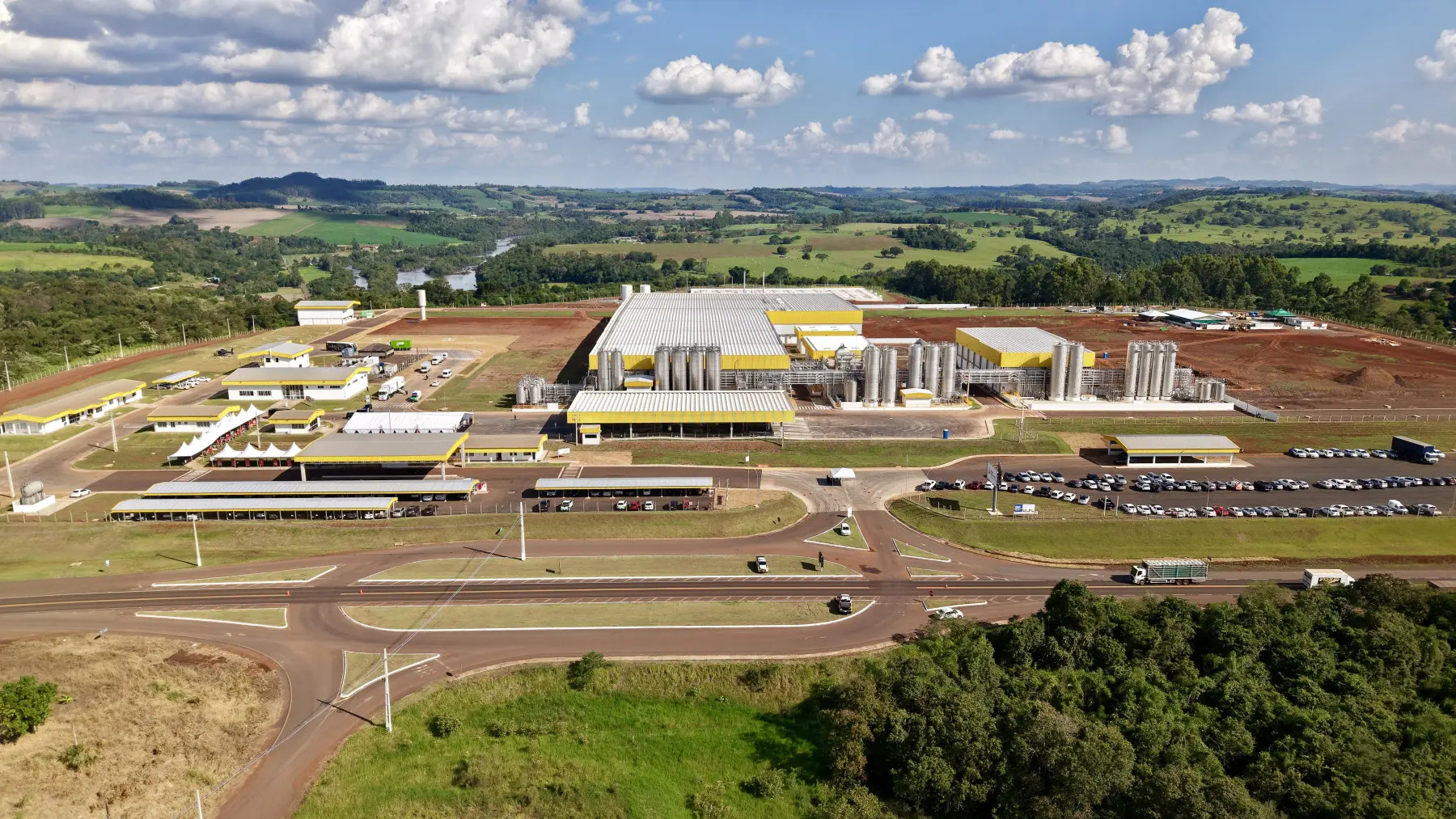
With an investment of R$ 612 million, a capacity to process 1.2 million liters of milk per day, Piracanjuba inaugurates a mega cheese factory that increases national production, reduces dependence on imports, and repositions Brazil on the global dairy map.
-
Brazilian city gains industrial hub for 85 companies that is equivalent to 55 football fields.


According to the website, Cosan itself admitted that the possibility of divestments in Raízen is already under internal discussion, including the partial or total sale of plants and businesses in the renewable energy sector.
During a teleconference with investors, the holding company’s board denied the possibility of a new capital injection into the company, reaffirming that its priority is to reduce its financial leverage.
Interest Rate Pressure and Restructuring
Entrepreneur Rubens Ometto, president of Cosan, highlighted at a BTG Pactual event that high interest rates have been hindering investments in the sector.
According to him, the company has allocated around R$ 9 billion for second-generation ethanol (E2G) projects, but has encountered difficulties in organizing these investments.
“High interest rates are somewhat hindering Raízen’s investments,” Ometto stated, emphasizing that the company’s financial situation requires alternatives to maintain growth without compromising the economic health of the group.
Possible Slicing of Raízen
The financial director of Cosan, Rodrigo Araújo, revealed that the company is evaluating the sale of part or all of some Raízen units, especially in the renewable energy and ethanol sectors. This decision would depend on the approval of Shell, its partner in the venture.
“We are evaluating bringing in partners for some of the company’s businesses. There’s nothing specific, but it’s one of the things being considered”, Araújo stated.
The possibility of slicing the company raises questions about Cosan’s strategy to maintain its market position without compromising cash flow.
Land Sales Already Underway
While assessing the future of Raízen, Cosan has already begun selling part of its assets.
Radar, a group company specialized in agricultural land, has intensified its property sales operations in 2024, a move that is expected to continue throughout this year.
“In 2024 and this year, it will be no different. We have increased the volume of divestments at Radar,” Araújo said.
Last year, the company sold nine farms, moving hundreds of millions of reais. Despite this, Radar’s assets continue to appreciate as agricultural land prices in Brazil remain high.
Currently, Radar’s portfolio is valued at R$ 17 billion, with R$ 5.3 billion belonging to Cosan. The expectation is that new sales will be announced in the coming months.
Future of Cosan and Sector Impacts
Experts believe that Cosan’s divestment strategy could redefine the biofuel and renewable energy market in Brazil.
With the possibility of selling plants and diluting its stake in Raízen, the sector is closely monitoring the company’s next steps.
This decision also impacts Shell, which will need to evaluate whether it agrees with potential changes in the control of the joint venture.
With interest rates still high and a challenging economic environment, the future of Raízen remains uncertain, but Cosan’s movements indicate that significant transformations are on the way.








Seja o primeiro a reagir!