





 Portuguese
  English
  Spanish
  4 min of reading
  1 comment


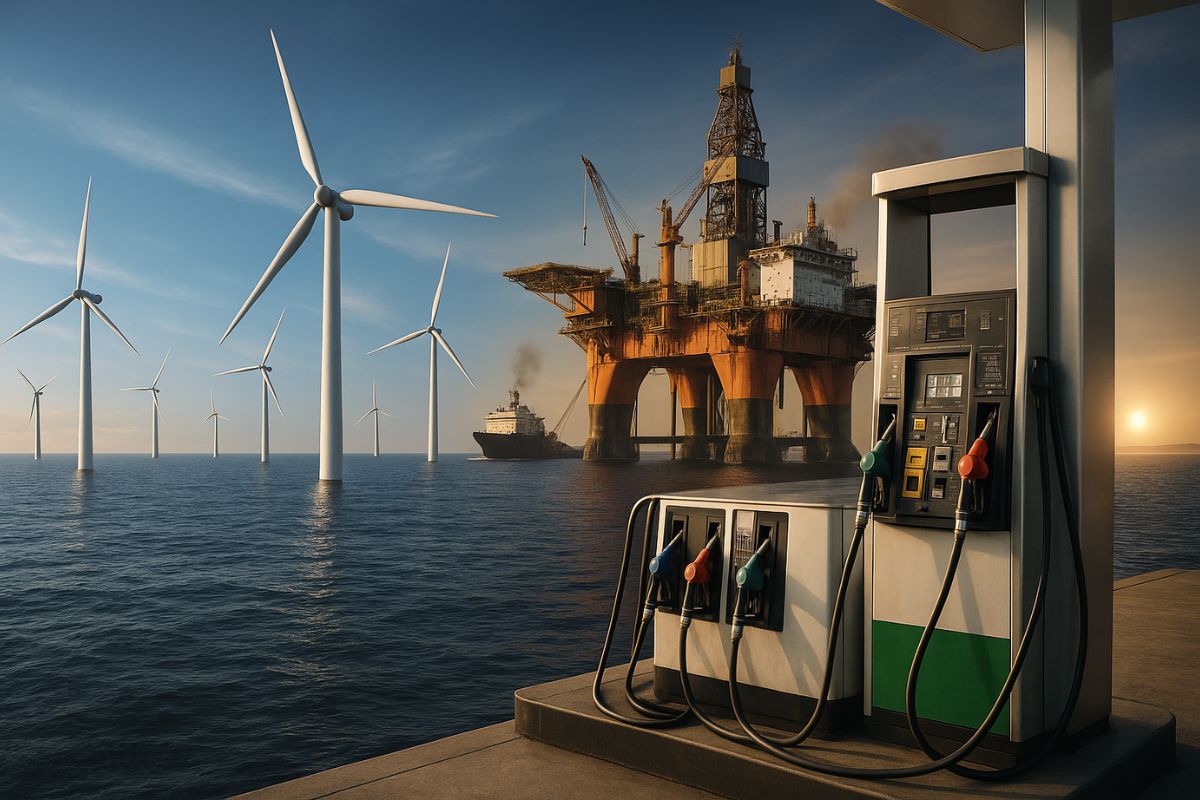


With The Projected Peak in Consumption Expected for The End of Oil, Major Oil Companies Like Petrobras, Shell, and TotalEnergies Are Following Different Paths to Survive and Profit in a New Energy Scenario
The narrative about the end of oil is forcing the largest energy companies in the world to make a trillion-dollar bet on the future. With the forecast that global demand for the fuel will peak in 2029, giants like Petrobras, Anglo-Dutch Shell, and French TotalEnergies are following radically different strategies to adapt.
While some double down on their most profitable oil and gas businesses, others are investing billions in constructing immense offshore wind farms. In Brazil, Petrobras is advancing its studies to install its own turbines off the Northeast coast, using the wealth of the pre-salt to finance its entry into the new energy era.
The Forecast of The End of Oil That Changed The Game, The Peak in Oil Demand by 2029
The change does not happen in a vacuum. It is a direct response to data from the International Energy Agency (IEA). In its reports, the IEA projects that global oil consumption will stop growing and peak at around 105.5 million barrels per day by 2029. From there, demand is expected to stabilize and begin to decline.
-
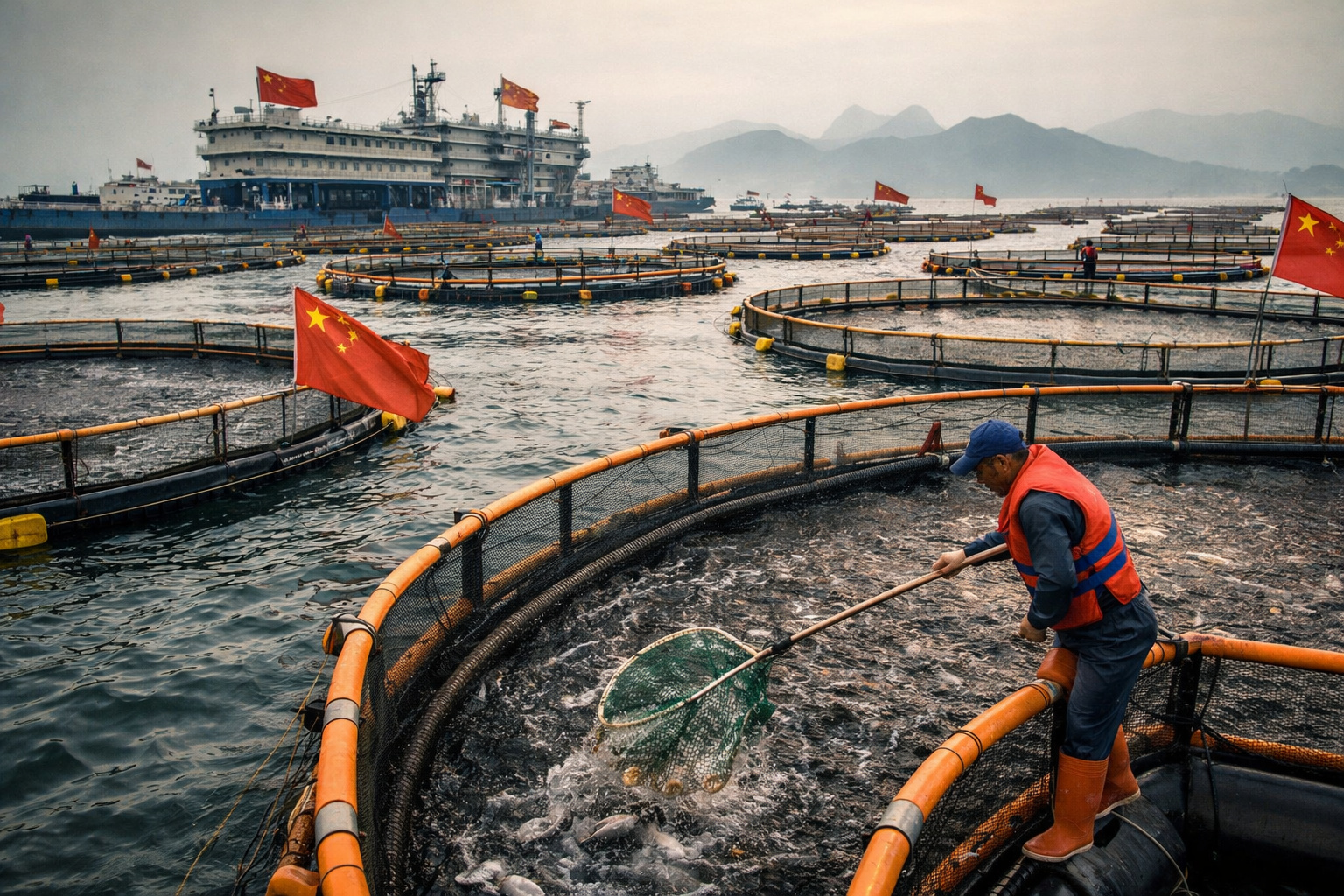
Neither Brazil nor the USA: China produces over 60% of the world’s farmed fish and accounts for about 40% of all global seafood, using industrial-scale aquaculture megafarms to influence the international market and supply billions of people.
-
Archaeologists opened the only Etruscan chamber never looted in 2,600 years and found four individuals lying on stone beds with 110 intact objects around them, and the inscriptions found in the tomb have not yet been deciphered because the Etruscan language is a mystery that science has not yet solved.

-
Health issues urgent alert for flu and calls for the vaccination of the elderly, children, and pregnant women this Saturday with Day D and drive-thru in Curitiba.

-
What seemed like waste has turned into a barrier, and now human hair collected from salons helps retain debris in the water of ancestral channels in Latin America.


This forecast marks the end of oil as an expanding market. The main reason is the combination of three factors: the rapid popularization of electric vehicles, the use of other energy sources, and the slowdown in growth in China, which has been the major engine of global consumption for decades.
Shell’s Strategy, Retreating to The Core Business and Focusing on Immediate Profit
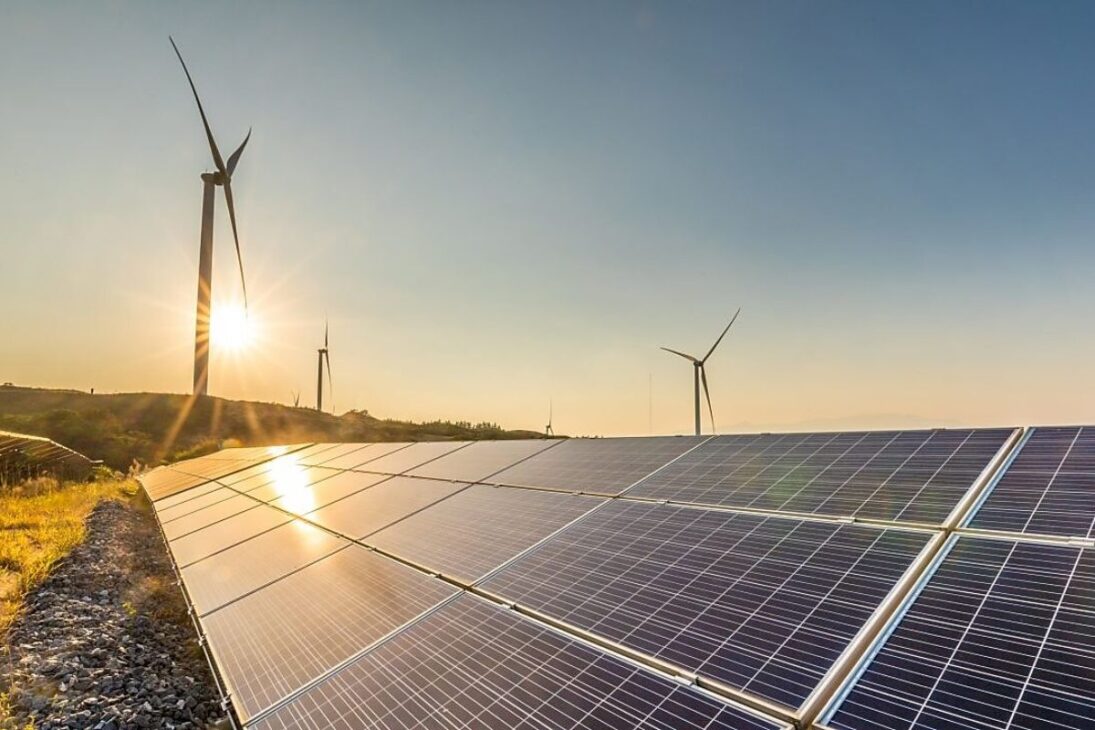
In light of this scenario, Shell made a clear decision: to focus on what is most profitable now. The company is executing a strategic withdrawal from new large renewable energy projects to concentrate its investments on its most profitable oil and natural gas operations.
In 2024, the company publicly weakened its emission reduction targets for the next decade. In early 2025, the move became even clearer with the announcement of a US$ 1 billion writedown, primarily related to its abandonment of developing new offshore wind projects in the United States. The strategy is clear: maximize shareholder value with the legacy business, even if it means betting on a market heading toward stagnation.
The Bet to Become an Integrated Energy Company
In the opposite direction, French TotalEnergies is aggressively investing to stop being a “oil company” and become an “energy company.” The company has already amassed a global portfolio of 23 GW in offshore wind projects and has been acquiring various solar and battery storage companies.
TotalEnergies’ strategy is to build an “integrated energy” business model. The goal is to combine renewable energy generation (solar and wind) with flexible assets, such as gas plants and batteries. This allows the company to offer its customers clean and reliable energy, 24 hours a day, positioning itself to compete directly with large electricity companies in the future.
Petrobras’ Plan, To Use Pre-salt Profits to Finance The Transition
Petrobras is following its own path, directly influenced by its role as a state-owned company. Its strategy is to use the immense profitability of pre-salt oil to finance, in the long term, its entry into the renewable energy market.
The company’s Strategic Plan 2024-2028 includes an investment of US$ 11.5 billion in low-carbon projects, primarily focused on wind and solar energy. The centerpiece of this strategy is a partnership with Norwegian giant Equinor to study the feasibility of building 14.5 GW in offshore wind farms on the Brazilian coast, a massive energy potential.
2025, The Key Year for Petrobras in The Wind Race in The Northeast
The year 2025 has become a landmark for Petrobras’ plans. With the sanctioning of the Legal Framework for Offshore Wind at the beginning of the year, which created the rules for energy exploration at sea, the company gained the legal certainty it needed to move forward.
Petrobras has already filed environmental licensing requests with IBAMA for its projects. The most advanced in the studies, conducted in partnership with Equinor, are located along the coast of Ceará and Rio Grande do Norte. Although final investment still depends on years of analysis, these are the first concrete steps of the state-owned company to prepare for a future where the discussion about the end of oil will become increasingly present.







Tem que mudar para energia limpa rápido o planeta pedindo socorro